 how-to
Professional Event Staging and Lighting Services: A Complete Guide
Table of Contents
- What Professional Event Staging and Lighting Services Include
- Corporate Event Lighting: Creating Impact and Atmosphere
- Corporate Gala Stage Design: From Vision to Execution
- Event Lighting Design Fundamentals: Types and Applications
- Event Draping and Lighting: Transforming Difficult Venues
- Planning Your Event: Budget, Timeline, and Venue Assessment
- Choosing the Right Event Staging and Lighting Provider
- Conclusion
- Frequently Asked Questions
Last Updated: October 10, 2026
What Professional Event Staging and Lighting Services Include
Professional event staging and lighting services transform ordinary spaces into immersive environments that captivate guests and reinforce your event's message. These services combine technical expertise with creative vision to deliver memorable experiences.
At XL Entertainment Systems, we understand that staging and lighting aren't just decorative, they're the foundation of how your guests experience your event. A well-designed lighting scheme can shift the entire mood of a room (Effects of colored lights on an individual's affective impressions in the observation...). Strategic staging creates focal points that draw attention exactly where you want it. Together, they tell your story.
Core services typically include lighting design and installation, stage construction and setup, audio-visual equipment integration, ambient and accent lighting, draping and fabric installations, and full technical support throughout your event. The best providers handle everything from initial consultation through teardown, ensuring seamless execution on event day. Achieving a professional atmosphere requires a careful balance where audio and lighting integration serves as the foundation for both visual clarity and sonic precision during your stage and uplighting vs flawless audio for seamless events.
Many event planners underestimate how much impact professional lighting design can have on venue transformation. Poor lighting leaves a space feeling flat and uninviting. Strategic lighting, whether uplighting to enhance architectural features, spotlights to highlight speakers or performers, or ambient lighting to set tone, completely changes how a space feels.
Corporate Event Lighting: Creating Impact and Atmosphere
The difference between a corporate event that lands and one that falls flat often comes down to lighting. Corporate event lighting serves multiple purposes: it establishes professionalism, directs attention, and creates the emotional atmosphere that makes attendees remember your event.
For corporate galas, conferences, and product launches, lighting design must balance visibility with ambiance. Speakers need adequate stage lighting so the audience can see them clearly. Simultaneously, the room needs atmospheric lighting that makes the space feel intentional and premium.
Consider the specific moments in your corporate event. During presentations, you need bright, focused stage lighting with minimal glare. During networking portions, softer ambient lighting encourages mingling and conversation. For entertainment or performances, dynamic lighting enhances the experience without overwhelming the performers.
Professional corporate event lighting also includes technical considerations. Lighting must be positioned to avoid casting shadows on speakers. Color temperature should complement your brand colors and décor. Intensity levels need adjustment throughout the event as natural light changes or as the event transitions between different segments.
XL Entertainment Systems designs corporate event lighting that reinforces your brand while serving the practical needs of your specific event format. We work backward from your event goals, what do you want attendees to feel during each segment?, and build the lighting design to support that.
Corporate Gala Stage Design: From Vision to Execution
A corporate gala stage design sets the tone for the entire event. The stage is where your most important moments happen: award presentations, performances, keynote speeches, and brand announcements. The design must support these moments while reflecting your organization's values and aesthetic.
Effective corporate gala stage design starts with understanding your event's flow. What happens on stage first? How many speakers or performers will use the stage? Will there be a backdrop, a video wall, or an open design? These questions determine the structural requirements and lighting placement.
The most impactful corporate gala stage designs are often the simplest. A clean, uncluttered stage with strategic lighting draws focus to whoever is speaking. Busy, overly decorated stages distract from your message. Professional stage design uses negative space intentionally.
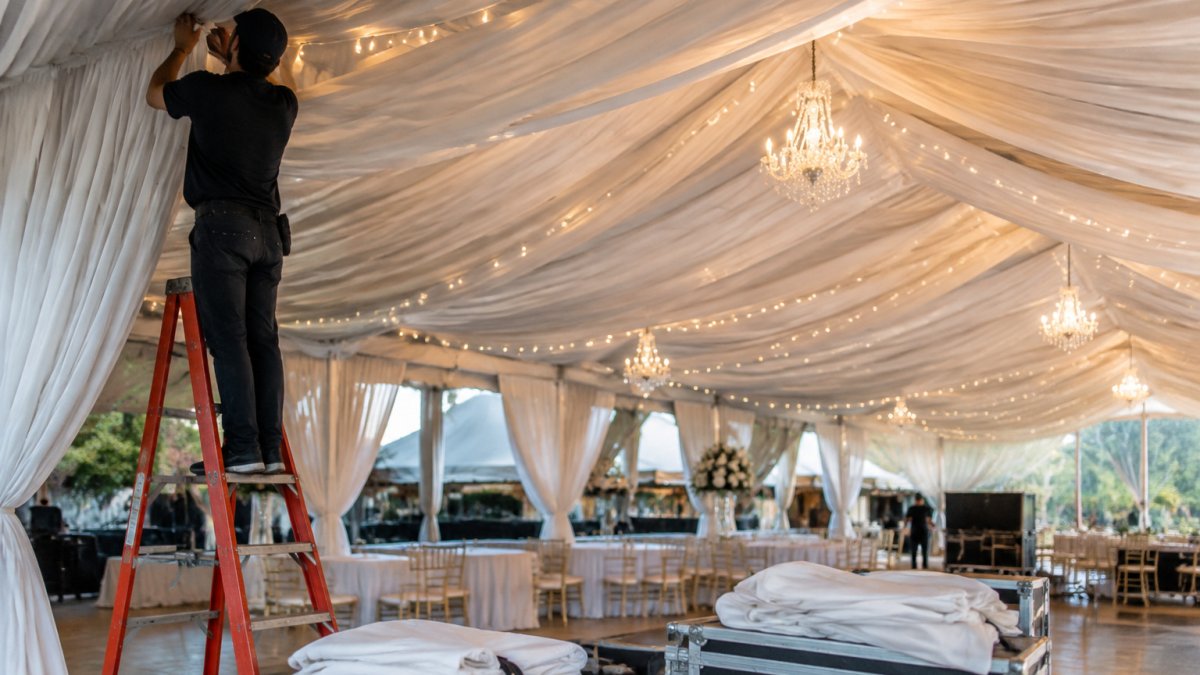
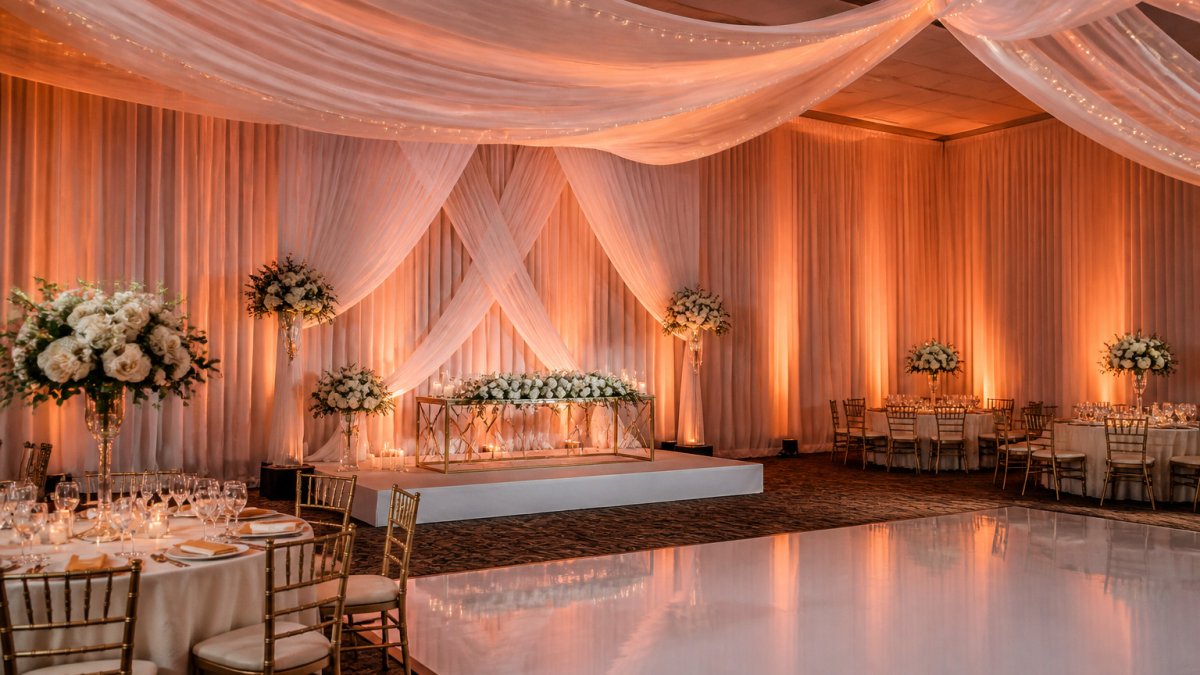
Draping is a critical component of stage design. Elegant fabric can hide unsightly venue elements, create visual depth, and define the stage area clearly. Lighting combined with draping can create dramatic effects, silhouettes, color washes, or subtle texture highlighting, that elevate the entire gala aesthetic.
The staging and lighting for your corporate gala should reflect your organization's brand identity. If your brand is modern and minimalist, your stage design should reflect that. If your brand is warm and traditional, the design should convey that feeling. Professional event staging and lighting services ensure consistency between your brand identity and the physical environment your guests experience.
Event Lighting Design Fundamentals: Types and Applications
Understanding the basic types of event lighting helps you make informed decisions about what your event actually needs. Different lighting serves different purposes, and the best event lighting designs layer multiple types strategically.
Ambient lighting creates the overall brightness level in your space. This is the baseline that makes the room visible and sets the general mood. Ambient lighting is typically soft and diffused, providing even coverage without creating harsh shadows.
Accent lighting highlights specific features: architectural elements, décor, signage, or decorative installations. Uplighting (lights positioned at ground level pointing upward) is a common accent technique that transforms how guests perceive a space.
Task lighting provides visibility for specific functions: stage lighting for speakers, lighting over dining tables so guests can see their food, lighting in registration areas so staff can process attendees efficiently.
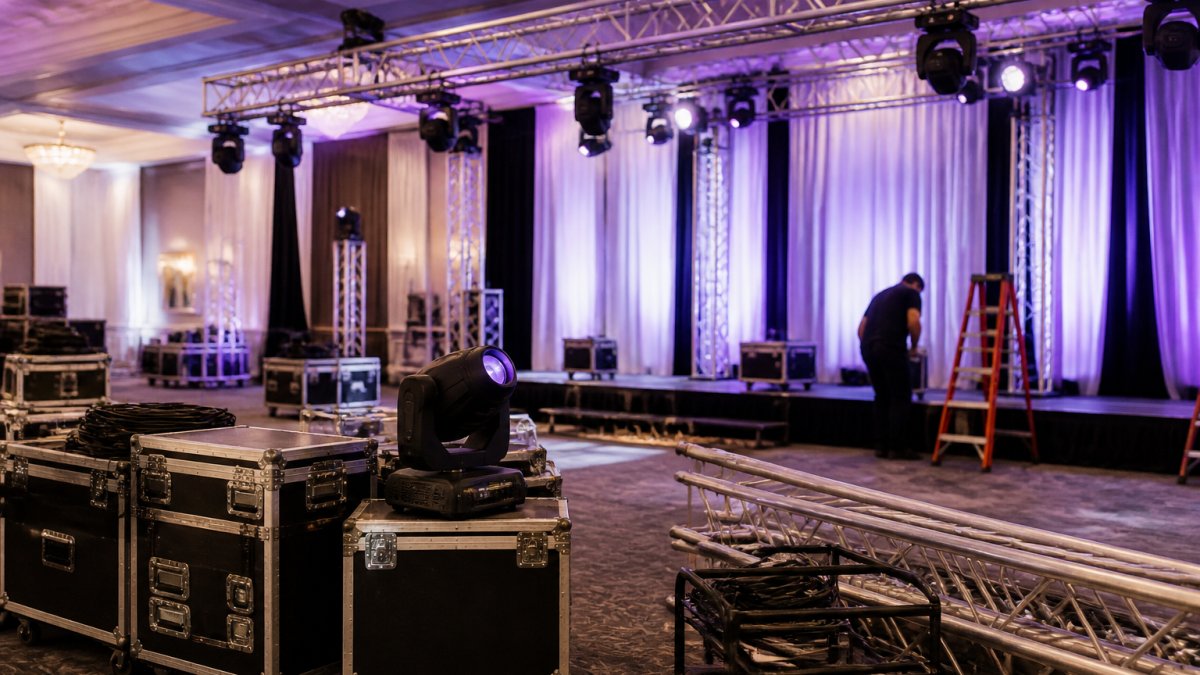
Decorative lighting includes effects like gobos (projected patterns), color-changing lights, spotlights, and moving lights that create visual interest and energy. These are especially effective for performances, entertainment segments, or high-energy corporate events.
Directional lighting controls where guests look. Spotlights on a stage pull focus there. Lighting concentrated in a lounge area draws people to gather there. Professional event lighting design uses directional lighting to guide the guest experience.
The most effective event lighting designs combine these types.
Event Draping and Lighting: Transforming Difficult Venues
Not every venue is naturally beautiful. Industrial lofts have exposed brick and bare pipes. Hotel ballrooms have bland, dated finishes. Warehouses feel cavernous and cold. Professional event draping and lighting can transform these challenging spaces into exactly what you envision.
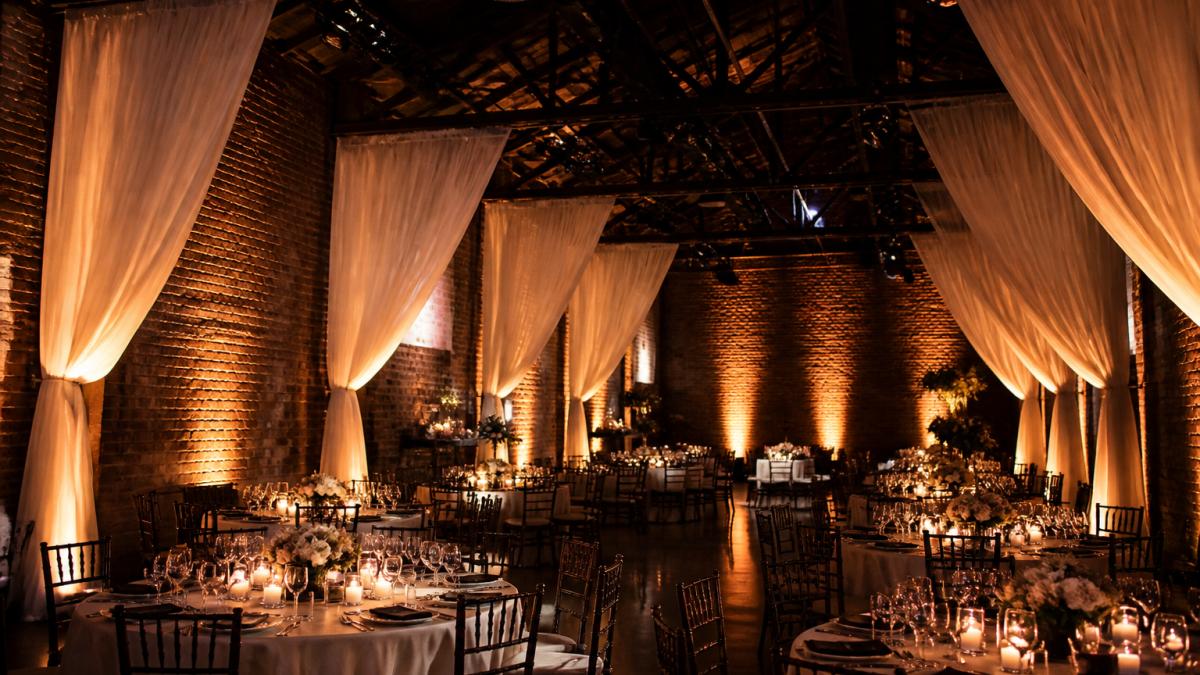
Draping serves multiple functions. It hides architectural elements you don't want visible. It defines separate areas within a large open space. It softens hard surfaces and creates visual warmth. Combined with strategic lighting, draping can completely change how a space feels.
Consider an industrial loft with exposed brick and concrete. Bare, it feels cold and unfinished. Add elegant fabric draping and warm uplighting on the brick, and suddenly the space feels intentional, intimate, and premium. The brick that looked harsh now looks rustic and romantic.
Event lighting design for difficult venues requires technical skill. If your venue has poor natural light or unflattering architectural features, lighting design must compensate. If your venue has great bones but needs enhancement, lighting can amplify those strengths.
XL Entertainment Systems specializes in venue transformation. We assess your specific venue, its challenges and its potential, and design staging and lighting that brings your vision to life. An industrial space can feel elegant. A hotel ballroom can feel fresh and modern.
Planning Your Event: Budget, Timeline, and Venue Assessment
Successful event staging and lighting starts with realistic planning. Understanding your budget, timeline, and venue limitations upfront prevents costly surprises and ensures your professional event staging and lighting services deliver exactly what you need.
Budget Planning
Pricing for professional event staging and lighting depends on several factors: the size of your venue, the complexity of the design, the duration of the event, and the specific services you need.
The key is transparency. A reputable provider should explain what services are included in different price points and help you understand where your budget has the most impact.
Many event planners worry about budget constraints. The reality is that professional event staging and lighting services can work within almost any budget.
Timeline Considerations
Professional event staging and lighting requires adequate planning time. A simple event might need only a few weeks of planning.
Your timeline affects what's possible. Rush projects cost more. Last-minute changes are harder to execute. Building in adequate planning time with your staging and lighting provider ensures they can source equipment, design custom elements, and coordinate logistics smoothly.
Venue Assessment
Before committing to a design direction, a professional should assess your venue. This means understanding the space's dimensions, ceiling height, electrical capacity, load-bearing capabilities, natural light conditions, and any architectural features that affect design options.
Some venues have limitations: low ceilings that restrict certain staging options, limited electrical outlets that affect lighting placement, or structural restrictions that limit draping installation.
Choosing the Right Event Staging and Lighting Provider
Selecting a staging and lighting provider is one of the most important decisions in your event planning process. The wrong choice results in poor execution, budget overruns, or a final product that doesn't match your vision.
What to Look For
Experience matters. A provider with a track record of successful events in your market understands local venues, knows what works and what doesn't, and has solved problems similar to ones you might face.
Comprehensive services simplify your planning. A provider that handles lighting, draping, staging, and installation as one coordinated team prevents communication gaps and ensures all elements work together seamlessly. Coordinating with multiple vendors is more complicated and often more expensive.
Communication and responsiveness matter more than you might think. Your staging and lighting provider should listen carefully to your vision, ask clarifying questions, and provide regular updates as your event approaches.
Transparency about pricing and timelines builds trust. A provider should clearly explain what's included in their services, what costs extra, and what timeline they need. Hidden fees and vague timelines are red flags.
XL Entertainment Systems Difference
We're a family-owned business with over 30 years of experience in event design. We've transformed hundreds of venues for weddings, corporate galas, conferences, and private celebrations.
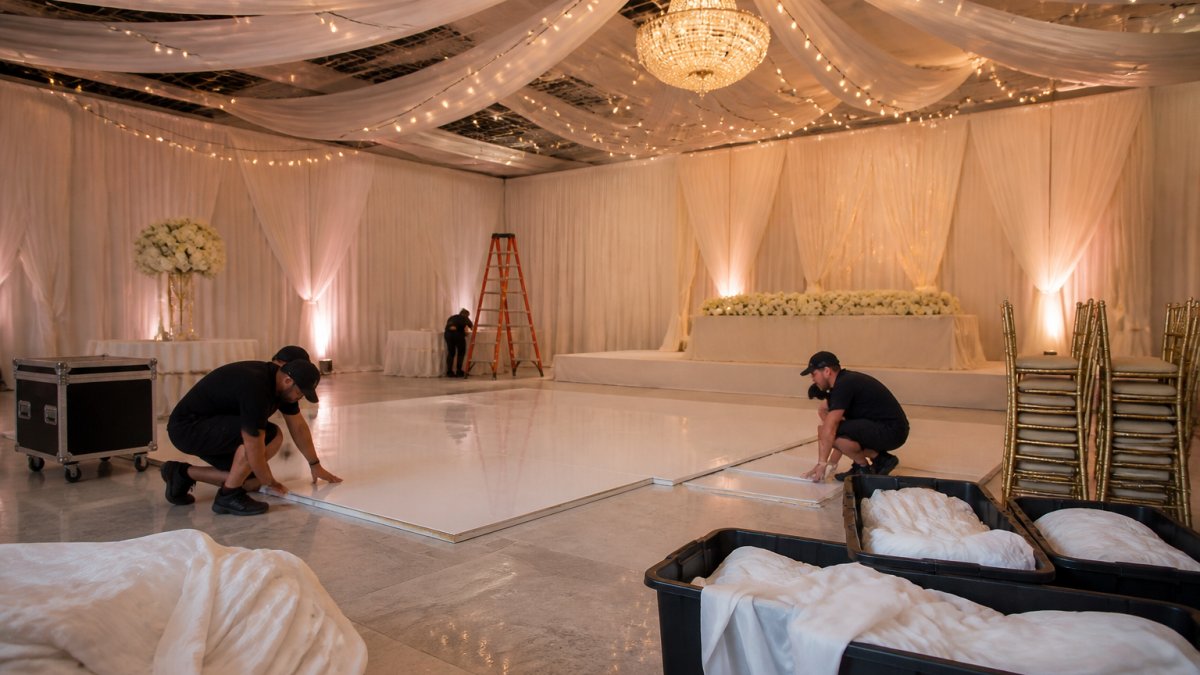
We handle everything: design consultation, lighting and staging installation, full technical support during your event, and professional teardown. You coordinate with one team, not five different vendors. We're committed to making your event planning process seamless and your event day flawless.
Conclusion
Professional event staging and lighting services transform ordinary spaces into memorable environments that reflect your vision and engage your guests. Whether you're planning a corporate gala, a wedding, or a milestone celebration, the right staging and lighting design makes an enormous difference in how your event feels and how your guests experience it.
The challenge most event planners face is finding a provider who truly understands their vision, communicates clearly, works within their budget, and delivers professional results. XL Entertainment Systems has been solving this challenge for over 30 years. We provide comprehensive event staging and lighting services, from initial design consultation through full installation and on-site support, tailored to your specific event and budget.
Ready to transform your venue? Call us today at (714)519-6131 to discuss your event vision and get started.
Frequently Asked Questions
What do professional event staging and lighting services include?
Professional event staging and lighting services typically include lighting design and production, stage structures and staging platforms, audio-visual equipment and support, uplighting and ambient lighting, LED walls and screens, draping and décor installation, technical setup and on-site management, and teardown. Many providers offer comprehensive packages that combine multiple services so you work with one vendor rather than coordinating with several. The specific services included depend on your event type, venue, and budget.
How do you choose lighting for a corporate gala stage design?
When selecting lighting for a corporate gala, consider the event's tone and objectives. Warm uplighting creates elegance and intimacy, while spotlights draw attention to speakers or performances. LED walls work well for displaying branding or visual content. Work with your lighting designer to assess your venue's existing conditions, identify problem areas like poor natural light or exposed brick, and create a lighting plan that highlights key elements like the stage, dance floor, or dining areas. Professional designers can show you examples of similar venues they've transformed.
How far in advance should you book event staging and lighting services?
Most event professionals recommend booking staging and lighting services 2-3 months before your event, especially for weddings and corporate galas. This timeline allows the provider to assess your venue, understand your vision, create a detailed design plan, and secure equipment. For larger events or peak seasons, booking 4-6 months ahead ensures availability. Early booking also gives you time to review design concepts, request changes, and address any venue-specific challenges like difficult lighting conditions or structural limitations.
What should you ask an event lighting company before hiring them?
Ask about their experience with events similar to yours, whether they provide references you can contact, how they handle venue challenges, what happens if equipment fails on event day, whether they offer design consultations, how they price their services, and what's included in their packages. Request to see examples of spaces they've transformed, ask about their on-site management during the event, and clarify travel policies and setup timelines. Understanding their process helps ensure they can deliver the atmosphere and visual impact you want.