 how-to
Full Service Event Design Companies: How to Choose
Table of Contents
- What Full Service Event Design Companies Actually Do
- How to Hire Full Service Event Design Companies: Step by Step
- Questions to Ask an Event Designer Before You Sign
- Understanding Event Designer Cost and Fee Structures
- What Belongs in Your Event Design Proposal
- Your Event Décor Planning Checklist for a Smooth Process
- Frequently Asked Questions
Last Updated: October 4, 2026
What Full Service Event Design Companies Actually Do
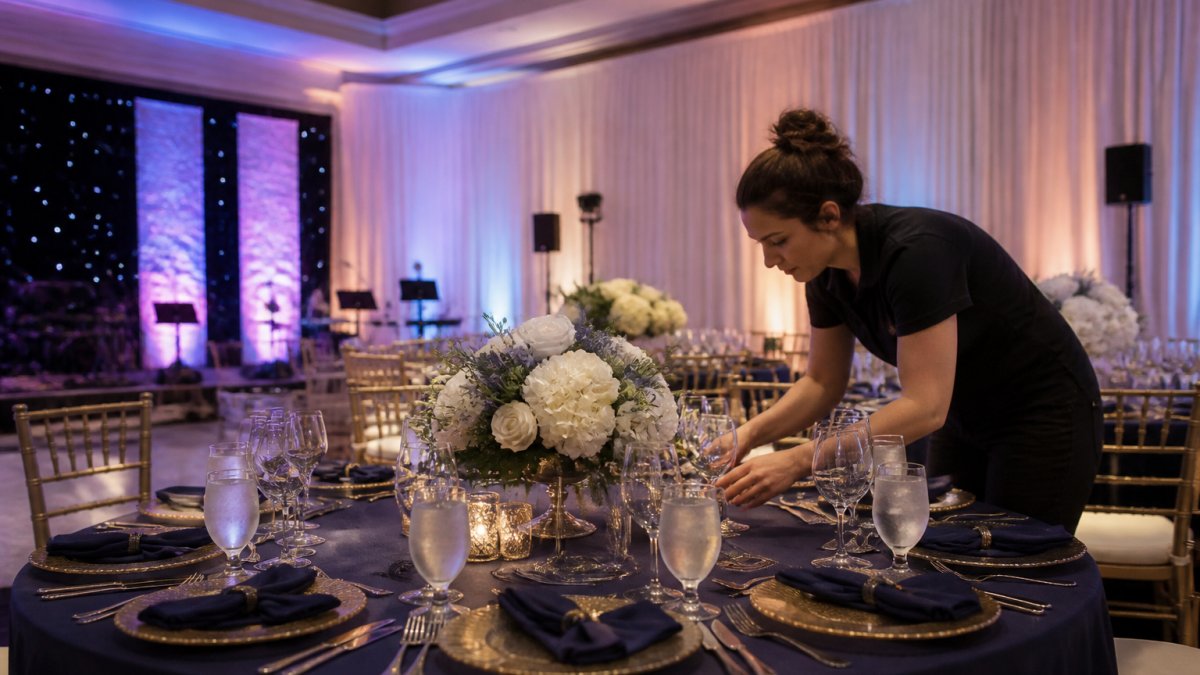
Full service event design companies handle the visual and physical transformation of a venue, from concept and layout through lighting, draping, décor installation, and teardown. They differ from planners who only manage logistics and timelines.
The distinction matters more than most couples and corporate planners realize. A planning-only service builds your schedule and confirms vendors.
At XL Entertainment Systems, we have worked on weddings, corporate launches, and milestone celebrations for more than 30 years. When design is an afterthought, the room feels unfinished, and no amount of good catering fixes it.
Design and Décor vs. Planning-Only Services
Design and décor services own the look and feel of the space. Planning-only services own the calendar, contracts, and day-of timeline. Many events need both, but hiring one does not get you the other.
If your venue already looks the way you want it, a planner may be enough. If the space needs transformation, you need a design team with installation capability.
The End-to-End Scope: From Concept to Teardown
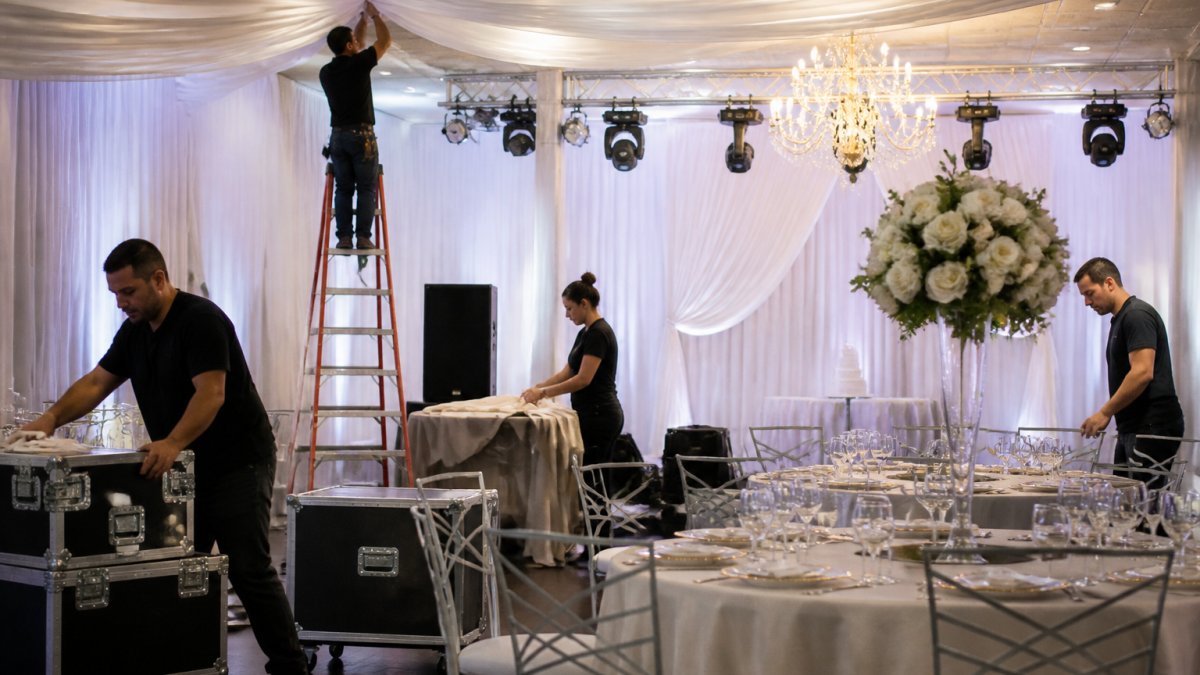
The end-to-end scope of a full-service design engagement runs from the first concept sketch to the final teardown sweep: event vision and concept development, design and décor, rental coordination, event setup, and event teardown.
How to Hire Full Service Event Design Companies: Step by Step
Step 2: Set a realistic budget range before you talk to anyone. Design and décor, rental coordination, lighting, and labor are separate line items.

Step 3: Shortlist providers by portfolio, service area, and team size. Ask for examples of spaces similar to yours.
Step 4: Run consultations and ask the questions in the next section. Treat this as an interview, not a pitch.
Step 5: Compare proposals side by side. Match scope, inclusions, and exclusions against each other, not just the bottom line.
Step 6: Sign and set approval milestones. Confirm when you approve the design, when final counts are due, and when installation begins.
| Stage | What You Do | What the Design Team Delivers |
|---|---|---|
| Discovery | Share event goals, venue, guest count | Concept direction, initial questions |
| Consultation | Interview two to three teams | Portfolio, references, rough scope |
| Proposal review | Compare line items and exclusions | Itemized scope, timeline, fee structure |
| Design approval | Sign off on renderings and samples | Final design plan, load-in schedule |
| Event day | Arrive as a guest | Setup, styling, teardown |
Questions to Ask an Event Designer Before You Sign
The most useful questions to ask an event designer cover scope, staffing, references, and what happens when something goes wrong. Ask them before you sign, not after the deposit clears.
- What exactly is included in the proposal, and what costs extra?
- Who is on site during setup and teardown, and how many people?
- Can I speak with two recent clients whose venues resemble mine?
- How do you handle venue restrictions on rigging, load-in times, and power?
- What is your process for design revisions, and how many rounds are included?
- What happens if a rental item arrives damaged or a delivery is delayed?
- How do you handle travel to a remote venue, and is that billed separately?
Understanding Event Designer Cost and Fee Structures
Event designer cost depends on scope, venue complexity, guest count, and rental inventory.
Flat design fee. The provider quotes one number for the concept, design plan, and on-site design management, with rentals, labor, and materials billed separately.
Percentage of décor budget. The provider charges a percentage of your total décor spend, typically a management fee on top of hard costs.
Itemized pricing. Labor, rentals, materials, delivery, and installation are each listed with a unit cost. It is the most transparent and easiest to audit, but requires reading the whole document rather than the bottom line.
Because every venue and event is different, we do not publish flat rates. Pricing depends on quantity, dates, and delivery, and we quote each event individually.
How to Build a Working Décor Budget
Start with your total event budget and carve out the categories that are not design: venue, catering, entertainment, photography, and attire. What remains is your design envelope, and it usually needs to cover more than couples and corporate planners expect.
A practical split most practitioners use:
- Rentals and materials, the largest line, covering draping, furniture, staging, dance floor, and tabletop
- Lighting, often underestimated; architectural and decorative lighting are separate scopes
- Labor, install crew, on-site styling, and teardown, usually billed by the hour or by the shift
- Delivery and logistics, trucking, storage, and any venue-imposed load-in fees
- Design fee, the provider's creative and management time
Hold back a contingency. Venue restrictions, last-minute guest count changes, and damaged rental replacements are the three most common reasons a décor budget overruns, and none are fully predictable at signing.
When you compare quotes, ask each provider to break out labor, rental coordination, and materials separately. That structure lets you compare two proposals honestly and shows where you can trim if the budget tightens. A quote that bundles everything into one number is not negotiable, it is take-it-or-leave-it.
What Belongs in Your Event Design Proposal
A complete event design proposal should include the design concept, itemized scope, a timeline with approval milestones, and clear exclusions. If any of those four pieces is missing, you are looking at an estimate, not a proposal.
Here is what to check for in the document itself:
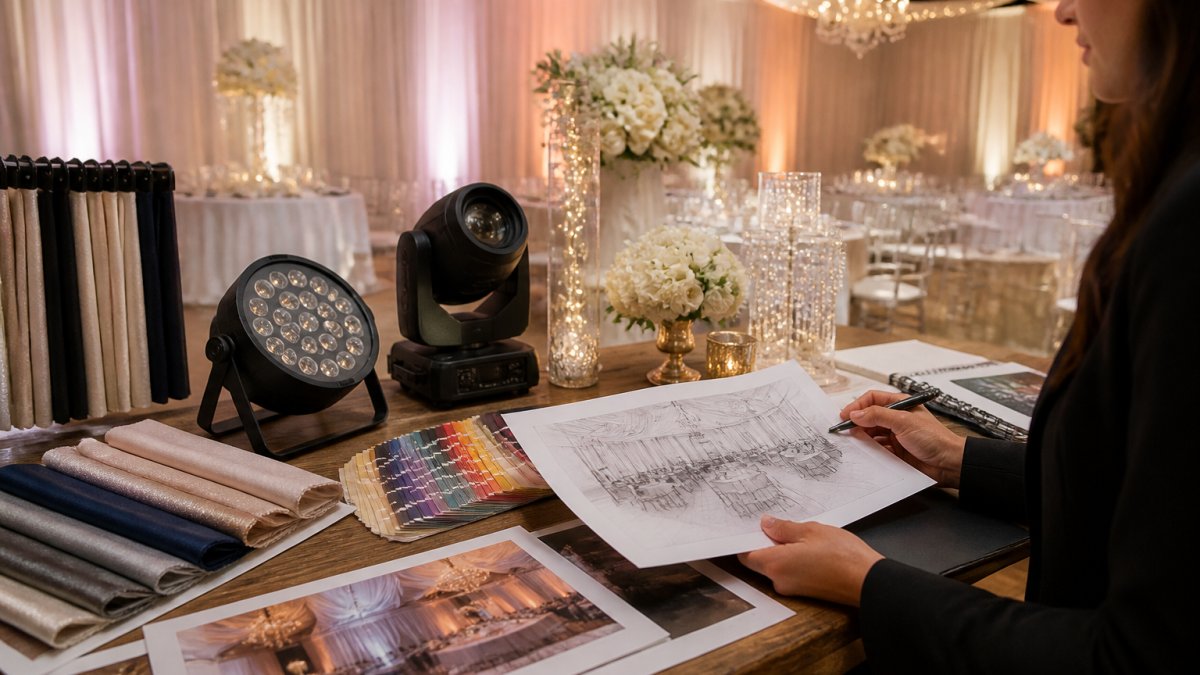
- Concept summary describing the event vision and how it fits your venue
- Itemized scope listing draping, lighting, staging, décor rentals, and rental coordination
- Timeline covering design approval, final counts, load-in, event setup, and event teardown
- Exclusions naming anything the team does not cover, such as catering or audio visual services
- References from clients with similar venues and event size
- Payment schedule tied to milestones rather than one lump sum
Full-Service vs. Planning-Only vs. Partial Planning: Where the Lines Fall
The scope question that trips up most clients is not what a provider does, it is what they do not do. The three service models look similar on a website and behave very differently on event day.
| Service Model | Owns | Does Not Own |
|---|---|---|
| Planning-only | Timeline, vendor contracts, day-of coordination | Design, décor, installation |
| Partial planning | A defined slice, often vendor sourcing or month-of logistics | Full design build, install, teardown |
| Full-service design | Concept, design, rentals, install, styling, teardown | Catering, entertainment, photography unless contracted |
A full-service design engagement typically includes venue walkthroughs, concept boards, renderings, rental sourcing and coordination, load-in scheduling, on-site installation, styling, and teardown. It usually excludes catering, entertainment, floral if the provider is not a florist, and audio visual unless explicitly added. That boundary is where most budget surprises live.
How to Evaluate a Proposal Line by Line
Read the proposal in this order to catch gaps before they cost you:
- Match the scope to the venue. Does the proposal reference your specific load-in window, rigging restrictions, and power access? A generic scope means the provider has not walked the space.
- Count the exclusions. Every exclusion is a cost you will absorb elsewhere. List them and price them before you compare totals.
- Check the labor line. Ask how many crew members are on site for install and teardown, and whether overtime is billed. A low labor line often means a thin crew and a rushed install.
- Verify the timeline against your venue contract. Your venue has its own load-in and load-out windows. If the proposal's timeline does not fit inside them, the schedule is fiction.
- Confirm what happens on revisions. Ask how many design revision rounds are included and what triggers an additional fee.
- Read the cancellation and rescheduling terms. Deposits, non-refundable design hours, and date-change fees should be stated, not implied.
Questions to Ask Before You Sign
- Who is the on-site lead during install, and will that person be at my event?
- Are you insured, and can you provide a certificate of insurance naming the venue?
- Which vendors do you work with regularly, and do you mark up their services?
- What is your process if a rental item arrives damaged or a delivery is delayed?
- How do you handle travel to a remote venue, and is that billed separately?
For more on how professional event standards are structured, the International Live Events Association resources outline industry expectations for production and coordination.
Your Event Décor Planning Checklist for a Smooth Process
An event décor planning checklist keeps the design process moving and prevents last-minute scrambles. Work through it in order to avoid most problems that derail décor timelines.
- Confirm venue capacity, load-in windows, and rigging restrictions in writing
- Set your décor budget separately from venue and catering costs
- Collect inspiration images and note what you like about each one
- Book your design team at least six months ahead for large events
- Approve the design concept and renderings before final counts are due
- Confirm the final guest count and how it affects seating and staging
- Walk the venue with your design lead before install day
- Confirm setup and teardown times with the venue and your team
- Assign one decision-maker so approvals do not stall
- Get the teardown and disposal terms in writing
If you are planning a wedding specifically, the wedding planning guidance from The Knot covers how décor timelines fit into the wider planning schedule. For corporate gatherings, event planning resources from Event Marketer address production timelines and vendor coordination.
Design is the part of an event that guests remember without knowing why. The room felt warm, the lighting landed right, the space felt intentional.
XL Entertainment Systems is a family-owned event design specialist with more than 30 years of experience in lighting, draping, custom décor, dance floors, chairs, and staging.
Frequently Asked Questions
How much does an event designer cost?
Pricing depends on the scope of work, event size, venue, and date. Full service event design companies typically quote per project rather than a flat hourly rate, because lighting, draping, rentals, and labor all vary. Some charge a design fee plus a separate production fee; others bundle everything into one proposal. Ask for a line-item breakdown so you can see what drives the total. XL Entertainment Systems works within client budgets and provides custom quotes based on your specific event.
What are the most important questions to ask an event designer?
Ask how long they have been in business, whether they carry liability insurance, and whether they handle setup and teardown or subcontract it. Request references from events similar to yours in size and venue type. Confirm how they handle design changes after the contract is signed. Ask who your day-of contact will be. Finally, ask for a written timeline showing design approval milestones, so you know exactly when decisions are due.
What is the difference between an event planner and an event designer?
An event planner manages logistics: vendor contracts, timelines, budgets, and guest coordination. An event designer focuses on how the space looks and feels, including lighting, draping, décor, staging, and floor plans. Full service event design companies often do both, or work alongside your planner. If you already have a planner handling logistics, a design-focused company can transform the venue without duplicating the planning work you have already paid for.
How far in advance should I hire a full service event design company?
For weddings and large galas, start conversations 8 to 12 months before your date. Peak seasons in California, New York, and Connecticut book early, and lighting and draping inventory is limited on popular weekends. Smaller corporate events and milestone parties can sometimes be booked 3 to 6 months out. If your venue has challenging features like exposed brick or high ceilings, extra lead time lets the designer test lighting and rigging solutions before the event.