 how-to
How to Plan Wedding Draping in Orange County
Last Updated: November 4, 2026
Quick Summary
Wedding draping is the use of fabric on walls, ceilings and framed areas to turn a plain venue into a unified, elegant room. Planning it well means choosing a draping style for the room, measuring the space and its interruptions carefully, picking a fabric that suits your lighting and mood, and booking early with a professional installer.
- Ceiling draping works best when you confirm rigging points and ceiling height before choosing a style.
- Standard pipe and drape panels sit on 8 to 10 foot centers, so divide your run by panel width and round up.
- Gathered panels use about one and a half times the opening width; heavily pleated panels can use two to three times.
- Keep at least 4 to 5 feet of clearance along draped walls bordering buffets, bars or photo areas.
- Never drape over fire exits, egress paths or sprinkler risers; break the run into segments instead.
Table of Contents
- What Wedding Draping Does for a Venue
- Ceiling Draping for Weddings: Choosing Swags, Clouds and Coverage
- Wedding Backdrop Rentals: Ceremony, Head Table and Sweetheart Options
- Pipe and Drape Rental Orange County: Measuring Your Space
- Fabric, Color and Fullness: Comparing Drape Materials
- Pairing Draping With Uplighting: Wedding Uplighting Rentals That Complement the Drape
- Booking Your Wedding Draping With XL Entertainment Systems
- Frequently Asked Questions
Planning a wedding in Orange County means deciding how the room will look before your guests walk in. Wedding draping is one of the ways to change a plain ballroom, banquet hall or garden tent into something that feels intentional and elegant. At XL Entertainment Systems, a family-owned wedding and event rental company serving Southern California since 1992, we help couples plan these transformations. The right draping plan starts with understanding what it does, how it is installed and what decisions you need to make early.
What Wedding Draping Does for a Venue
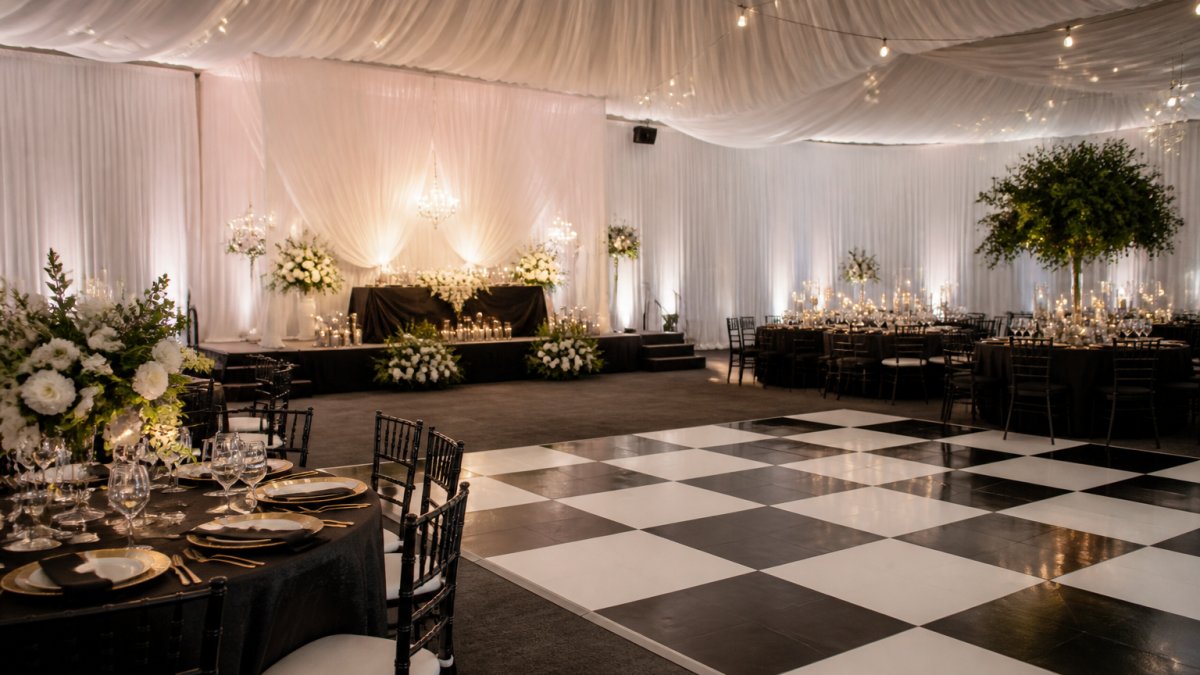
Wedding draping softens hard architectural lines, hides utilitarian features such as exposed beams, mismatched walls or stacked storage, and gives the room a single unified color story. Fabric absorbs sound, which can make a large reception space feel warmer and more intimate. It also gives your decor a backdrop to build around, so flowers, lighting and tables read as part of one design rather than scattered elements.
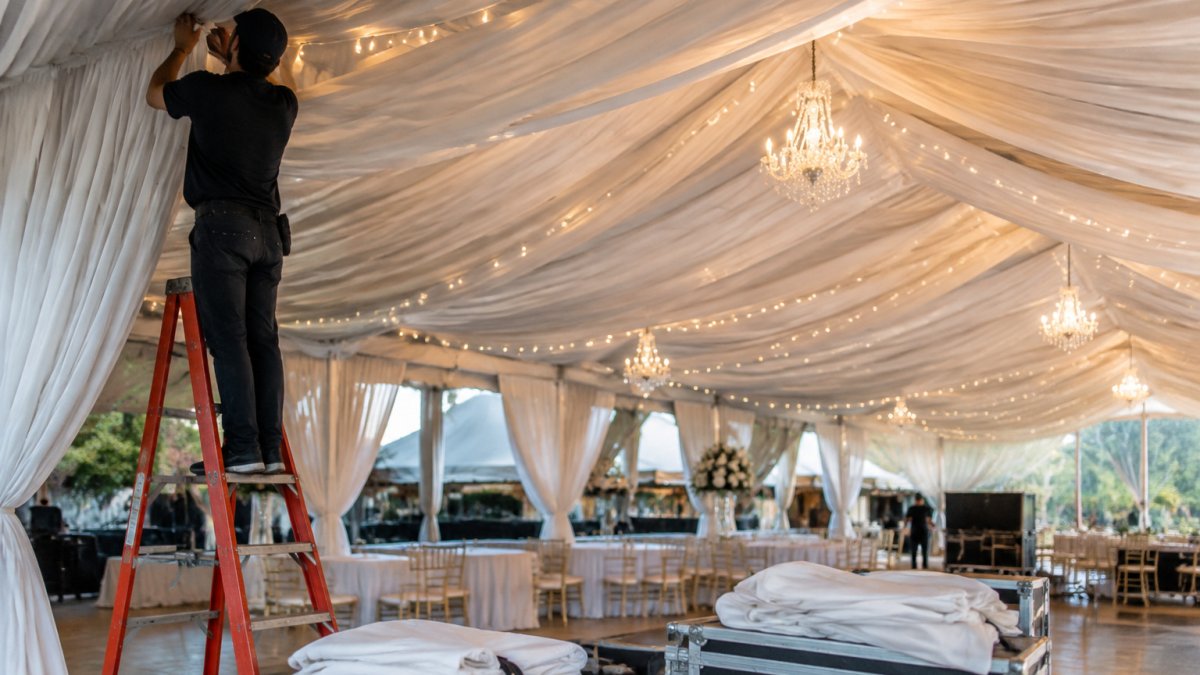
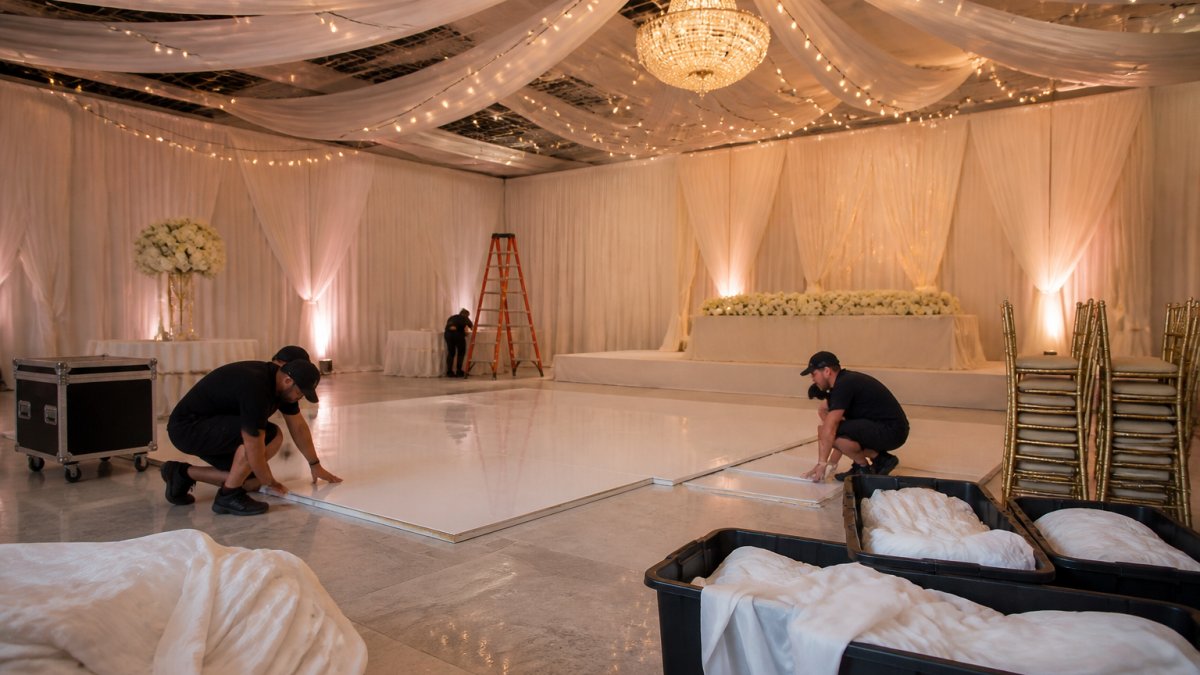
Draping works in three common ways: wall coverage, ceiling treatments and pipe-and-drape framing for ceremony and reception areas. Many couples combine two or three of these to create a continuous look from the entrance to the dance floor. Because draping is installed by professionals, it adds color and texture the room could not provide on its own.
Ceiling Draping for Weddings: Choosing Swags, Clouds and Coverage
Ceiling draping is often the most dramatic change you can make to a reception hall. Common approaches include fabric swags that drape in soft lines from a central point, clouds that gather fabric into a rounded canopy, and full ceiling coverage that turns a high, echoing room into a more enclosed, cozy space. Which one suits your room depends on ceiling height, the number of guests and how much of the existing structure you want to hide.
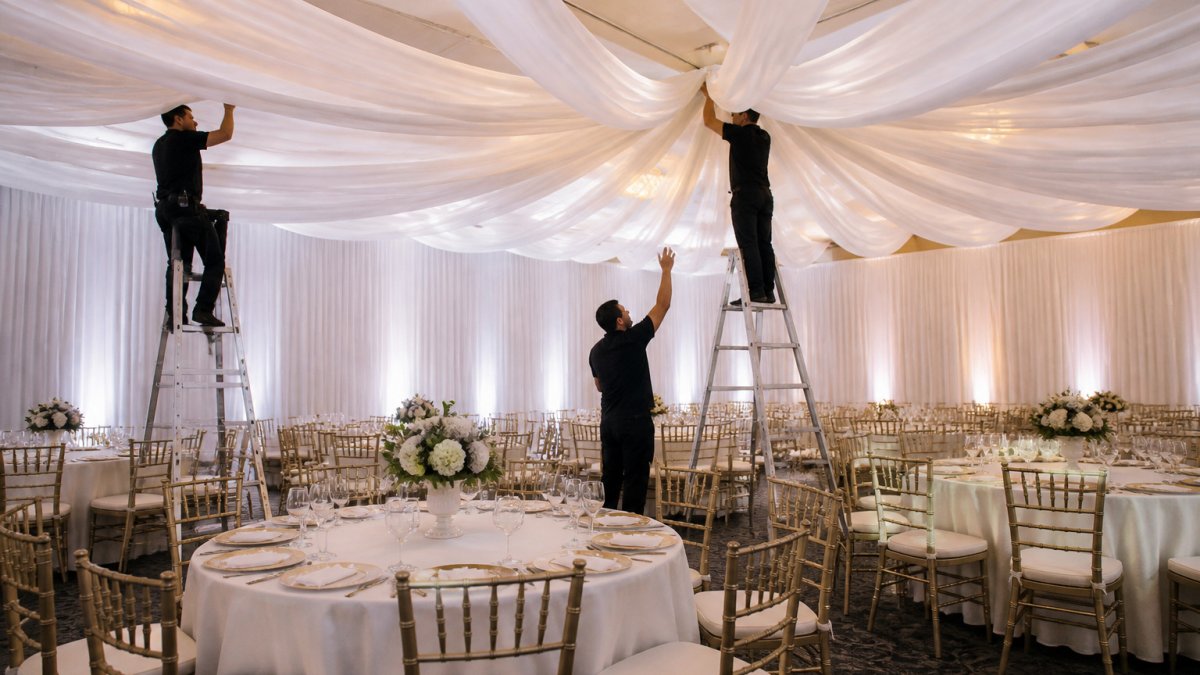
Consider your ceiling height before choosing a style. Ask your rental team to walk the room with you and confirm where rigging points are available, since venues often have specific rules about what can be hung from the structure.
Wedding Backdrop Rentals: Ceremony, Head Table and Sweetheart Options
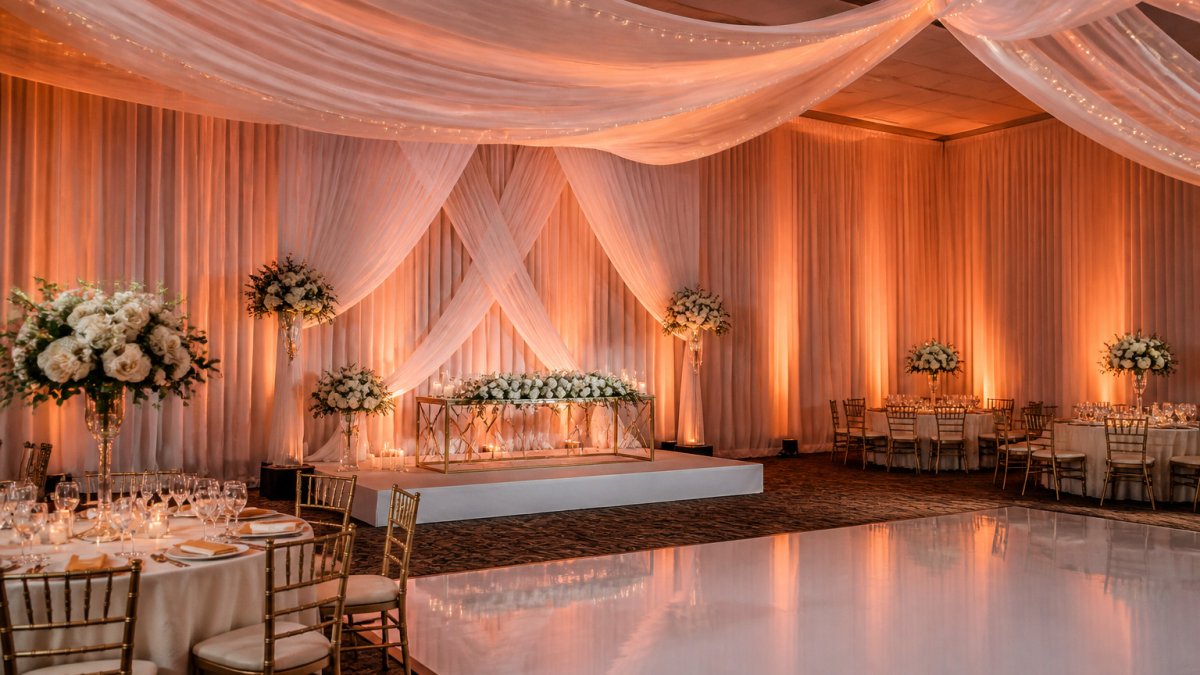
A backdrop frames the moment couples stand in front of their guests, which makes it one of the most photographed elements of the day. Ceremony backdrops usually span a wider width and sit behind the officiant, while sweetheart table backdrops are smaller and framed around the couple's seating. Head table backdrops often match the ceremony design so the event feels cohesive from start to finish.
When planning backdrops, think about how they will look in photographs as well as in person. Light colors and soft textures photograph well under warm uplighting, while high-contrast patterns can compete with the couple.
Pipe and Drape Rental Orange County: Measuring Your Space
Pipe and drape is a flexible framework of vertical pipes, adjustable bases, horizontal crossbars and fabric panels used to section off areas, create ceremony corridors and enclose spaces where walls are missing. It is one of the most practical options for hotel ballrooms, outdoor pavilions and converted commercial spaces that were not built with event decor in mind, and it is fully freestanding, so nothing has to be attached to the venue's walls or ceiling.
Accurate measurements make the difference between a polished installation and one that looks cramped. The good news is that the math is simple once you know the standard dimensions. Uprights are commonly available in 6-foot, 8-foot, 10-foot and taller heights, and crossbars typically come in 6-foot to 10-foot adjustable lengths. A standard panel is usually built on 8-foot to 10-foot centers, which means one upright every 8 to 10 feet along the run. To estimate the number of panels you need, divide the total run length by your panel width and round up. A 40-foot wall at 10-foot centers needs four panels and five uprights; the same wall at 8-foot centers needs five panels and six uprights.
Fullness is the second number that changes the quote. Flat panels use roughly the width of the opening in fabric. Gathered panels use about one and a half times the width, and heavily gathered or pleated panels can use two to three times the width. A 10-foot opening with 50 percent fullness needs about 15 feet of fabric per panel, so a 40-foot run at that fullness needs roughly 60 feet of fabric. More fullness reads as richer and hides more behind the drape, but it also adds weight, cost and setup time.
Walk the space and record four things before you request a quote: the full width and depth of the area you want to cover, the ceiling or clearance height at each point, every door, window, column or outlet that interrupts the run, and the walking paths guests and staff will use. A common mistake is measuring only the room and forgetting the paths. Leave at least 4 to 5 feet of clearance along any draped wall that borders a buffet line, bar or photo area so guests and catering staff can move comfortably.
Watch out: a run that crosses a fire exit, emergency egress path or sprinkler riser cannot simply be draped over. Venues in this region typically require those paths to stay clear, and the fix is usually to break the run into segments or shift the layout rather than to cover the opening.
Share your measurements and photos of the room with your rental provider early so the layout can be planned before delivery day.
Request a Free Quote →
Fabric, Color and Fullness: Comparing Drape Materials
Fabric choice affects how light moves through the room, how the drapes hang, how they photograph and how well they hold up through a long event. Most wedding draping uses one of four fabric families, and each behaves differently.
Sheer fabrics such as chiffon and voile are lightweight and semi-transparent. You can browse the full range of backdrops and draping services available for Southern California events. They diffuse light beautifully, suit airy garden-style and tented weddings, and look soft in photographs, but they show wrinkles and creases more readily and offer little privacy or light blocking. Chiffon is the most common choice for ceiling swags and clouds because it catches uplighting and appears to float.
Satin and taffeta are heavier and have a subtle sheen. They hold deep pleats and structured swags well and read as formal, which suits ballroom and black-tie designs. The trade-off is that shine can reflect camera flash and show every fold, so these fabrics reward precise installation.
Matte fabrics such as poly Premier, a heavyweight polyester often used for pipe and drape, are opaque and block light almost completely. They are the workhorse of room dividing and wall coverage because they hide what is behind them, resist wrinkles better than sheers and hold color consistently under warm or cool lighting. They are less romantic on their own but pair well with a sheer overlay.
Velvet and heavier textured fabrics add richness and absorb sound, which helps in large echoing halls, but they are the heaviest option and are usually reserved for accent panels, backdrops and sweetheart table treatments rather than full ceiling coverage.
Fullness, meaning how much extra fabric is gathered into each panel, controls whether the drapes look lush or minimal. Flat panels use roughly the width of the opening, gathered panels use about one and a half times the width, and heavily gathered or pleated panels can use two to three times the width. More fullness reads as richer and hides more of the structure behind it, but it adds weight, cost and setup time.
Color decisions should account for your lighting plan. A white drape can read as ivory under amber uplights and as cool gray under bright white lights, so test colors in the actual venue whenever possible. Ask for fabric swatches and, if your timeline allows, a sample installation before committing to a full design. You can also browse real draping examples from past weddings to see how these fabrics look in finished rooms.
Confirm fabric requirements with your rental provider up front rather than discovering them during the venue walkthrough.
Pairing Draping With Uplighting: Wedding Uplighting Rentals That Complement the Drape
Uplighting and draping work best together because the light reveals the texture of the fabric while the fabric softens and spreads the light across the walls. Amber and warm white uplights are popular choices for classic romance, while cooler tones suit modern or minimalist designs. Placing uplights at the base of draped walls creates a glow that makes the entire room feel warmer without adding visible fixtures.
When you plan wedding uplighting rentals, coordinate the color temperature with your drape color so the two do not clash.
Booking Your Wedding Draping With XL Entertainment Systems
Once you have a sense of the style and layout you want, the next step is a conversation about your specific venue, date and guest count. Pricing for wedding draping depends on the quantity of fabric, the complexity of the installation, the delivery location and the dates involved. Contact XL Entertainment Systems to request a free, personalized quote for wedding draping in Orange County. When you reach out, share your event date, venue, location and the services you are considering, including draping, uplighting, dance floors and chair rentals, so we can recommend a package that works together. Our family-owned team has been serving Southern California since 1992.
Frequently Asked Questions
How much does wedding draping cost in Orange County?
Pricing depends on the size of the space, the number of drape panels, the fabric chosen, the delivery distance and the installation time, so there is no single figure that applies to every wedding. The most reliable way to get an accurate number is to share your event date, venue address, room dimensions and the services you want. XL Entertainment Systems provides a free, personalized quote based on those details, which lets you compare options against your budget before you commit.
Can draping and uplighting be used together?
Yes. Draping and uplighting work well together because the fabric softens the room while the lights add color and depth to the drape. Amber and warm white uplighting tends to flatter sheer and solid fabrics, while cooler tones can make a modern space feel crisp. Coordinating the lighting plan with the draping layout during the planning stage helps avoid hot spots and shadows on the fabric.
What venue details affect wedding draping installation?
The most important details are ceiling height, wall length, the layout of doors and windows, the available power and rigging points, and the time window for setup. Knowing these before you book helps determine whether ceiling swags, wall panels, pipe and drape or a backdrop is the right choice. Share these details with your rental provider early so the installation plan matches the space.
How far in advance should I book wedding draping?
Book as early as your venue date is confirmed, especially for peak wedding season in Orange County. Early booking gives you more choice of fabric colors and installation windows and gives your rental provider time to plan the layout. Reach out with your event date, venue and requested services to start the process.