 how-to
Event Draping in Orange County: Planning Guide
Last Updated: November 5, 2026
Quick Summary
Event draping covers walls, ceilings, and room dividers with fabric to hide fixtures, soften echo, and set a defined look for a venue. In Orange County, planners most often use pipe and drape, a freestanding system that hangs panels without drilling into walls. Choosing the fabric first keeps lighting and other rentals consistent with the design.
- Event draping hides utility fixtures, softens echo, and creates a defined setting.
- Pipe and drape hangs panels from adjustable uprights and crossbars using weighted bases.
- Confirm exit paths and sprinkler heads stay unobstructed before finalizing the drape layout.
- Pair ceiling draping with uplighting so the fabric is lit from below and glows.
- Compare quotes line by line, since some omit installation, delivery, or strike.
Table of Contents
- What Event Draping Does for a Venue
- Pipe and Drape Rental Orange County Planners Use Most
- Indoor Event Draping for Ballrooms and Halls
- Outdoor Event Draping and Tent Considerations
- Combining Event Draping and Lighting for Full Impact
- Planning Steps, Timeline and Cost Factors
- Booking Your Event Draping With XL Entertainment Systems
- Frequently Asked Questions
Event draping in Orange County can change a plain venue into a room people remember, and it does so faster than most couples and planners expect. For XL Entertainment Systems, a family-owned rental company serving Anaheim and the surrounding area since 1992, draping is often the first decision that shapes everything else: the lighting, the dance floor, the chair choice. This guide walks through how to plan it well, from the basic function of draping to booking the installation.
What Event Draping Does for a Venue
Event draping covers bare walls, ceilings, and room dividers with fabric, usually to hide utility fixtures, soften echo, and create a defined setting. At XL Entertainment Systems we treat draping as the base layer of a room's look, because nearly every other element sits against it. Many planners find that a well-chosen fabric makes a conference hall or banquet room feel intentional rather than temporary.
Draping also sets the mood before anyone picks up a glass. Ivory or champagne fabric reads as formal and soft, while deep colors feel dramatic. Choosing the fabric first keeps the rest of the design consistent.
Pipe and Drape Rental Orange County Planners Use Most
Pipe and drape is the workhorse system behind most event draping in Orange County. It uses adjustable uprights, horizontal crossbars, and fabric clips to hang panels anywhere you can place a weighted base, so it works in hotel ballrooms, conference centers, warehouses, and tents without drilling into a single wall. Planners reach for it for ceremony backdrops, sweetheart table settings, room dividers, registration areas, and trade-show booths.
A standard pipe-and-drape kit is described by three numbers: the height of the uprights, the width of each crossbar section, and the total linear footage of fabric. Uprights adjust to a range of heights, and crossbars come in set section lengths that determine how the fabric panels are cut. The exact sizes your event needs depend on the room and the design, so ask for specifics when you request a quote. When you call for a quote, the useful numbers are:
- Total linear feet of each wall, backdrop, or divider run
- Finished height you want the drape to reach
- Ceiling height at the lowest obstruction (sprinkler heads, chandeliers, HVAC diffusers)
- Whether the venue permits weighted bases on the floor and whether the floor is carpet, tile, or concrete
- Number of doorways, fire exits, and aisles that must stay clear
- Primary fabric color plus any accent color for swags or valances
- Whether the drape needs to be opaque (blocking what is behind it) or sheer (letting light through)
Configuration matters as much as footage. A flat panel run reads clean and modern; a swagged or gathered top adds softness and is common for ceremony arches and sweetheart backdrops. For a room divider, the drape usually runs floor to ceiling so guests cannot see over or under it. For a backdrop behind a head table, the drape typically stops a few feet above the floor or is dressed with a valance so cables and base plates stay hidden.
Watch out: fire and life-safety rules generally require that exit paths, exit signs, and fire-suppression equipment stay visible and unobstructed, so a drape run that crosses a marked exit or covers a sprinkler head will usually be rejected by the venue, confirm placement with the venue manager before finalizing the layout. Many venues also require flame-retardant fabric and may ask for documentation, so ask your rental provider how the fabric is treated.
Freestanding pipe-and-drape is the safe default in venues that prohibit wall or ceiling attachments. Where the venue does allow it, ceiling-mounted or truss-based draping can span larger areas without floor bases, but it depends on rigging points and load limits the venue controls. A short site visit or a review of the venue's floor plan and photos resolves most of these questions before the contract is signed.
Indoor Event Draping for Ballrooms and Halls
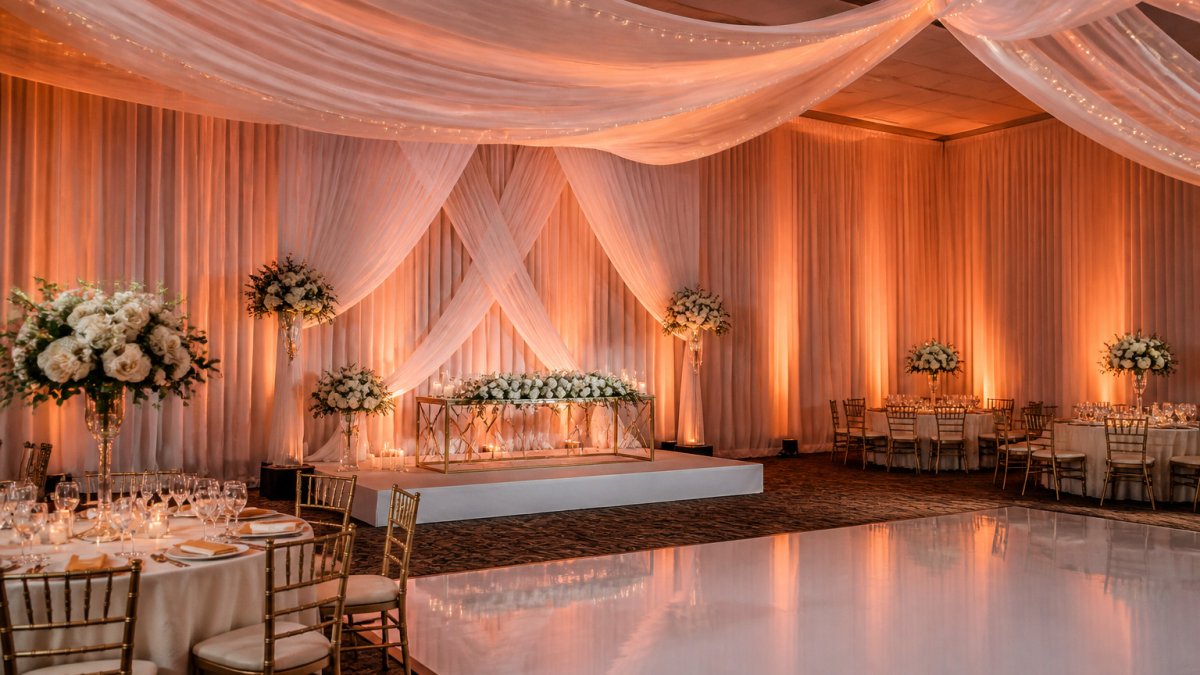
Ballrooms and banquet halls are where draping makes the biggest visual difference, mainly because their ceilings are high and their walls are often plain. Ceiling draping gathers fabric in soft swags and can help conceal overhead elements. Wall draping covers the back wall and stage area, giving a single, cohesive backdrop for the ceremony or head table.
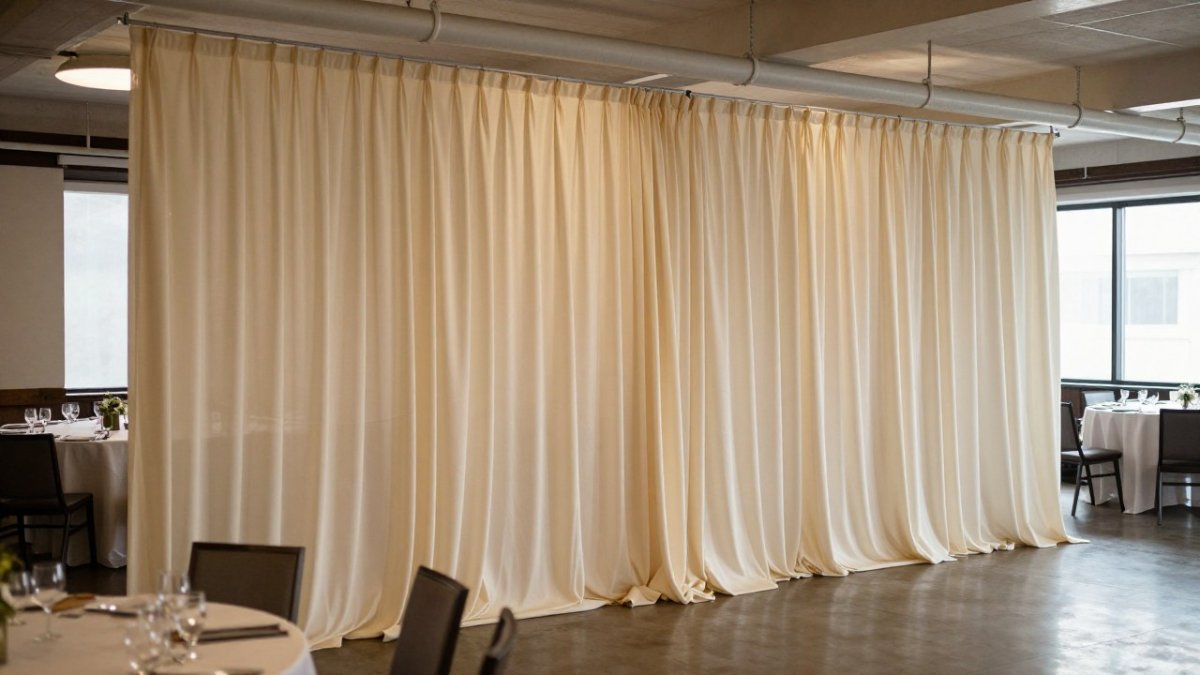
For ballrooms, we usually recommend pairing ceiling draping with uplighting so the fabric is lit from below and glows. A ceiling left dark will look flat in photos regardless of how the walls are dressed. Keep the fabric color consistent across the ceiling and walls unless you are deliberately creating zones.
Outdoor Event Draping and Tent Considerations
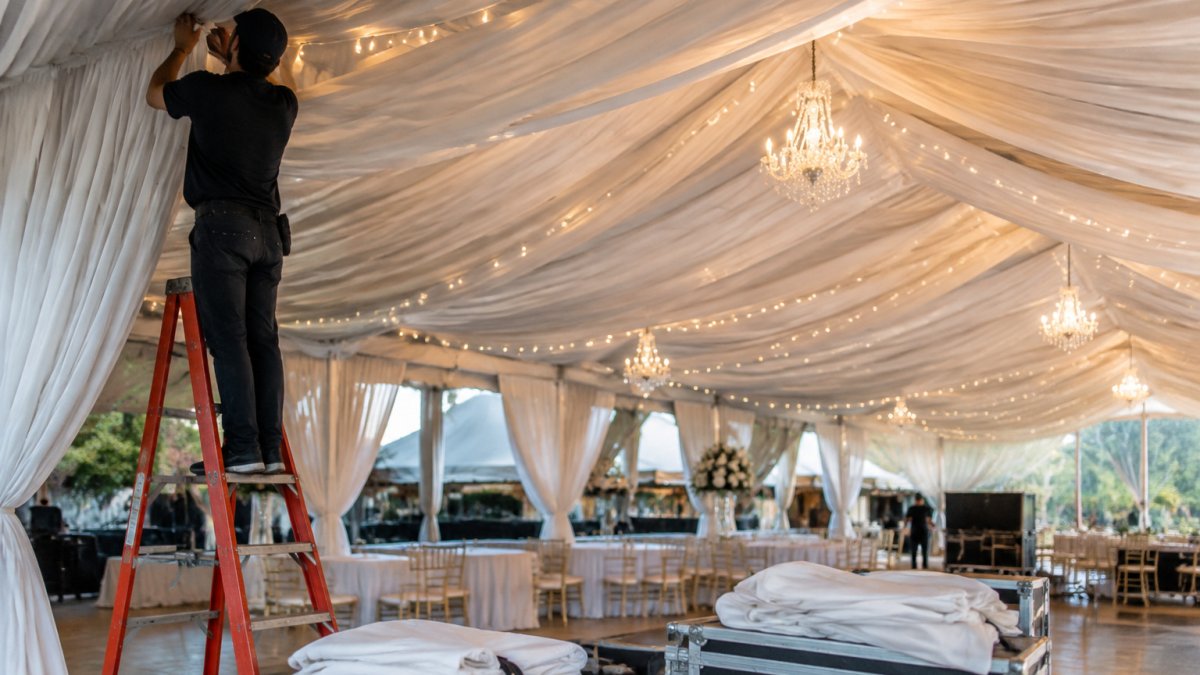
Outdoor draping introduces weather, wind, and ground conditions that indoor events never face. Tent draping, including swags along the tent poles and sidewalls, helps a plain white tent feel like part of the celebration. Fabric must be secured against wind, and heavier fabrics generally hold their shape better outdoors than lightweight sheers.
Plan for power access and daylight changes. A tent that looks elegant at 6 p.m. can look flat at noon, so schedule lighting and final drape adjustments for the hours the event actually runs. Ask your rental team how they will handle wind and whether a backup indoor option exists.
Combining Event Draping and Lighting for Full Impact
Draping and lighting work as a pair. Fabric by itself is a surface; light turns it into an atmosphere. Uplighting in amber or warm white brings out the texture of the drape, while string lights, bistro lights, or market lights add a second layer of depth above guest tables. Monogram lighting can personalize a backdrop without overwhelming the design.
Request a Free Quote →
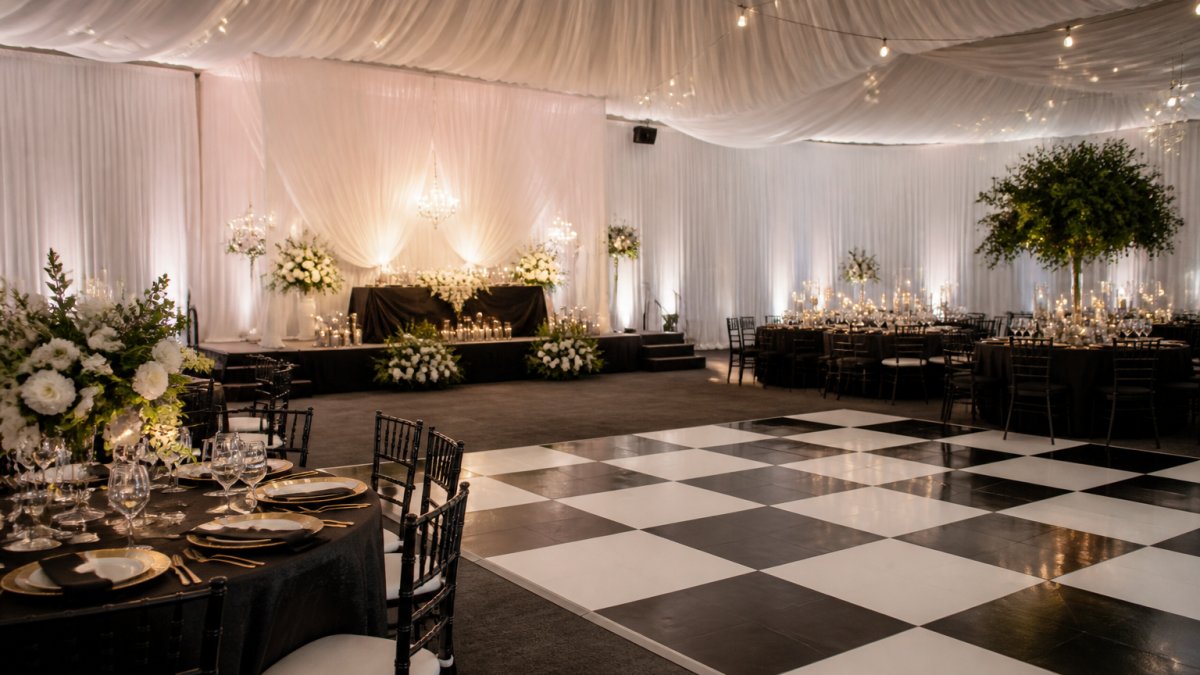
A practical sequence is to select the drape color first, then choose the light temperature that complements it. Warm light flatters ivory and blush; cooler light sharpens black and white checkered or modern palettes. Testing the combination in person, or reviewing the set design before the event, avoids surprises.
Planning Steps, Timeline and Cost Factors
A draping plan that holds up on event day usually follows the same sequence: confirm the venue's rules and your date, sketch the room to scale, choose the drape system and fabric, layer in lighting and any dance floor, stage, or chair rentals, then lock delivery, installation, and strike windows. Each step feeds the next, and skipping the venue-rules step is the most common reason a design has to be redesigned late.
A practical booking timeline looks like this:
- Several months out: reserve the date and confirm the venue's attachment and rigging rules in writing.
- Before the event: finalize the drape layout, fabric, and color, and add lighting, dance floor, and chair selections so the room reads as one design.
- Shortly before the event: confirm final counts, delivery address, load-in entrance, and the strike deadline the venue enforces.
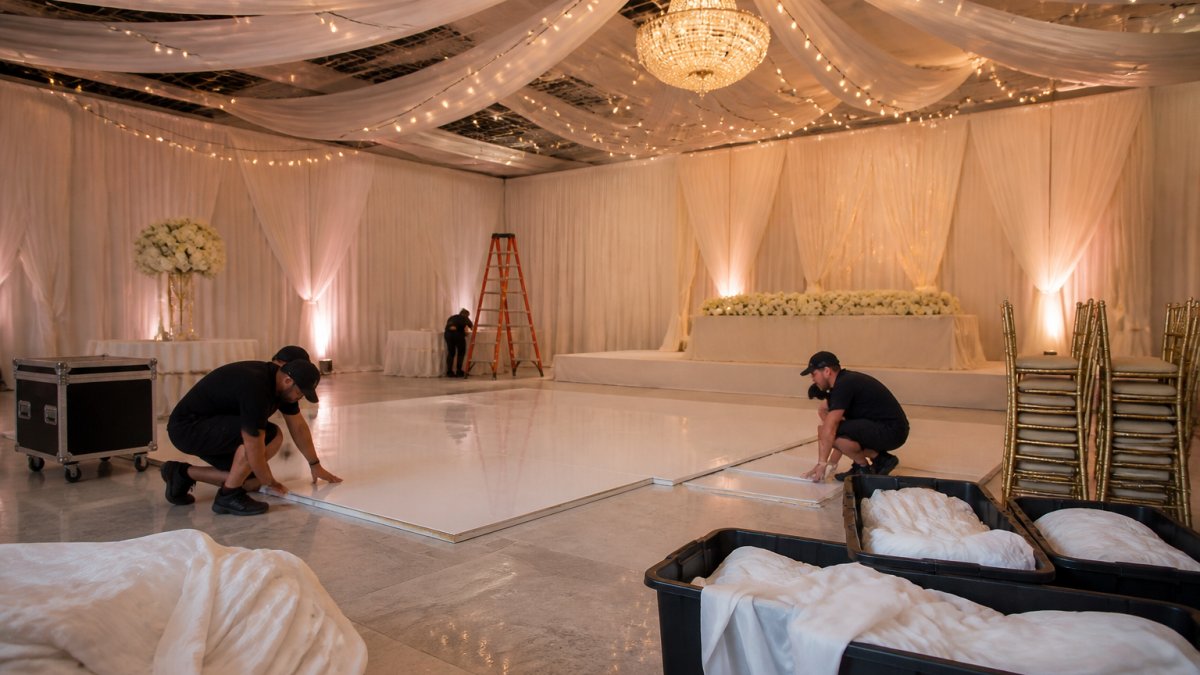
Setup and strike windows drive labor more than most clients expect. Ask early whether the venue allows overnight hold, what loading dock or elevator will be used, and whether vendors must supply paperwork such as a certificate of insurance.
Cost is a function of several variables, not a single rate:
- Dimensions: linear footage and finished height determine fabric yardage, upright count, and base count.
- System: freestanding pipe and drape, ceiling-mounted, or tent draping each carry different hardware and labor.
- Fabric: sheers, opaque solids, and specialty fabrics differ in weight, light blocking, and care.
- Labor: installation and strike time scale with height, access difficulty, and venue window.
- Add-ons: uplighting, string lights, monogram lighting, dance floor, stage, and chairs each add scope.
- Logistics: delivery distance, load-in complexity, and rental duration affect the total.
Because those variables move together, the most accurate number comes from a quote built on your actual room. A quote checklist worth sending to any rental provider includes: event date and venue, room dimensions and ceiling height, photos or a floor plan, the drape runs you want, fabric and color direction, lighting and other rentals under consideration, load-in and strike windows, and whether delivery, installation, and removal are included.
Watch out: a quote that omits installation, strike, or delivery can look lower than a complete one, so compare line items rather than totals, and confirm who is responsible for damage and any venue-mandated insurance.
The article breaks the draping booking timeline into three stages, from reserving the date months out to confirming final logistics shortly before the event.
| Stage | What to do | When |
|---|---|---|
| Reserve the date | Confirm the venue's attachment and rigging rules in writing | Several months out |
| Finalize the design | Settle drape layout, fabric, color, and add lighting, dance floor, and chairs | Before the event |
| Confirm logistics | Verify final counts, delivery address, load-in entrance, and strike deadline | Shortly before the event |
Booking Your Event Draping With XL Entertainment Systems
Booking starts with a conversation about your event date, venue, and the services you need. XL Entertainment Systems offers draping, lighting, dance floors, chair rentals, and stage wraps, and we recommend combining them where they complement each other so the room looks unified. We provide professional installation.
To request a free, personalized quote, contact XL Entertainment Systems with your event date, venue name and location, and the services you have in mind. Sharing a rough room layout or photos helps us recommend the right system from the start.
Frequently Asked Questions
What is event draping used for?
Event draping covers walls, ceilings, stages and entrances with fabric panels to hide utility fixtures, define a space and set a color palette. It is common at weddings, galas, corporate events and trade shows. Draping can also divide a large room into smaller areas for a ceremony, cocktail hour and dinner. Because fabric is hung from a pipe and drape frame or ceiling rig, it changes the look of a venue without permanent construction. Pricing depends on quantity, fabric, dates and delivery, so request a quote for your specific layout.
What is the difference between pipe and drape and ceiling draping?
Pipe and drape uses vertical frames, crossbars and clamps to hang fabric along walls or around a space, creating backdrops, room dividers and enclosed areas. Ceiling draping suspends fabric from the ceiling, often in swags or a canopy, to soften a room and cover overhead elements. Many events combine both: pipe and drape defines the walls and stage, while ceiling treatments unify the room. Your venue's ceiling height, rigging rules and layout determine which approach fits best.
Can event draping be used outdoors?
Yes, outdoor event draping is common for tents, patios and garden receptions. Panels used outdoors need secure anchoring so wind does not pull them loose. Tent draping, swagging and perimeter pipe and drape are typical choices. Ask your vendor how they will secure the system on your site, whether ground conditions allow for stakes or weights, and what contingency plan applies if the weather changes on the event day.
How far in advance should I arrange event draping?
Booking early gives you the best choice of dates, fabric colors and crew availability, particularly for peak wedding season and holiday weekends. Confirm your venue's load-in window, access hours and rigging restrictions before selecting a delivery date, since install and teardown take time. Requesting a quote several months ahead lets you review samples and finalize the layout with enough room to make changes. Last-minute bookings may still be possible, but options narrow quickly.