 how-to
How Do You Manage Logistics for Wedding Venue Setup?
Last Updated: November 1, 2026
Quick Summary
Managing logistics for wedding venue setup means building a written timeline backward from the ceremony, confirming your venue's access windows first, and sequencing vendors by footprint so overhead work happens before floor work and surface decor. Send every vendor a shared load-in schedule at least two weeks out, then confirm again three days before.
- Confirm the rental window, loading dock, and vendor entrance with the venue coordinator before planning any decoration.
- Leave a 30-minute buffer before doors open because something always runs long.
- Stagger vendor load-in times by 30 minutes in the shared schedule to prevent gridlock.
- Schedule a final walkthrough 45 minutes before doors open using a printed checklist.
- Book the same crew for teardown whenever possible, since they know how each piece comes apart.
Table of Contents
- Start With a Realistic Wedding Setup Timeline
- Build a Wedding Vendor Load-In Schedule That Holds Up
- Use a Wedding Setup Checklist to Catch What Timelines Miss
- Coordinate With the Venue Before Anyone Arrives
- Plan Wedding Setup and Breakdown as One Operation
- Solve the Most Common Setup Problems Before They Happen
- Book Your Rental and Installation Team Early
- Frequently Asked Questions
Start With a Realistic Wedding Setup Timeline
Managing logistics for wedding venue setup comes down to one principle: the room must be ready before the first guest walks in, and the clock never stops. The same truth holds at every venue. Couples who build a written timeline early avoid the scramble that ruins the morning of the wedding.
A wedding setup timeline is a written schedule that assigns every task, vendor, and delivery to a specific window of time before the ceremony begins.
Map the Venue's Access Windows First
Before you plan a single decoration, confirm when you can actually get in. Ask the venue coordinator four questions:
- What time does our rental window open?
- Is another event booked the night before?
- Which entrance can vendors use?
- Where do trucks park and unload?
A venue with a morning event before yours may not release the room until mid-afternoon. That single fact reshapes the entire day.
Build the Timeline Backward From the Ceremony
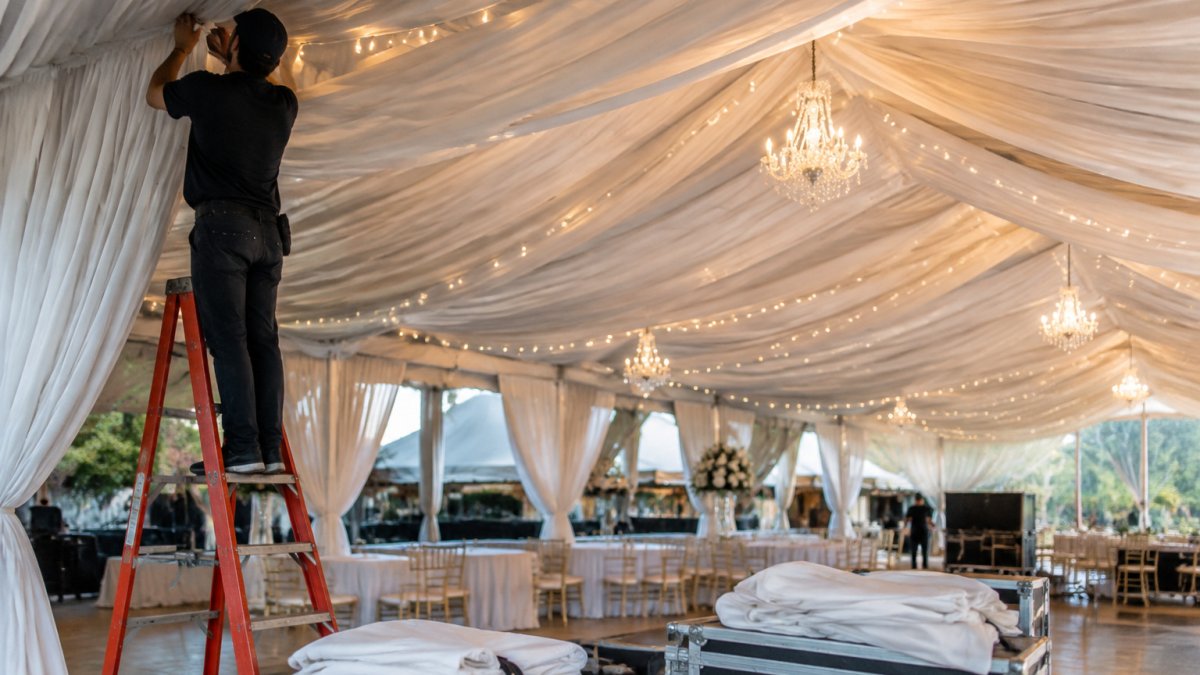
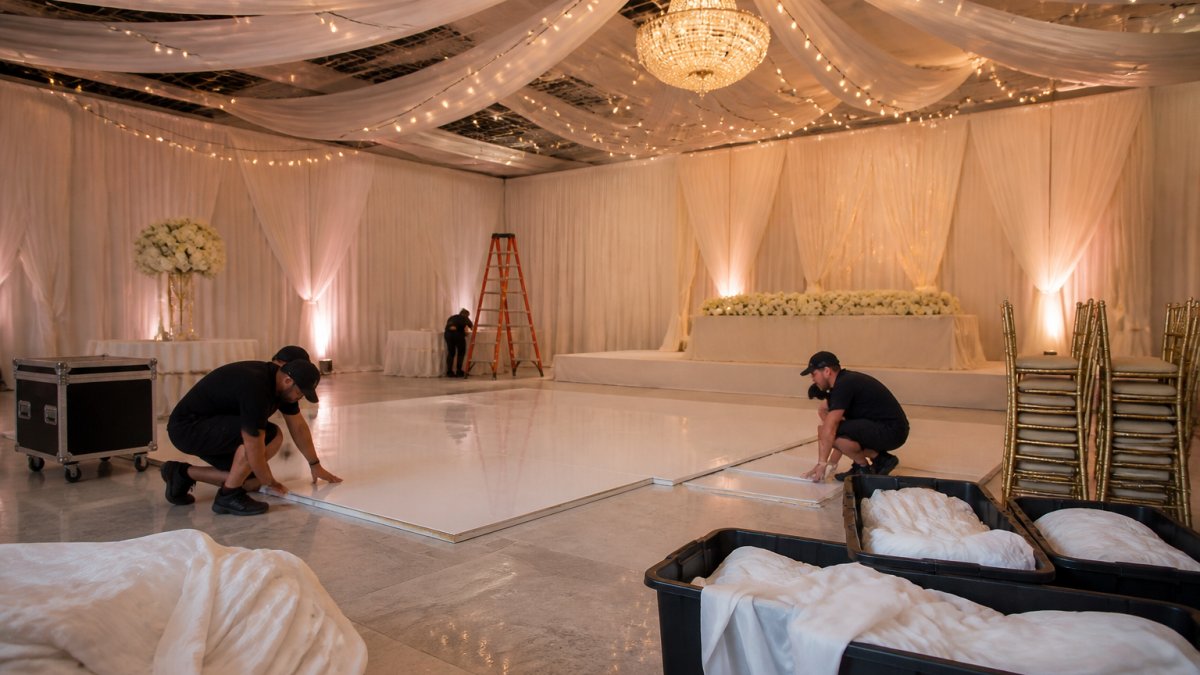
Start at the ceremony time and work backward. Draping and lighting go up first because everything else depends on them. Tables, chairs, and the dance floor follow. Florals and place settings come last.
Leave a 30-minute buffer before doors open. Something always runs long.
Build a Wedding Vendor Load-In Schedule That Holds Up
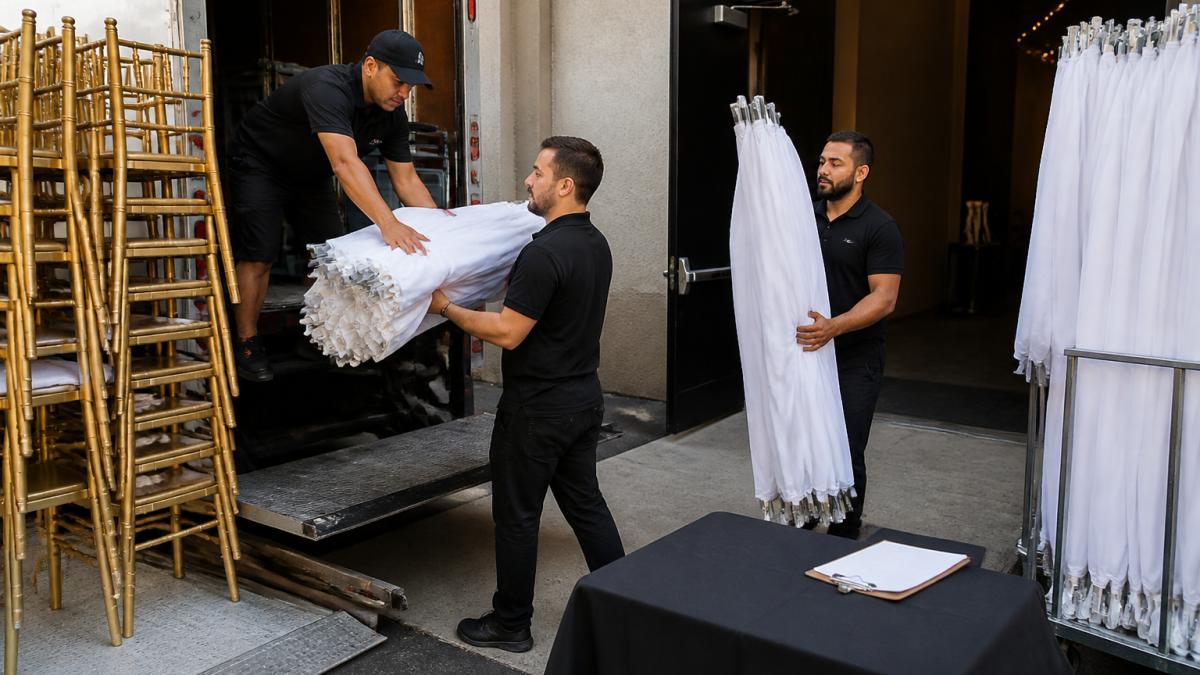
A wedding vendor load-in schedule is the shared document that tells each vendor when to arrive, where to park, and when their setup must be finished. It is the single most useful tool for avoiding gridlock at the service entrance.
Send it to every vendor at least two weeks out, then confirm again three days before. For a deeper walkthrough on sequencing multiple companies without conflicts, see our guide on how to coordinate multiple event vendors.
Sequence Vendors by Footprint, Not by Alphabet
Large items block small ones. Order your vendors by how much space and time they need:
| Vendor | Typical Setup Window | Why This Slot |
|---|---|---|
| Draping and lighting crew | 3-5 hours | Works overhead, needs empty floor |
| Dance floor installation | 1-2 hours | Must sit before chairs and tables |
| Table and chair delivery | 1-2 hours | Fills the floor once floors are down |
| Florist and decor | 1-2 hours | Finishes last, works around furniture |
| Catering and bar | 1-2 hours | Needs clear access to service areas |
The rule is simple: overhead work first, floor work second, surface decor last. Reverse that order and your draping crew will be climbing around centerpieces.
Use a Wedding Setup Checklist to Catch What Timelines Miss
A timeline tells you when. A wedding setup checklist tells you what. The two work together, and neither replaces the other.
Build your checklist by walking the venue room by room. Note every surface, outlet, and doorway. Then assign each item an owner, a deadline, and a location.
Here is the checklist we use as a starting point:
- Confirm venue access time and loading dock location
- Verify power outlets for uplighting and any AV needs
- Mark the ceremony aisle and backdrop position with tape
- Confirm dance floor dimensions and placement
- Count chairs against the final guest list
- Assign a contact person for each vendor
- Pack a setup kit: tape, scissors, zip ties, touch-up paint
- Schedule a final walkthrough 45 minutes before doors open
- Confirm breakdown order and trash removal plan
Print two copies. One goes in your binder, one goes to the venue coordinator.
Coordinate With the Venue Before Anyone Arrives
Venue rules decide what your vendors can and cannot do. Ignoring them causes delays on the day, and sometimes damage fees.
Ask about weight limits on rigging points before anyone plans ceiling draping. Confirm whether open flame is allowed before candles appear on the tables. Check the policy on attaching anything to walls.
The Occupational Safety and Health Administration publishes guidance on temporary structures and safe overhead work that professional installation crews follow. Ask your rental team how they handle overhead rigging, and get the answer in writing.
One more step: send the venue a one-page summary of your vendor schedule. Coordinators appreciate the heads-up, and they will flag conflicts you did not see.
Plan Wedding Setup and Breakdown as One Operation
Most couples plan the setup carefully and treat breakdown as an afterthought. That is a mistake. Wedding setup and breakdown are the same job run in reverse, and the venue usually charges by the hour for both.
Confirm three things before the wedding day:
- What time must the room be completely empty?
- Who removes trash and recycling?
- Does the venue charge overtime if breakdown runs late?
Assign one person to run the breakdown. Give them the same checklist, read backward. Vendors who installed a piece know how it comes apart, so book the same crew for teardown whenever possible. Our guide to professional event setup and teardown covers the full sequence in more detail.
Solve the Most Common Setup Problems Before They Happen
The same handful of problems show up at venue after venue. Plan for them and the day runs smooth.
Problem: Vendors arrive at the same time and block each other. Fix: Stagger load-in times by 30 minutes in the shared schedule.
Problem: The room is smaller than the floor plan suggested. Fix: Measure the space yourself and confirm dimensions with the venue coordinator before ordering rentals.
Problem: Setup runs long because nobody owns the final decisions. Fix: Name one point person with authority to make calls on the spot.
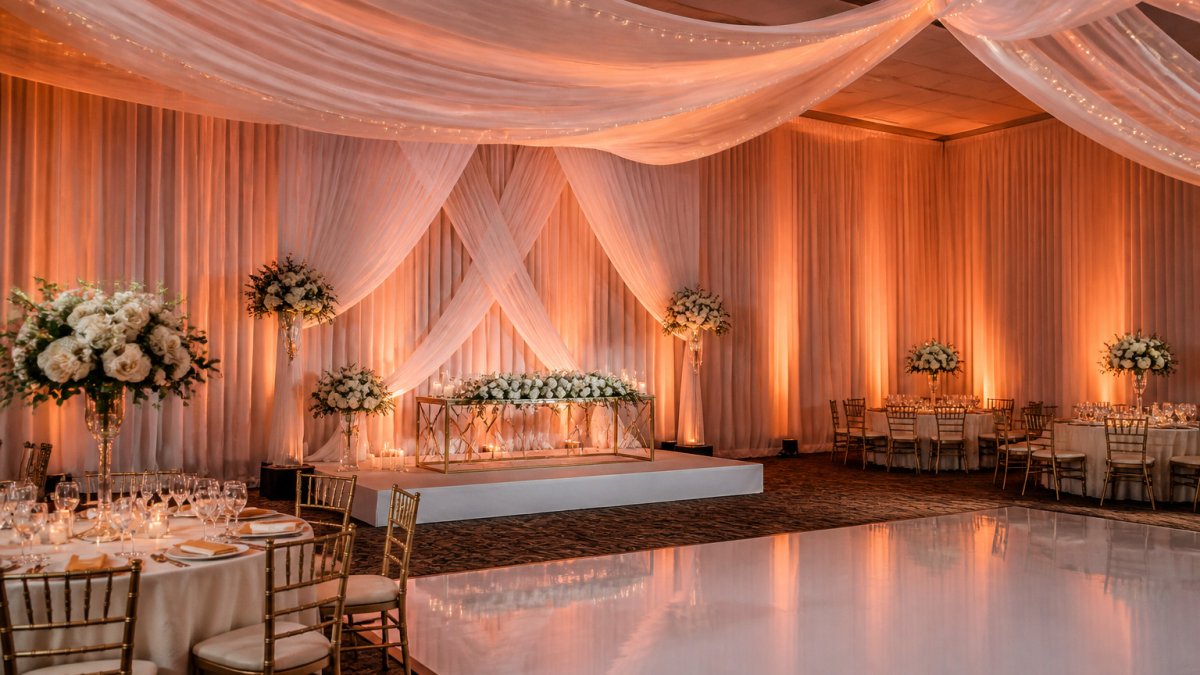
Problem: The lighting feels cold in photos. Fix: Test uplighting colors in the actual room before the wedding. Warm amber tones flatter most ballrooms and photograph well.
Watch out: never let a vendor start overhead rigging without written approval from the venue. If a rigging point fails or a wall is damaged, the couple often absorbs the repair cost.
Book Your Rental and Installation Team Early
The best logistics plan still depends on a crew that shows up on time and knows the venue. Popular dates book out months ahead, and the companies with the strongest reputations fill first.
When you vet a rental and installation team, ask for:
- Proof of insurance
- References from venues similar to yours
- A written load-in and load-out plan
- Clear answers on who handles rigging and teardown
Our guide on how to find reliable event vendors walks through the questions that separate a professional operation from a crew that cancels at the last minute.
XL Entertainment Systems is family-owned and has installed draping, lighting, dance floors, and chairs across Southern California since 1992. Our team handles the setup and teardown for draping, lighting, dance floors, and chairs. You can explore our full range of services or request a free custom quote with your date, venue, and guest count.
Frequently Asked Questions
How early should vendors arrive to set up a wedding?
It depends on what each vendor installs. Draping, lighting, and dance floors need the longest window because they involve rigging, cabling, and leveling, so book those crews for the morning of the event or the day before when the venue allows. Florists and cake deliveries usually land two to four hours before guests arrive. Build your wedding vendor load-in schedule around the venue's access window and confirm every arrival time in writing at least two weeks out.
Who is responsible for wedding setup and teardown?
Responsibility splits by contract. Rental companies typically install and remove their own draping, lighting, dance floors, and staging, while the venue handles tables, chairs it owns, and cleaning. Couples and planners usually manage personal decor like place cards and favors. Read each contract for the exact start and end of responsibility, then assign one point person who stays on site through wedding setup and breakdown so nothing is left unclaimed.
How much time should be allowed for wedding venue breakdown?
Most venues cap breakdown at two to four hours after the event ends, and some require everything out by midnight. Draping, lighting, and dance floors come down faster than they go up, but crews still need loading access and lighting to work safely. Confirm the venue's hard stop, ask whether overnight removal is possible, and schedule your rental crew's pickup window before the wedding day so no one is rushing at 11 p.m.
How do you plan wedding venue setup around venue restrictions?
Get the venue's rules in writing before you finalize any schedule. Ask about load-in doors, elevator sizes, rigging limits, floor protection requirements, vendor parking, and the earliest and latest access times. Share those details with every vendor so no one shows up with equipment that cannot fit or be hung. A wedding setup checklist built around the venue's restrictions prevents the delays that come from discovering a rule on the day of.
The difference between a calm wedding morning and a chaotic one usually comes down to planning, not luck. If you want a team that has done this hundreds of times, XL Entertainment Systems brings professional installation, quality equipment, and personalized service to every venue we work in. Share your event date, venue, and location with us, and we will build a setup plan around your space. Get started with XL Entertainment Systems and walk into your ceremony knowing the room is ready.