 how-to
How to Coordinate Multiple Event Vendors: A Step-by-Step Guide
Table of Contents
- Step 1: Build Your Event Vendor Coordination Checklist Before You Book Anyone
- Step 2: Define Event Vendor Responsibilities in Writing
- Step 3: Draft an Event Vendor Timeline Template Everyone Can Follow
- Step 4: Create an Event Vendor Communication Plan
- Step 5: Run the Final Walkthrough and Vendor Sync
- Step 6: Manage Setup and Teardown Without Overlap Chaos
- Step 7: Troubleshoot Common Coordination Mistakes Before They Happen
- Frequently Asked Questions
Last Updated: October 19, 2026
Step 1: Build Your Event Vendor Coordination Checklist Before You Book Anyone
Learning how to coordinate multiple event vendors starts before a single contract is signed. The strongest coordination tool is a master checklist that captures every vendor's contact info, arrival time, power needs, and setup requirements in one place.
At XL Entertainment Systems, we've spent more than 30 years installing draping, lighting, dance floors, and chairs alongside caterers, florists, photographers, and bands. The events that run smoothly almost always share one trait: someone built the checklist early.
Event vendor coordination is the practice of aligning every supplier's schedule, space, and responsibilities around one shared plan. Skip it, and you spend the event solving problems instead of enjoying it.
What Belongs on the Master Checklist
Every entry should answer four questions: who, when, where, and what do they need.
- Company name, contact person, and mobile number
- Arrival time and load-in window
- Setup location and square footage required
- Power draw and outlet needs
- Teardown window and pickup time
- Certificate of insurance on file
- Final payment terms and balance due date
Confirming Load-In, Load-Out, and Power Needs
Venues rarely offer unlimited access. Ask each vendor for their exact load-in window and share it with the venue manager in writing. Confirm who supplies power for lighting, sound, and catering equipment, and check whether the venue requires a licensed electrician for certain setups.
Step 2: Define Event Vendor Responsibilities in Writing
Written scopes prevent the finger-pointing that ruins event days. A clear scope states what each vendor delivers, what they don't, and who handles the gaps between them.
Separating Scope From Assumptions
Most coordination disputes trace back to an assumption nobody wrote down. Who moves chairs after the ceremony? Who tapes down cables? Who removes rental items at midnight?
Put those answers in the contract or an attached scope sheet. Then send a one-page summary to every vendor so all parties see the full picture, not just their own slice.
The U.S. Small Business Administration's guide to writing business contracts offers a useful framework for documenting deliverables and terms clearly.
Step 3: Draft an Event Vendor Timeline Template Everyone Can Follow
A shared timeline turns a dozen separate schedules into one plan. Build it once, distribute it to every vendor, and update it as details change.
Working Backward From the Ceremony Start
Start with the moment guests arrive and work backward. A typical sequence looks like this:
| Time Before Ceremony | Task | Who Owns It |
|---|---|---|
| 6 hours | Rentals delivered, draping and lighting installed | Rental and decor vendor |
| 4 hours | Florals and centerpieces placed | Florist |
| 3 hours | Catering load-in begins | Caterer |
| 2 hours | Band or DJ soundcheck | Entertainment |
| 90 minutes | Photographer arrives for detail shots | Photography |
| 30 minutes | Final walkthrough and vendor clear-out | Planner or point person |
Share the template as a shared document, not a PDF. Live files stay current when times shift.
Step 4: Create an Event Vendor Communication Plan
A communication plan names one point of contact, one channel, and one schedule for updates. It removes the group-text chaos that swallows event weeks.
One Point of Contact, One Channel
Designate a single coordinator, whether that's a planner, a venue manager, or a trusted family member. Every vendor routes questions through that person. Choose one channel, such as email for logistics and phone for day-of issues, and tell everyone which is which.
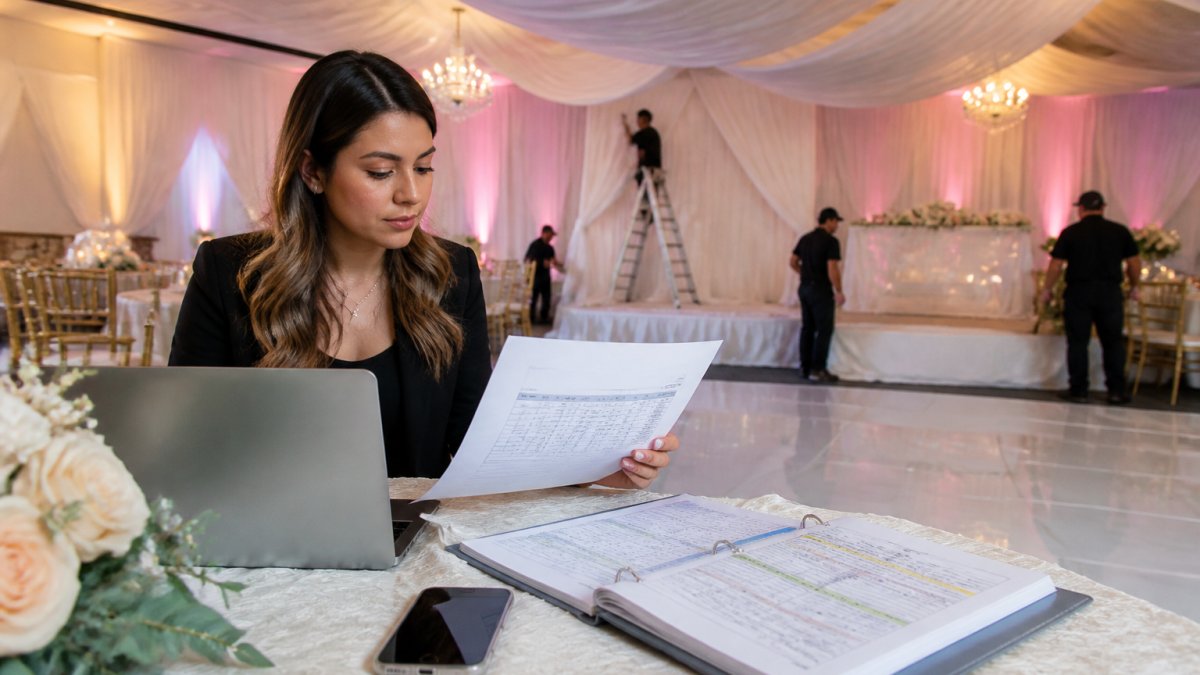
Set two check-in points: a confirmation call two weeks out and a final logistics email three days before. Both should repeat arrival times, contacts, and any changes.
Step 5: Run the Final Walkthrough and Vendor Sync
The final walkthrough is where plans meet the actual room. Schedule it at the venue with the key vendors present, ideally a month out and again the week of the event.
Walk the space in setup order. Mark load-in paths, outlet locations, and where each item lands. For rentals like draping, lighting, and dance floors, confirm ceiling height, rigging points, and floor surface in person. Our team verifies these details during site visits because a ballroom's ceiling structure decides what's possible.
Close the walkthrough with a short vendor sync call. Recap who arrives when, who reports to whom, and what changed since the last version of the timeline.
Step 6: Manage Setup and Teardown Without Overlap Chaos
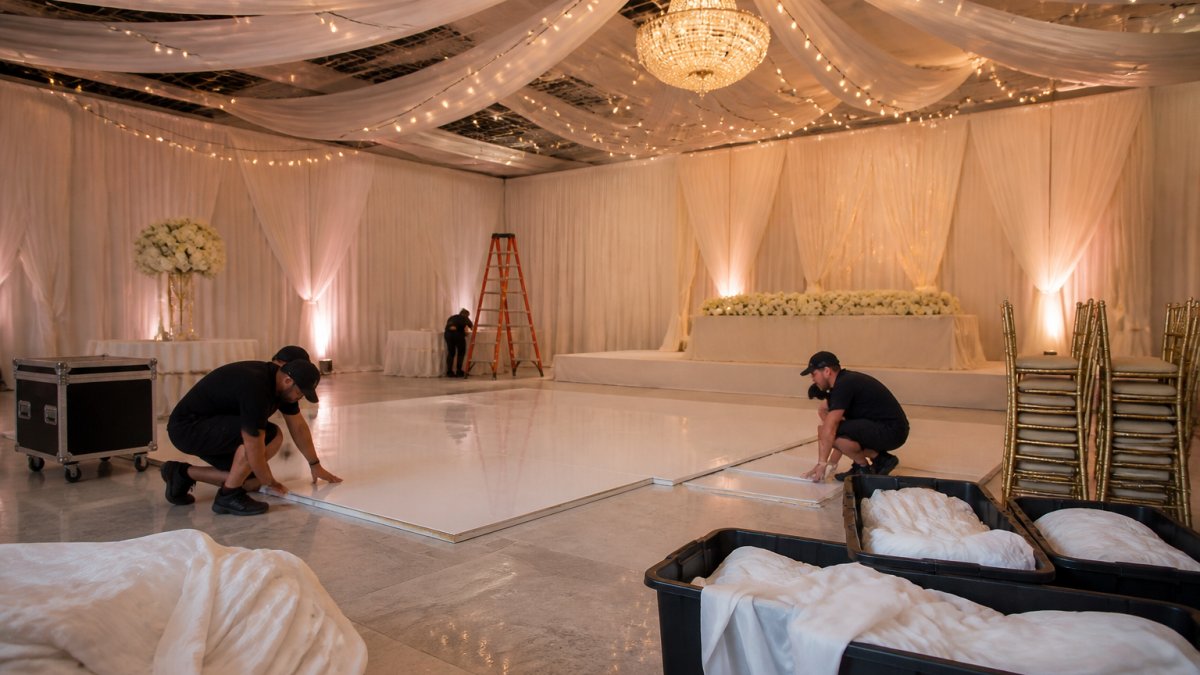
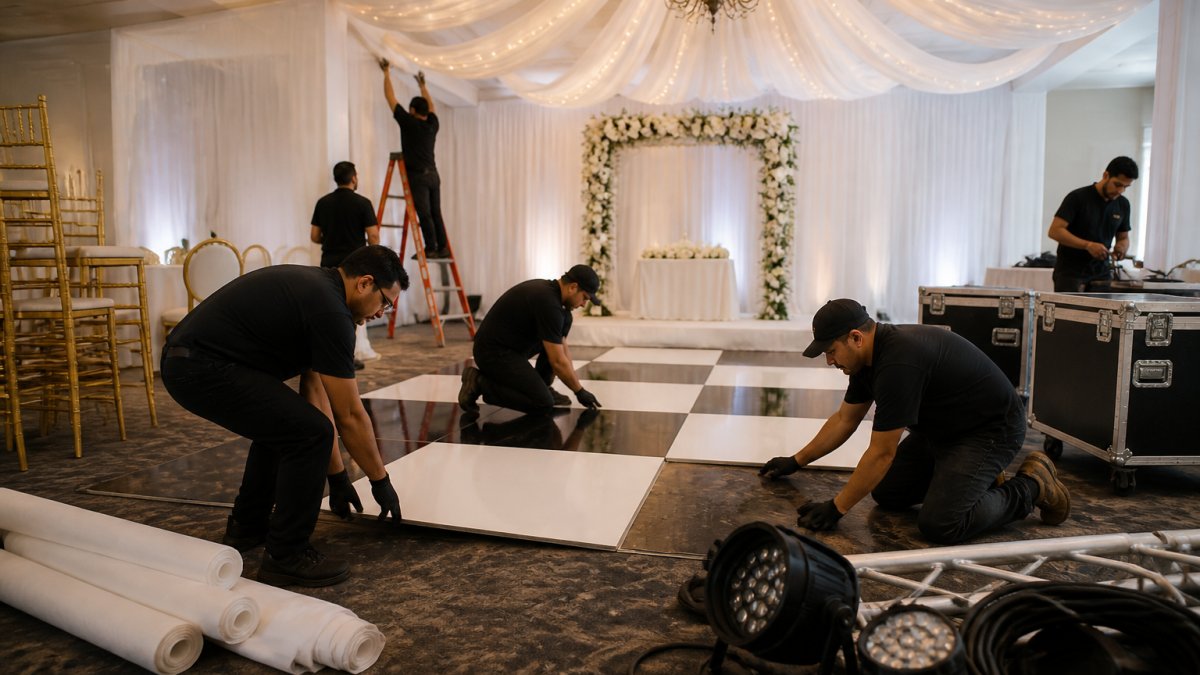
Setup chaos usually comes from overlapping arrival windows. Stagger load-in times so each vendor has room to work, and publish the order in the timeline.
Teardown needs the same attention. Rentals, decor, and lighting often leave last because they surround everything else. Confirm who stays to strike the room and who can leave early.
Step 7: Troubleshoot Common Coordination Mistakes Before They Happen
Most vendor problems are predictable. Here's how to catch them early:
- No single decision-maker. Fix it by naming one coordinator in writing.
- Verbal-only agreements. Fix it by confirming every change over email.
- Missing insurance certificates. Fix it by collecting them at booking, not event week.
- Unrealistic load-in windows. Fix it by asking the venue for its rules before you book vendors.
- No rain plan for outdoor setups. Fix it by asking each vendor for a weather backup in writing.
The Occupational Safety and Health Administration's event safety guidance is worth reviewing for temporary structures and crowd safety basics.
Coordinating multiple event vendors comes down to one shared plan, one point of contact, and written scopes everyone can see. That's the approach we bring to every installation at XL Entertainment Systems. Since 1992, our family-owned team has handled draping, uplighting, dance floors, and chair rentals across Southern California with professional setup and teardown built into the plan.
Tell us your event date, venue, and the services you need, and we'll send a free custom quote. Combining draping, lighting, and a dance floor in one rental package also means one fewer vendor for you to coordinate.
Frequently Asked Questions
How do you coordinate multiple vendors for an event?
Start by naming one coordinator who holds the master schedule and communicates with every vendor. Build an event vendor coordination checklist that lists each company's arrival time, contact name, power needs, and setup location. Share a single timeline with all vendors at least two weeks before the event, then confirm it again 48 hours out. When every vendor works from the same document and knows who to call, overlap and confusion drop sharply.
How far in advance should you contact event vendors?
For weddings and large galas, book core vendors six to twelve months ahead, especially draping, lighting, and dance floor companies that install on site. Smaller events can often be scheduled three to six months out. Once contracts are signed, send your event vendor timeline template so each company knows its load-in window. Confirm details two weeks before and again two days before the event to catch any schedule changes.
Who is responsible for coordinating vendors on event day?
One person should own event day coordination, usually the planner or a designated site manager. That person holds the final timeline, greets each vendor, and resolves conflicts. If you are handling it yourself, assign a trusted friend or family member to field vendor questions so you are not answering calls during the ceremony. Clear event vendor responsibilities prevent two people from giving the same vendor conflicting instructions.
How do you prevent scheduling conflicts between event vendors?
Map every arrival, setup, and teardown window on one shared document, then check for overlaps that require the same space or power source. Give vendors staggered load-in times, such as draping first, then lighting, then dance floor installation. Include a buffer of 30 to 60 minutes between major handoffs. An event vendor communication plan that names one point of contact keeps last-minute changes from turning into conflicts.