 how-to
How to Find Reliable Event Vendors for Your Big Day
Last Updated: October 28, 2026
Quick Summary
To find reliable event vendors, define your event type and service categories first, then cross-check names across directories, marketplaces, venue referrals, and tagged photos from real events. Compare every vendor on the same criteria, normalize each quote into identical cost categories, and verify insurance, licensing, references, and a signed contract before paying any deposit.
- Rank service categories by risk, since rentals and catering carry the heaviest logistics load.
- A marketplace listing is a lead source, not a reference check, so cross-check every name.
- Score each vendor from 1 to 5 on every comparison row and total the scores.
- Request two or three references from events within the past year and call them.
- Never send a deposit before a signed contract names the same legal business you are paying.
Table of Contents
- Start Your Search by Event Type and Service Category
- Where to Look: Directories, Marketplaces, and Local Referrals
- How to Compare Vendor Profiles, Portfolios, and Reviews
- The Event Vendor Checklist for Verifying Reliability
- Questions to Ask Event Vendors Before You Book
- The Event Vendor Contract Checklist: What to Confirm in Writing
- Build Your Event Vendor Booking Timeline
- Request a Free Quote from a Trusted Local Vendor
- Frequently Asked Questions
Start Your Search by Event Type and Service Category
Finding reliable event vendors starts with narrowing the field before you contact anyone.
Define your event type first. Then list every service category it requires.
Reliability is easier to judge within a category: a florist and a lighting company are vetted differently, one with perishable deadlines and the other with installation and power requirements.
At XL Entertainment Systems, we have worked Southern California events since 1992.
Your starting list:
- Venue
- Caterer
- Photographer and videographer
- Entertainment or DJ
- Florist and decorator
- Rentals: draping, lighting, dance floor, chairs, stage
- Officiant or speaker
- Transportation
Rank each category by risk. Rentals and catering carry the heaviest logistics load. If either fails, guests notice immediately.
Where to Look: Directories, Marketplaces, and Local Referrals
Directories, marketplaces, and personal referrals are three channels to consider when searching for event vendors. Each has a different strength, and you can combine all three when building a shortlist.
Directories and marketplaces can let you search by location and service category, filter by availability, browse profiles, and request quotes in one place.
Referrals work the other way: a trusted friend or venue coordinator may recommend someone they have worked with. Your pool may be small.
A marketplace listing is a lead source, not a reference check.
How to use each channel:
- Directories and marketplaces: build a wide list, then filter hard
- Local referrals: ask your venue for its preferred vendor list
- Peer groups: wedding forums and local community boards surface names fast
- Social media: check tagged photos from real events, not just the vendor's own posts
Cross-check every name.
How to Compare Vendor Profiles, Portfolios, and Reviews
Comparing vendors fairly means scoring the same criteria, in the same order, using the same evidence.
Start with the vendor profile: confirm the legal business name, service category, service area, and years in operation.
Then move to the portfolio. Ask for past work from events like yours: same venue type, guest count, and style.
Reviews need reading, not skimming. Look for patterns across reviews rather than relying on one write-up.
Normalize scope before you compare anything
The biggest comparison error is scoring vendors who quoted different things. One quote includes delivery, installation, teardown, and taxes; another lists a base rate and adds each as a line item. Rewrite every quote into the same categories before you score anyone:
- Base rental or service cost for the items you specified
- Delivery and pickup charges, if any
- Installation and teardown labor, if any
- Taxes and any applicable fees
- Travel or mileage beyond a stated service radius
- Overtime or after-hours charges for late load-out
- Add-ons you were quoted separately (extra chairs, additional lighting fixtures, decals, draping panels)
- Deposit and payment schedule
Compare totals, not headlines.
Test communication before you commit
Send each vendor the same short question, for example, whether a specific item is included, and note reply time and whether the answer is specific or evasive.
Confirm availability, not just interest
Ask each vendor to confirm in writing whether your specific date is available and, if a hold is offered, how long it lasts.
A fair comparison framework:
| What to compare | What to look for | Why it matters |
|---|---|---|
| Experience | Years in business, similar events | Fewer surprises on event day |
| Portfolio | Real photos from comparable venues | Proof of past work, not stock images |
| Reviews | Patterns across many testimonials | Reliability shows up as a theme |
| Communication | Reply speed and specificity before booking | Predicts responsiveness later |
| Scope | Written list of what is included | Prevents surprise gaps |
| Total cost | Normalized quote including delivery, labor, taxes | Stops headline-price mistakes |
| Availability | Written date hold and hold duration | Prevents double-booking |
| References | Past clients you can contact | Verifies claims directly |
Score each vendor from 1 to 5 on every row. Total the scores. Use the results to help build your shortlist.
For a deeper walkthrough of comparing profiles and portfolios before you decide, see our guide on event planning vendors.
The Event Vendor Checklist for Verifying Reliability
An event vendor checklist can help you organize information to review before you sign.
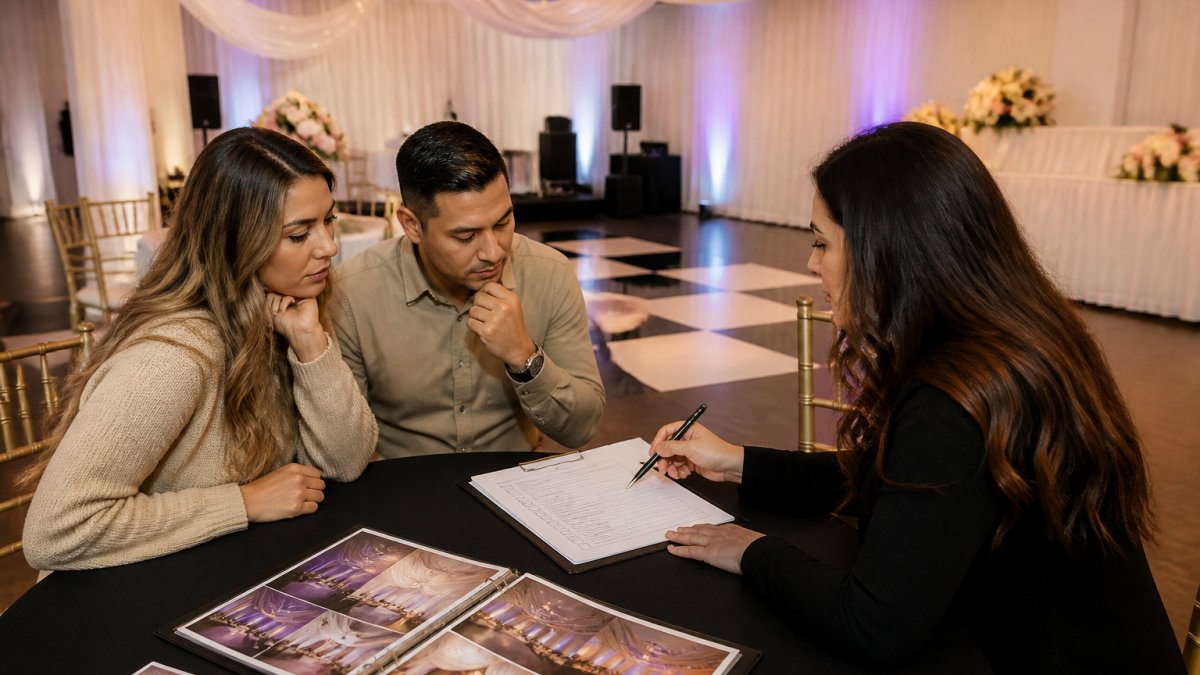
Work through this list for every vendor on your shortlist:
- Confirm the legal business name and that it is currently active
- Ask for proof of insurance and confirm the coverage dates include your event
- Request two or three references from events within the past year
- Call those references and ask what went wrong, not just what went right
- Confirm who actually installs and who handles teardown
- Ask what happens if the assigned crew is sick or delayed
- Get the delivery window and setup window in writing
- Confirm the backup plan for equipment failure
- Check whether the vendor has worked your venue before
Watch out: paying a deposit to a personal payment account instead of the business is one of the clearest fraud signals in event booking.
Ask references the same question: "Would you book them again, and why?"
Questions to Ask Event Vendors Before You Book
Ask these questions before booking, and write down the answers so you can compare them later.
About scope and setup:
- What exactly is included, and what costs extra?
- Who handles delivery, installation, and teardown, your own crew or a subcontractor?
- How long does setup take, and when does your crew arrive?
- What are your load-in and load-out restrictions, and have you worked this venue before?
About reliability and contingency:
- What is your backup plan if equipment fails on the day?
- What happens if the assigned crew is sick or delayed?
- Can I speak with two or three recent clients?
- Do you carry general liability insurance, and can you provide a certificate naming my venue as additionally insured if required?
- Are you licensed and registered to operate under your legal business name?
About money and terms:
- What is the payment schedule, and what is the deposit?
- What is your cancellation and reschedule policy for both sides?
- Does your contract include a force majeure clause covering weather, venue closure, and emergencies?
- Are there travel, mileage, overtime, or after-hours fees?
- What is the change-order process if I add items after signing?
Verify insurance and licensing, don't just ask
Asking whether a vendor is insured is easy; verifying it protects you. Request a certificate of insurance and check that coverage dates include your event date and the policy is current. If your venue requires being named as additionally insured, confirm the vendor can produce that document before you book. For licensing, confirm the legal business name on the quote matches the license and contract, a mismatch is a reason to pause.
Know the payment-fraud red flags
Consider these payment-related questions when reviewing a vendor:
- Payment requested to a personal account, peer-to-peer app, or wire rather than the business
- Pressure to pay in full upfront with no written contract
- A quote that arrives from a different email domain than the vendor's website
- No physical business address or a address that does not match public records
- Reluctance to provide references or a certificate of insurance
Keep the signed contract alongside any payment records.
Plan the contingency before you need it
Ask each vendor what happens if something goes wrong on event day, and get the answer in writing.
Pricing depends on quantity, dates, delivery, and installation, so ask for a written quote rather than a verbal estimate. Our event lighting and decor pricing guide explains what drives cost so your budget questions land well.
Listen for vague answers. "We'll figure it out on the day" is not a plan.
The Event Vendor Contract Checklist: What to Confirm in Writing
An event vendor contract checklist protects you when memory and goodwill run out. If it is not in the contract, it is not agreed.
Confirm these in writing:
- Full legal business name and contact details
- Event date, venue address, and setup and teardown times
- Itemized scope: every item, quantity, and color or style choice
- Payment schedule and the deposit amount
- Cancellation and reschedule terms for both sides
- Insurance and liability responsibilities
- Force majeure clause covering weather, venue closure, and emergencies
- Late or no-show remedies
- Change order process for additions after signing
Read the cancellation clause twice. It is the clause most couples regret not reading. Also confirm the contract states who owns and stores your items before the event, and who is responsible for damage.
Keep every email and quote. If a detail was promised in writing, attach it to the signed contract.
Build Your Event Vendor Booking Timeline
A booking timeline can help you plan when to contact event vendors.
A practical sequence:
- Set your date, venue, and guest count
- Book the venue and confirm its vendor rules
- Secure the highest-risk categories first: catering, rentals, and entertainment
- Book the photographer and videographer
- Confirm florals and decor
- Lock in lighting, draping, and dance floor details
- Schedule final walkthroughs and confirm load-in times
- Send final counts and confirm arrival windows two weeks out
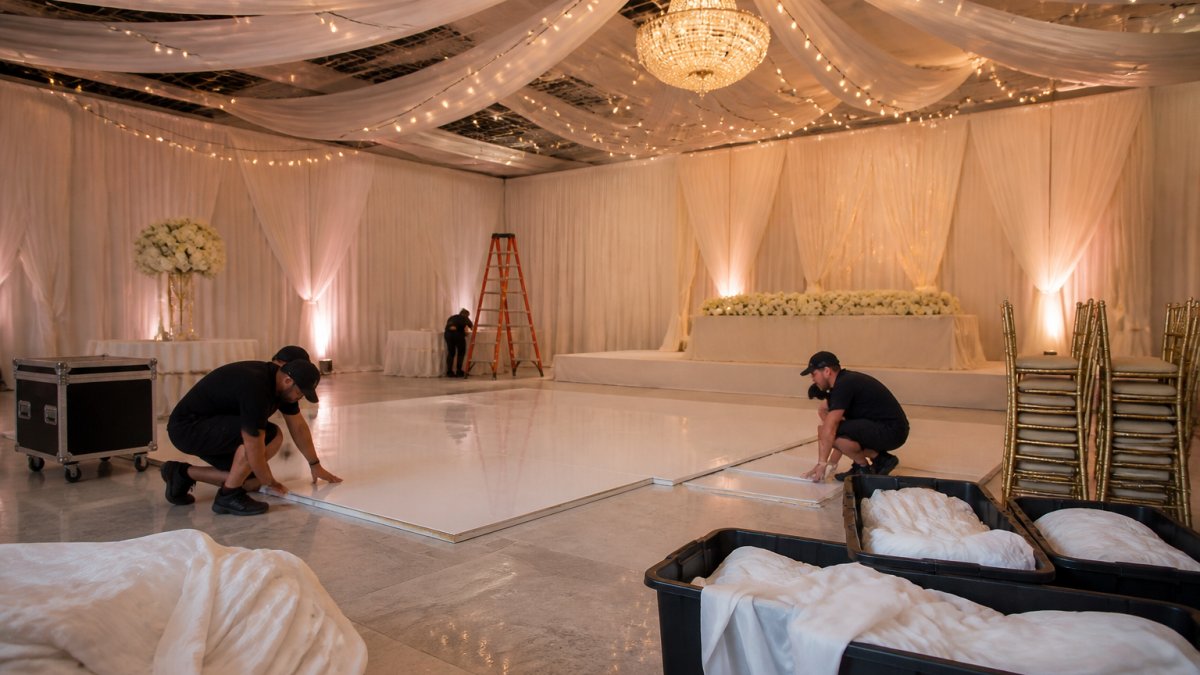
Coordinate vendors who share the same room. Lighting, draping, and the dance floor all touch the same space, and setup order matters. Our step-by-step guide on coordinating multiple event vendors walks through that sequencing in detail.
Watch out: booking a vendor without confirming the venue's load-in rules can force a rushed setup. Ask the venue first, then book.
Request a Free Quote from a Trusted Local Vendor
When you are ready to book, review your references and contracts.
At XL Entertainment Systems, we are a family-owned company that has served Southern California events since 1992. We handle draping, uplighting, dance floors, chair rentals, staging, and cold sparkler effects with professional installation. Explore our services to see the full range, and contact our team to request a free custom quote.
Share your event date, venue, location, and the services you need. Request a free custom quote.
Frequently Asked Questions
How do you choose reliable event vendors?
Start by defining your event type and service category, then search local directories and ask for referrals. Compare vendor profiles and review their portfolios and customer testimonials. Use an event vendor checklist to confirm licensing, insurance, and backup plans. Always get a written contract that details deliverables, payment terms, and cancellation policies before paying a deposit.
What should you ask an event vendor before booking?
Ask about their experience with events like yours, how they handle setup and teardown, and whether they carry liability insurance. Request references from past clients and ask to see examples of similar work. Confirm availability for your date, what happens if they need to cancel, and whether travel fees apply. Ask for a quote so you can review the proposed scope.
What should an event vendor contract include?
An event vendor contract can include the event date, venue, and setup times; a list of services and equipment; payment terms; cancellation terms; and what happens if the vendor cancels or arrives late. Review everything before signing and keep a copy for your records.
When should you book vendors for an event?
Create an event vendor booking timeline and confirm each contract in writing.
Your event deserves vendors who show up, deliver what they promised, and handle the details without drama. XL Entertainment Systems brings more than three decades of local experience, in-house installation, and a personalized approach to every celebration. Get started with XL Entertainment Systems and build an event your guests will remember.