 blog
Eventconcept Alternative for Corporate Events: 2026 Guide
Table of Contents
- What Corporate Teams Actually Need From an Eventconcept Alternative
- The Corporate Event Design Checklist: What to Lock Down Before You Compare Vendors
- Questions to Ask an Event Rental Company Before You Sign
- Corporate Gala Decor Ideas That Work in Southern California Venues
- How an Eventconcept Alternative Handles Pricing, Migration, and Setup
- What to Ignore When Comparing Corporate Event Vendors
- Conclusion: Choosing the Right Partner for Your Next Corporate Event
- Frequently Asked Questions
Last Updated: October 12, 2026
What Corporate Teams Actually Need From an Eventconcept Alternative
An Eventconcept alternative for corporate events is a design and rental partner that transforms your venue physically, not another dashboard for registration and ticketing.
Software handles logistics: the agenda, the attendee list, the check-in scan. It cannot drape a ballroom, hang bistro lights across a warehouse ceiling, or make a cold industrial space feel branded. Corporate event design lives in that gap.
At Wedding & Event Rentals, we have spent more than 30 years transforming Southern California venues.
Where Software Platforms End and Venue Transformation Begins
Event technology solves the invisible half of a corporate event: registration, attendee management, session scheduling, and analytics. For multi-day conferences with sponsor and speaker management, that tooling is essential.
Then the doors open. Attendees judge the room in seconds.
A cloud-based platform can send a hundred confirmation emails.
Treat your software and your design partner as two separate decisions, the shortlists have nothing to do with each other.
The Corporate Event Design Checklist: What to Lock Down Before You Compare Vendors
A corporate event design checklist keeps vendor conversations honest. Build it before you request a quote, because it defines what "good" means for your event.
Work through these before you start comparing:
- Venue address, load-in window, and any union or building rules
- Room dimensions, ceiling height, and permanent fixtures you cannot move
- Setup and teardown times the venue will allow
Scale, Venue, and Budget: The Three Variables That Decide Everything
Three variables drive every design decision: guest count, the room itself, and your budget.
A 100-person board dinner in a restaurant private room needs almost nothing. A 600-person awards gala in a hotel ballroom needs ceiling draping, uplighting, a stage, and a dance floor. Same budget per head, completely different scope.
Questions to Ask an Event Rental Company Before You Sign
The questions to ask an event rental company should surface four things: what they own, who installs it, how they handle corporate requirements, and what happens when something goes wrong. Get answers in writing and treat them as a shortlist filter, not a formality.
Ownership and Installation
- Do you own your inventory or subcontract it? Subcontracted draping and lighting means less control over quality and timing.
- Who installs and strikes the design? A crew that installs its own work knows how it comes down. Ask whether the same team handles both.
- Can you show examples from venues like ours? Ask for spaces with similar ceilings, walls, and lighting conditions. A draped tent tells you nothing about a warehouse.
Corporate-Specific Requirements
These are the questions most rental vendors are not asked, and the ones that matter most.
- Can you provide a certificate of insurance and complete vendor onboarding? Most corporate venues and procurement departments require a COI, W-9, and sometimes a signed vendor agreement before load-in. Ask how quickly they can turn those around.
- How do you handle brand compliance and approvals? If your backdrop carries a logo or brand color, ask how color matching is confirmed and who signs off before fabrication. A vendor who has done corporate work will have a process; one who has not will improvise.
- What is your data and privacy practice? You may share guest counts, floor plans, and attendee-adjacent details. Ask how that information is stored, who sees it, and whether it is deleted afterward.
- How do you support accessibility? Ask about ramp access for stages, aisle widths around dance floors, and whether lighting can be adjusted for guests with sensory sensitivities, corporate events often have requirements private parties do not.
Terms, Risk, and the Fine Print
- What is the deposit and cancellation policy? Get the terms in writing before you commit.
- What happens if the venue changes our load-in window? Access changes are common; ask how the vendor handles rescheduling and whether it affects labor charges.
- Who is liable for damage during installation or strike? Confirm the insurance and liability structure in writing.
Treating these as formalities is a common mistake. The vendor who cannot answer corporate-specific questions clearly usually disappoints on event day, not because the work is bad, but because the paperwork, approvals, and coordination were never built for a corporate environment.
Corporate Gala Decor Ideas That Work in Southern California Venues
Corporate gala decor ideas succeed when they work with the room instead of fighting it. Southern California venues range from historic hotel ballrooms to converted warehouses, and each rewards a different approach.
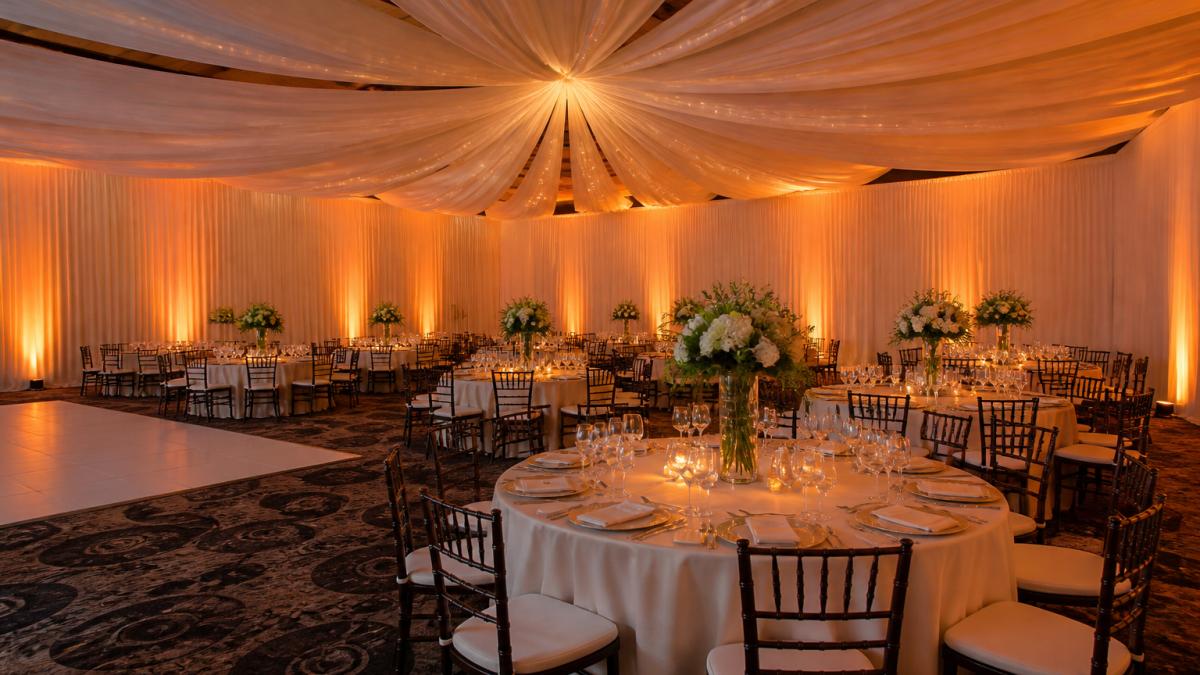
Draping and Uplighting Combinations for Hotel Ballrooms
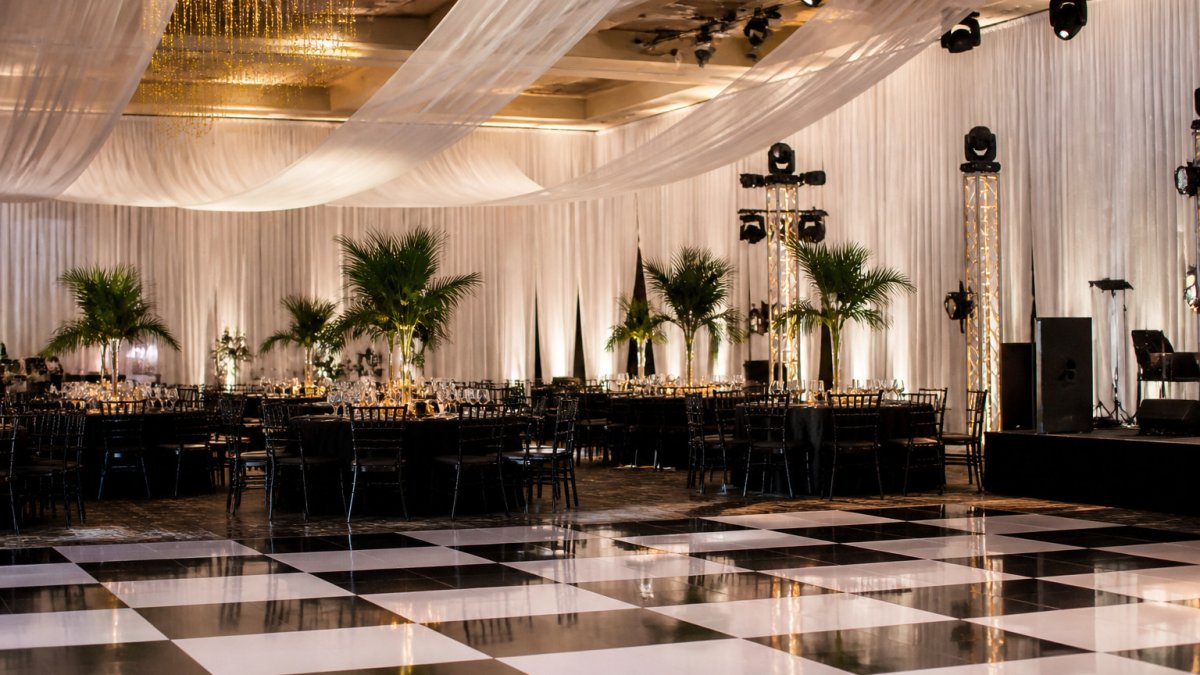
Hotel ballrooms usually have good bones and dated finishes. Ceiling draping pulls attention upward and hides ceiling grid, vents, and speaker clusters. Wall draping covers patterned carpet edges and mismatched wall treatments.
Uplighting does the rest. Warm amber reads formal and welcoming. Brand colors on the walls tie the room to the company without a single printed sign. Together, draping and uplighting can change how a ballroom photographs in every direction.
Making Industrial and Warehouse Spaces Feel Intentional
Exposed brick, concrete floors, and open ceilings read cold by default. The fix is layered light and soft texture.
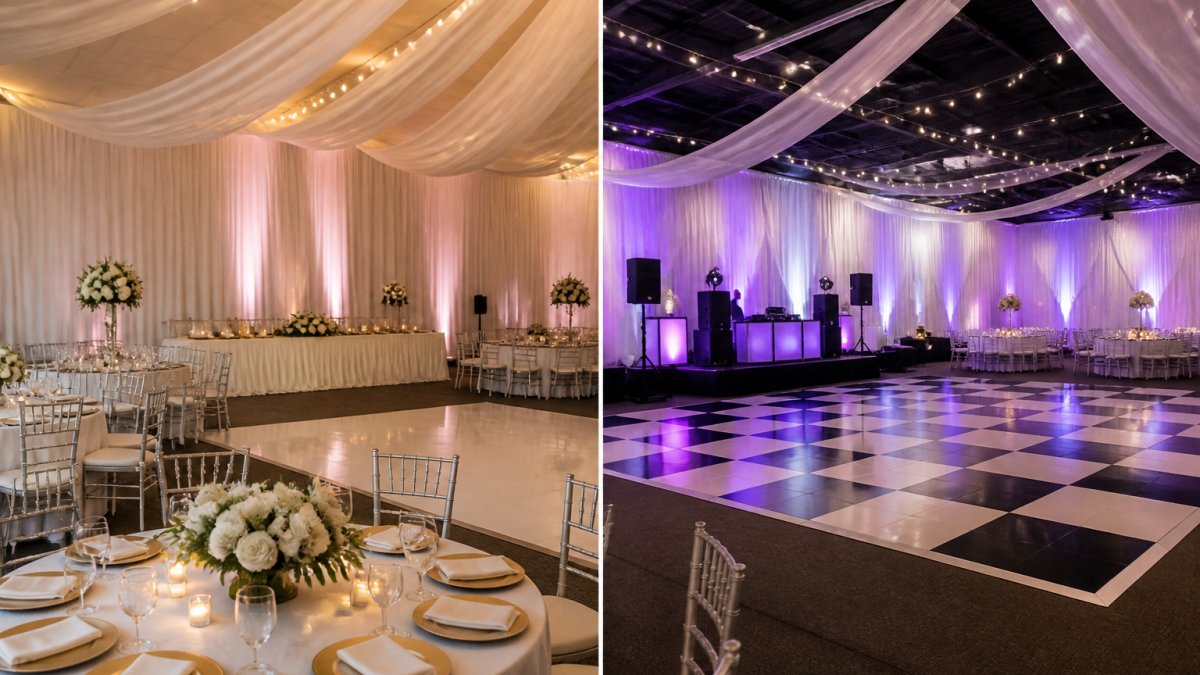
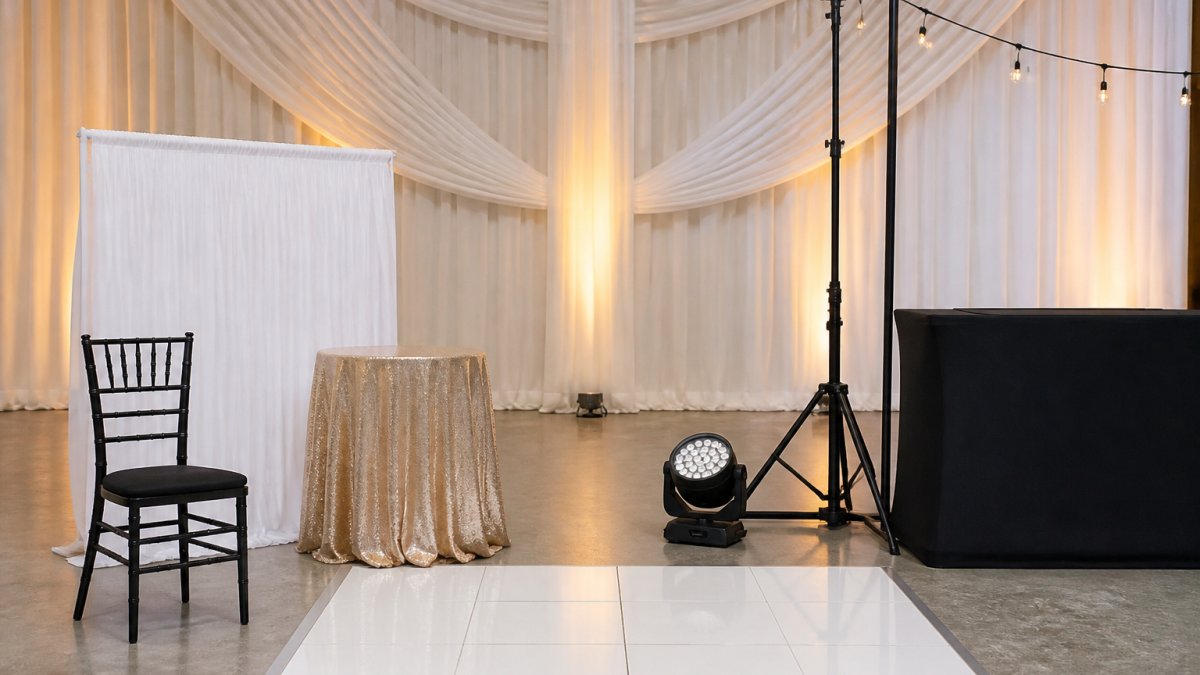
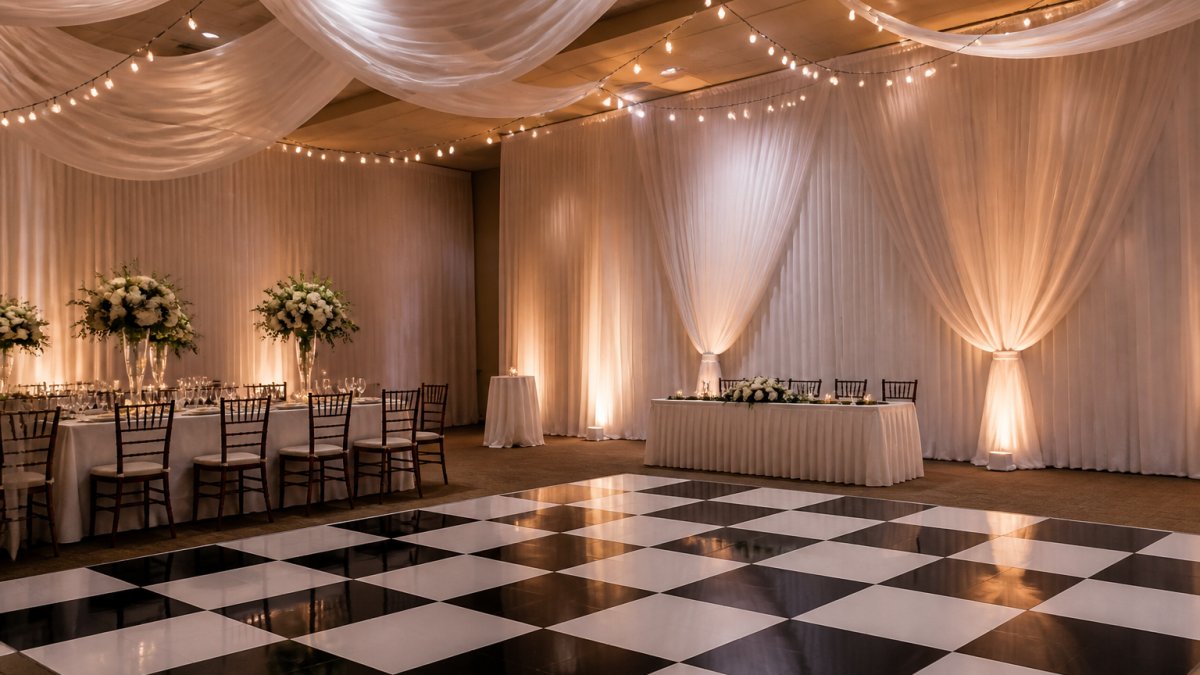
String lights and bistro lights across the ceiling create warmth overhead, draped fabric softens hard walls, and a seamless white or checkered dance floor defines the room's center. Add a stage with a branded backdrop and the space stops looking unfinished and starts looking designed.
How an Eventconcept Alternative Handles Pricing, Migration, and Setup
Software alternatives publish rate cards because a subscription is the same product for every buyer. Event design and rental cannot work that way. A responsible vendor quotes per event because scope, venue access, and installation labor vary so much between a 150-person reception and a 600-person gala.
What you should ask for is a transparent cost structure. Any quote should separate the line items below so you can compare vendors on equal footing:
- Rental inventory, draping fabric, lighting fixtures, dance floor panels, staging, and chairs, priced by quantity and duration
- Installation labor, crew size and hours, which scale with ceiling height, rigging complexity, and load-in distance
- Delivery and pickup, mileage, freight elevator or dock fees, and after-hours access charges
- Site survey, some vendors include it, some bill it separately; confirm before you sign
A quote that lumps everything into one number is harder to audit and compare. Ask for the breakdown.
Migration: Moving From a Previous Vendor or an In-House Setup
Switching design partners is simpler than most corporate teams expect, but it rewards preparation. Gather these first:
- Venue details, address, room dimensions, ceiling height, load-in window, and any union or building rules
- Reference images, photos of the look you want, plus photos of the actual room
- Guest count and layout, seating style, stage placement, and focal points
- Brand assets, logo files, color codes, and any approved backdrop artwork
- Prior vendor notes, what worked, what failed, and any equipment that underperformed
With those in hand, a design partner can usually tell you within one conversation what is feasible and what needs a site visit. Migrating from an in-house setup uses the same list, the difference is that you are also handing off installation and teardown, where internal teams lose the most time.
Setup and Strike: A Predictable Sequence
Installation follows a rhythm that experienced crews plan around:
| Phase | What Happens | Typical Timing |
|---|---|---|
| Design review | Scope, colors, and layout confirmed | Weeks before event |
| Site check | Crew confirms ceiling, power, and access | Before event day |
| Installation | Draping, lighting, flooring, staging | Morning of event |
| Show day | On-call support for adjustments | During event |
| Strike | Full teardown and removal | After event ends |
For multi-day events, confirm in writing whether the design stays up overnight and who handles security during the dark hours. A draped ballroom with uplighting is a significant investment, and an unsecured room is a risk no one wants to discover at 7 a.m.
Corporate Approvals, Stakeholder Coordination, and Reporting
Corporate events rarely run through one decision-maker. Procurement, brand, facilities, and the executive sponsor often each hold a piece of the approval. A design partner who understands that structure saves you weeks.
Ask how they handle:
- Certificate of insurance and vendor onboarding, many corporate venues and procurement teams require COIs and W-9s before a crew can load in
- Single point of contact, one coordinator who can speak to procurement, the venue, and your internal team
- Brand compliance, color matching, logo placement, and approval of any branded backdrop before fabrication
- Post-event reporting, photos of the installed design, a strike checklist, and any damage or loss notes, which internal teams often need for reconciliation
What to Ignore When Comparing Corporate Event Vendors
Feature comparison tables built for software do not transfer to rental vendors. A list of "integrations" tells you nothing about whether a crew shows up on time.
Ignore vendor count as a proxy for quality. One company that installs its own draping, lighting, flooring, and staging removes the burden of managing five contractors.
Ignore stock photography unrelated to your venue type.
Pay attention to the questions a vendor asks you.
Conclusion: Choosing the Right Partner for Your Next Corporate Event
The hardest part of corporate event design is not choosing a platform; it is finding a partner who owns the equipment, installs it themselves, and answers your questions before you sign. Wedding & Event Rentals has handled that work across Anaheim, Irvine, Newport Beach, and the wider Orange County and Los Angeles area since 1992. Our team provides ceiling and wall draping, uplighting, string lights, seamless dance floors, Chiavari and Ghost chair rentals, staging, and full custom event design with professional installation and teardown.
Frequently Asked Questions
What should you compare when choosing a corporate event design provider?
Focus on four things: the range of services offered under one contract, whether installation and teardown are included, how the vendor handles venue-specific challenges like high ceilings or exposed brick, and whether they can show you photos of similar spaces they have transformed. A provider that handles draping, lighting, staging, and dance floors in-house saves you from coordinating multiple vendors on event day.
How do you choose an event rental company for a corporate gala?
Start with a corporate event design checklist: confirm the venue's load-in windows, ceiling height, and power access, then ask each vendor how they handle those constraints. Request references from comparable events, and ask specifically about setup timelines and who supervises installation. A family-owned company with decades of local experience, like XL Entertainment Systems serving Orange County and Los Angeles, will know the quirks of area venues before arriving on site.
How can draping and lighting transform a corporate event venue?
Ceiling draping softens harsh overhead lighting and hides exposed ductwork or structural beams, while wall draping creates a clean backdrop for branding and stage areas. Uplighting adds color and depth to walls that would otherwise look flat in photos. Together, these two elements change how a room feels within hours, which matters when you are working with a raw or industrial space that needs to read as polished for a client-facing event.
What services should a corporate event decor company offer?
A full-service decor company should cover ceiling and wall draping, ceremony and reception backdrops, uplighting and intelligent lighting, string and bistro lights, dance floor rentals, chair rentals, and stage setup. Ask whether they handle delivery, installation, and teardown, or whether those are separate line items. XL Entertainment Systems provides all of these services with professional installation throughout Anaheim, Irvine, Riverside, and surrounding areas.