 blog
Rama Event Pros vs ET Events: Which Fits Your Gala?
Last Updated: October 25, 2026
Quick Summary
Rama Event Pros vs ET Events comes down to scope, not quality: one may bundle planning and coordination while the other focuses on rentals and production. Decide which model your gala needs, then confirm who owns the install, what the base quote includes, and who is on site during the event.
- A gala needs a designed room, a run of show, working equipment, and a crew that installs on schedule.
- Ask who owns the install, what the base quote includes, and who is on site during the event.
- Delivery, labor, strike, and after-hours access are the line items most often added later.
- Drape the surfaces the camera will see behind the speakers first; everything else is secondary.
- Two quotes are only comparable when delivery, labor, strike, overtime, and insurance terms are stated the same way.
Table of Contents
- Rama Event Pros vs ET Events: What the Comparison Actually Turns On
- An ET Events Alternative for Corporate Galas That Handles Draping and Lighting In-House
- Corporate Event Draping and Lighting: What Changes the Room and What Doesn't
- Your Event Rental Quote Checklist Before You Sign Anything
- The Event Design Proposal Checklist a Gala Committee Should Demand
- How to Compare Event Vendors When Their Services Differ
- Request a Free Quote for Your Gala
- Frequently Asked Questions
Rama Event Pros vs ET Events: What the Comparison Actually Turns On
This guide from XL Entertainment Systems, a family-owned rental company established in 1992, explains how to approach vendor comparisons for your event.
Here is the honest framework: comparing event providers is a question about scope, not about quality. One provider may bundle planning and coordination into an event; another may focus on rentals and production.
Below, we break down where different providers fit, the three questions that settle the decision, and the checklist that protects your budget. For a closer look at how a dedicated alternative stacks up, see our alternatives to Rama Event Pros for private celebrations.
Where each provider fits in a corporate gala plan
Start with the job you are hiring for.
If a provider sells planning and coordination as its core service, it fits committees that have no staff planner and want one point of contact.
Most gala disappointments trace back to this mismatch. A production company asked to run logistics will struggle; a planning firm asked to hang ceiling draping will subcontract it.
The three questions that decide the winner for your event
Ask these before you compare anything else:
- Who owns the install? If the answer is "a partner," ask who that partner is and whether they carry their own crew.
- What is in the base quote? Delivery, labor, strike, and after-hours access are the four line items most often added later.
- Who is on site during the event? A gala with a live program needs someone who can fix a fixture mid-dinner.
Whichever provider answers all three in writing, with names and timelines, is the one to keep talking to.
An ET Events Alternative for Corporate Galas That Handles Draping and Lighting In-House
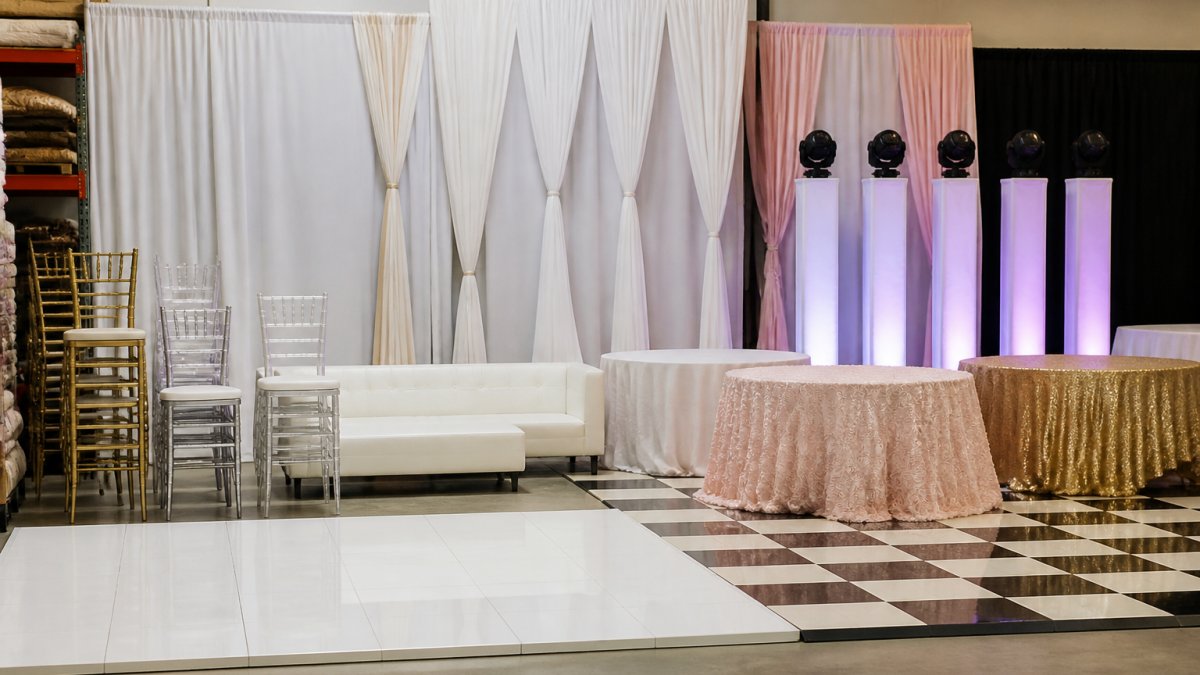
For committees seeking a rental house that installs its own work, XL Entertainment Systems offers a practical alternative. At XL Entertainment Systems, draping, uplighting, dance floors, stage, and chairs come from one inventory and one crew, with no handoff between a designer and a subcontractor on load-in day.
What that looks like in practice:
- Ceiling and wall draping installed by the same team that hangs the lighting
- Uplighting and intelligent lighting programmed for the room, not rented as a box of fixtures
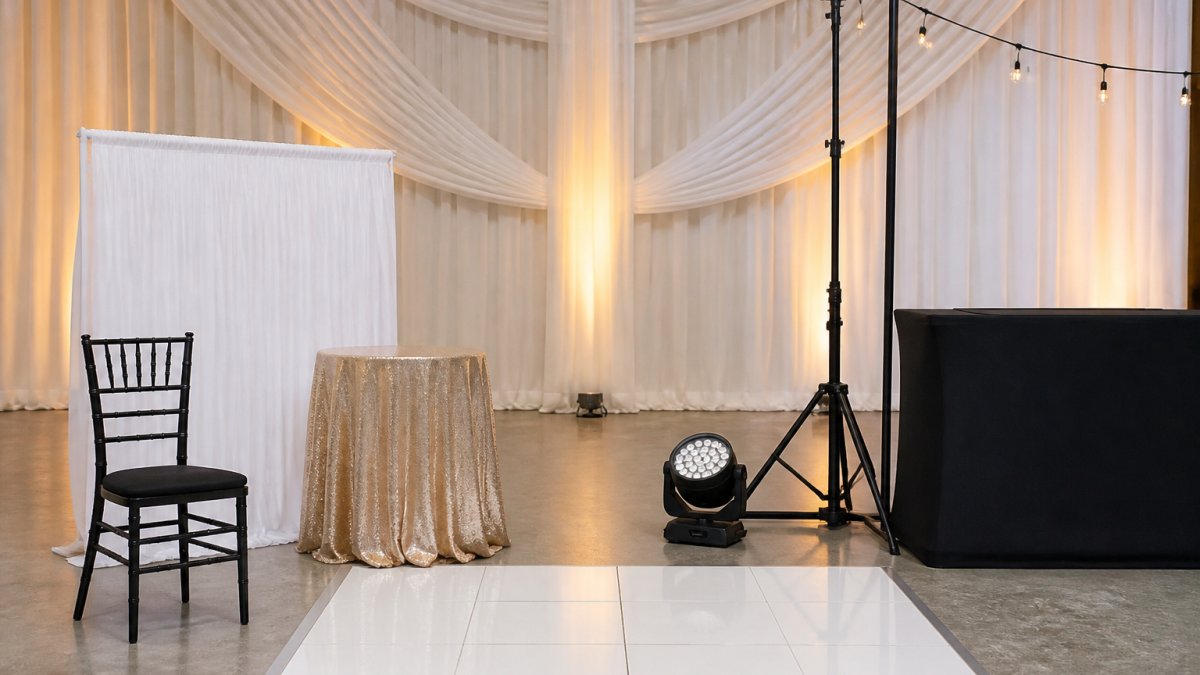
- Seamless white, checkered, or round dance floors delivered and leveled on site
You can see the full range on our event rental services page. One vendor, one timeline, one number to call when something shifts.
Corporate Event Draping and Lighting: What Changes the Room and What Doesn't
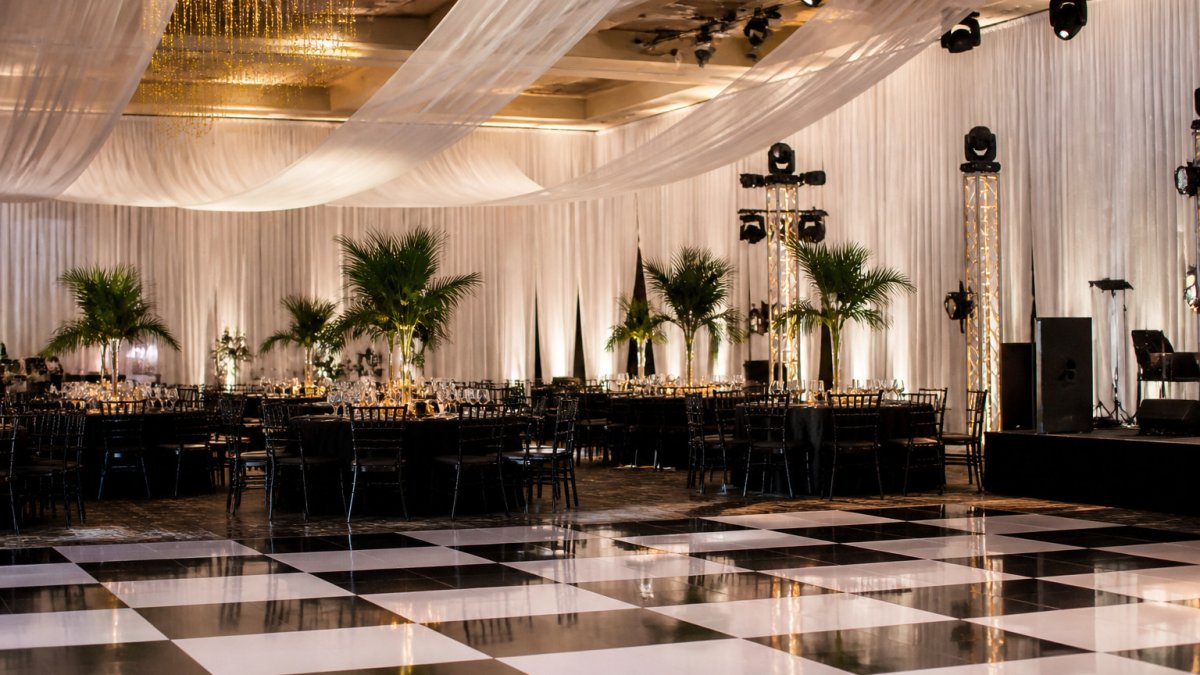
Draping and lighting most affect how a gala photographs, and they are the two most often oversold. Fabric softens a hard room; light directs attention. Neither fixes a bad floor plan or an undersized stage.
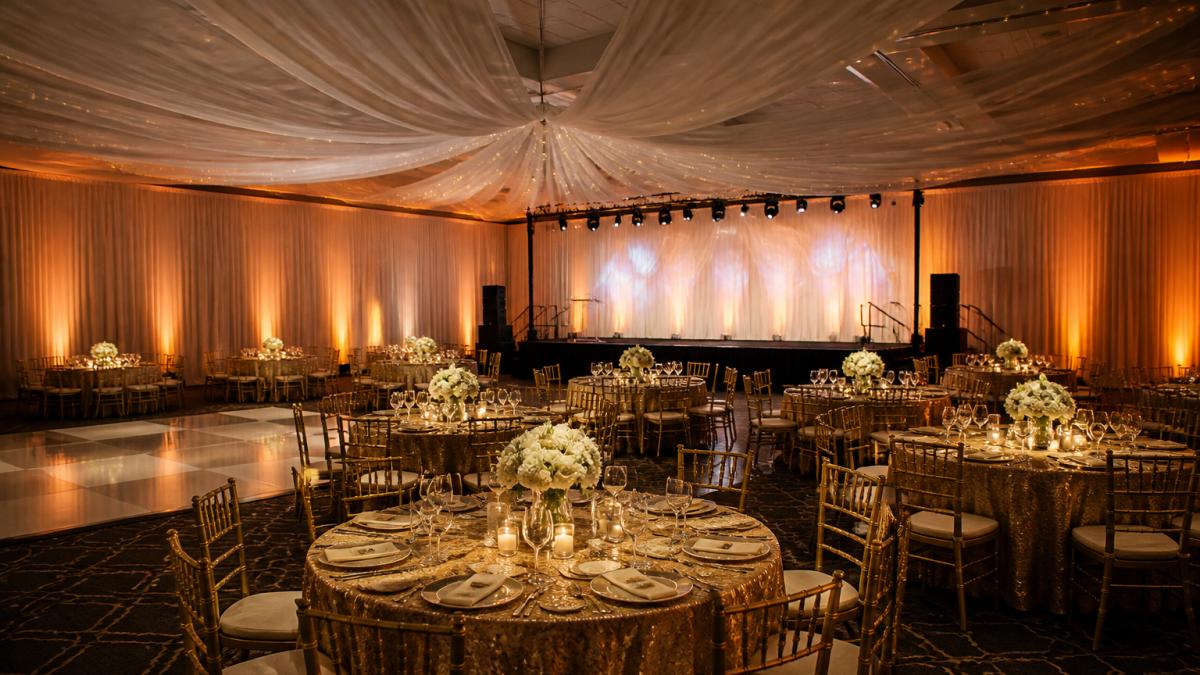
What draping genuinely changes: exposed ceiling grid, brick or concrete walls, exit doors that break a sightline, and the visual height of a low room.
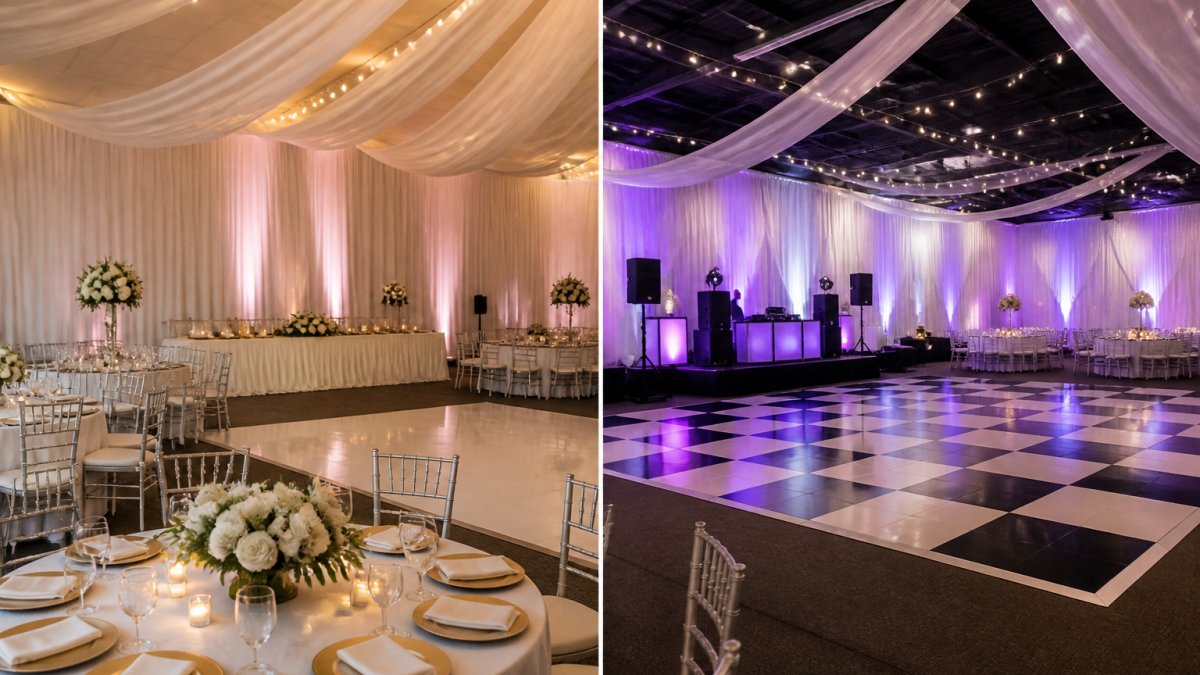
Lighting works the same way. Uplighting washes a wall in color and separates the room from the ceiling.
Draping choices that hide an awkward ballroom
The most common gala problem is a room with good bones and bad surfaces: a dropped ceiling, service doors behind the head table, or a wall of glass that reads as an office at night.
Ceiling draping pulls the eye upward and hides the grid. For layout and install sequence, our guide to draping large event spaces walks through the order of operations.
A rule we use: drape the surfaces the camera will see behind the speakers first. Everything else is secondary.
Lighting layers that read well on camera
Three layers cover most galas. Ambient uplighting sets the color on the walls. A stage wash lights the people on stage. Accent lighting picks out the bars, the auction tables, and the centerpieces.
Amber uplighting is safest for a seated dinner because it flatters skin tones and photographs warm. Our custom event lighting guide for galas covers programming and color sequencing in more detail.
Your Event Rental Quote Checklist Before You Sign Anything
A quote is only useful if it lists what happens on site. When comparing providers, request a written quote and compare it line by line against a fixed checklist.
What is usually public versus what you must request
Public information typically covers service categories, service area, and contact details. Request in writing: itemized inventory with quantities, delivery and labor terms, overtime rates, power and rigging requirements, and cancellation and change terms. Do not assume a package includes delivery, labor, or strike just because the service is listed.
The quote checklist
- Itemized inventory with quantities, not a lump sum
- Delivery window and load-in access time confirmed with the venue
- Labor for install and strike listed separately
| What to check | Why it matters | What good looks like |
|---|---|---|
| Inventory detail | Prevents substitutions on the day | Every item and quantity listed |
| Install labor | The most common add-on charge | Separate line, stated hours |
| Strike and load-out | Venue curfews create overtime | Overtime rate in writing |
| Power and rigging | Lighting and draping need it | Requirements confirmed with venue |
| On-site contact | Problems get fixed fast | A name and a phone number |
| Insurance | Venues often require it | Certificate provided on request |
| Backup plan | Equipment failures happen | Spare fixtures or a stated contingency |
Contract, insurance, and contingency details to confirm
Beyond the line items, confirm the terms that protect your budget if something changes:
- Cancellation and rescheduling: what notice is required, and what portion of the quote is affected
- Liability coverage: whether the provider carries insurance and can furnish a certificate to your venue
- Backup equipment: whether spare fixtures or a contingency plan are included for critical lighting and power items
If a provider will not put these in writing, that is your answer.
The Event Design Proposal Checklist a Gala Committee Should Demand
A proposal is not a mood board. It should state exactly what will stand in the room, who builds it, and when it comes down.
Demand these six items:
- A rendering or reference photo of each major element: stage, ceiling, head wall, dance floor
- A floor plan showing where draping, lighting, and staging land
- A load-in and load-out schedule tied to venue access
- A crew list with roles
- A change-order process with approval steps
- A single point of contact through the event
Committees that review proposals against a fixed list make faster decisions and get fewer surprises; those that review on impression alone approve the prettiest deck and discover the gaps later.
How to Compare Event Vendors When Their Services Differ
When two providers sell different things, compare them on the work, not the brochure. The trap is scoring both on the same generic rubric and letting the prettiest deck win. Build the comparison around your event type first, then verify each claim in writing.
Start with an event-type decision matrix
Different events stress different parts of a vendor. Use this matrix to decide which capabilities matter most before you score anyone:
| Event type | What matters most | What to verify in writing |
|---|---|---|
| Wedding or reception | Draping, backdrop, dance floor, chairs, lighting design | Install ownership, floor leveling, color temperature, strike time |
| Corporate gala or fundraiser | Ceiling and wall draping, stage, uplighting, program lighting | Rigging and power requirements, on-site contact, overtime terms |
| Private party or milestone | Pipe and drape, bistro and string lights, dance floor | Delivery window, load-in access, weather contingency for outdoor setups |
| Production-heavy event | Stage, custom stage wraps, intelligent lighting, cold sparklers | Crew roles, backup equipment, change-order process |
If your event is a wedding, draping and lighting design usually carry more weight than raw inventory count. If it is a gala with a live program, stage, power, and on-site presence matter more. Score each vendor only on the rows that apply to you.
Verify service and inventory differences, don't assume them
When comparing providers, the burden is on you to confirm what each provider owns versus subcontracts. Ask for:
- An itemized inventory list with quantities for the specific items you need
- A statement of which items are owned in-house and which are rented from a partner
- The name of the crew that will install and strike, and whether that crew is employed or contracted
A vendor that owns its install and answers these in writing is easier to compare. If a provider will not confirm ownership of a service, treat it as unverified.
Map geographic coverage and logistics before you compare anything else
Service area is the fastest way to narrow the field. Confirm each provider's delivery radius and whether travel beyond it changes the quote. Then ask the logistics questions that decide whether an install runs on schedule:
- What is the delivery window, and does it match the venue's load-in access time?
- Is there a dock, freight elevator, or stair carry, and does the crew account for it?
- Are after-hours or venue-curfew overtime terms stated in writing?
A provider that serves your venue regularly will usually have a smoother load-in. Ask directly whether they have worked your venue before and what constraints they know about it.
Use a weighted scoring sheet, but weight scope fit highest
Build a simple scoring sheet: scope fit, install ownership, quote transparency, on-site presence, and reference availability. Score each from one to five and weight scope fit highest. A vendor that scores well on everything except scope fit will still fail your event; one that scores moderately but owns the install and answers in writing will usually deliver.
Ask for references from events of similar size and format, and how the vendor handled a problem on site. The answer tells you more than any portfolio.
Request a Free Quote for Your Gala
Comparing event vendors gets easier once you know your scope, install owner, and quote terms.
If your gala needs draping, lighting, a dance floor, a stage, and chairs installed by one crew, we can price it as a single package. Share your event date, venue, and service list through our contact page and we will send a free custom quote.
Frequently Asked Questions
What services do Rama Event Pros and ET Events offer?
Event design and decor providers offer various services. Ask each for a written scope covering draping, lighting, dance floors, stage, chairs, delivery, installation, and teardown. If any of those sit with a subcontractor, get that name in writing. A provider that handles draping and lighting in-house usually means fewer people to coordinate on gala day.
How do I compare event design and decor providers for a corporate gala?
Score each provider on four things: verified services, geographic coverage and travel terms, quote inclusions, and a design proposal with visuals. Ask for references from galas of similar size and guest count, and confirm who installs and strikes the room. The comparison comes down to which one can put all of that in writing before you sign.
What should I ask an event decor company before booking?
Ask who owns the inventory, who installs it, what the overtime and strike fees are, and whether the quote includes delivery, setup, and teardown. Request a certificate of insurance and a sample timeline for your venue. Confirm the deposit and cancellation terms in writing. These questions separate a firm quote from an estimate that grows after the gala.
What should a corporate gala decor proposal include?
A complete proposal names the draping and lighting scope, shows a rendering or reference photo of a similar room, lists every rental item with quantities, states the install and strike windows, and includes a line-item quote. It should also name the crew lead and the backup plan if a piece fails. Use the event design proposal checklist in this article to compare proposals side by side.