 ultimate-guide
Corporate Event Decor Planning Checklist 2026
Table of Contents
- Corporate Event Decor Planning Checklist: What to Lock Down First
- Corporate Event Decor Ideas That Reflect Your Brand
- Corporate Event Decor Budget: Where the Money Goes
- Event Decor Planning Timeline: Decision Deadlines and Lead Times
- Corporate Event Decor Checklist Template You Can Copy
- Venue Constraints, Accessibility, and Setup Logistics
- Frequently Asked Questions
Last Updated: October 12, 2026
Corporate Event Decor Planning Checklist: What to Lock Down First
A corporate event decor planning checklist in 2026 starts with six decisions, not with Pinterest boards: event goals, budget, venue, audience, timeline, and brand standards.
At XL Entertainment Systems, we have spent more than 30 years draping, lighting, and staging corporate spaces, and the pattern is always the same.
Below, we break down what to decide first, what to order when, and how to keep décor aligned with the brand paying for it.
| Decision | Lock It Down By | Why It Comes First |
|---|---|---|
| Event goals and success measures | 16+ weeks out | Sets budget and scope |
| Budget allocation | 14 weeks out | Caps every later choice |
| Venue and load-in rules | 12 weeks out | Determines what is possible |
| Theme and brand integration | 10 weeks out | Drives all ordering |
| Décor items and vendors | 8 weeks out | Lead times vary widely |
| Setup and teardown plan | 2 weeks out | Prevents event-day surprises |
Corporate Event Decor Ideas That Reflect Your Brand
Brand-aligned décor is the difference between a room that looks decorated and a room that looks like your company.
Where brand standards touch physical décor
- Logo placement and clear space. Pull the logo usage rules from your brand guidelines before ordering anything. Most guidelines specify a minimum clear space around the mark and a minimum print size, and those rules apply to a stage backdrop, a step-and-repeat, and a directional sign just as much as they do to a business card.
- Color matching. Brand colors rarely translate directly to fabric and lighting. A hex value printed on paper and the same value rendered in drapery or an LED wash will not match, so request a physical swatch or a lighting test before committing to a large order.
- Typography and signage. Wayfinding, table numbers, menu cards, and sponsor boards should use the approved typefaces. If the brand font is licensed, confirm the sign vendor has rights to reproduce it.
- Sponsor and partner visibility. If the event has sponsors, their logo treatment needs the same clear-space and sizing discipline as your own, and sponsor tiers usually dictate placement. Get the sponsor list and tier levels before the signage order goes out.
- Photo backdrops and social moments. A step-and-repeat or branded wall is the single most photographed décor element at most corporate events. Confirm logo scale from the camera's distance, not from standing two feet away, and check that the backdrop reads correctly in both ambient and flash lighting.
Practical ways to carry a brand through a corporate event space
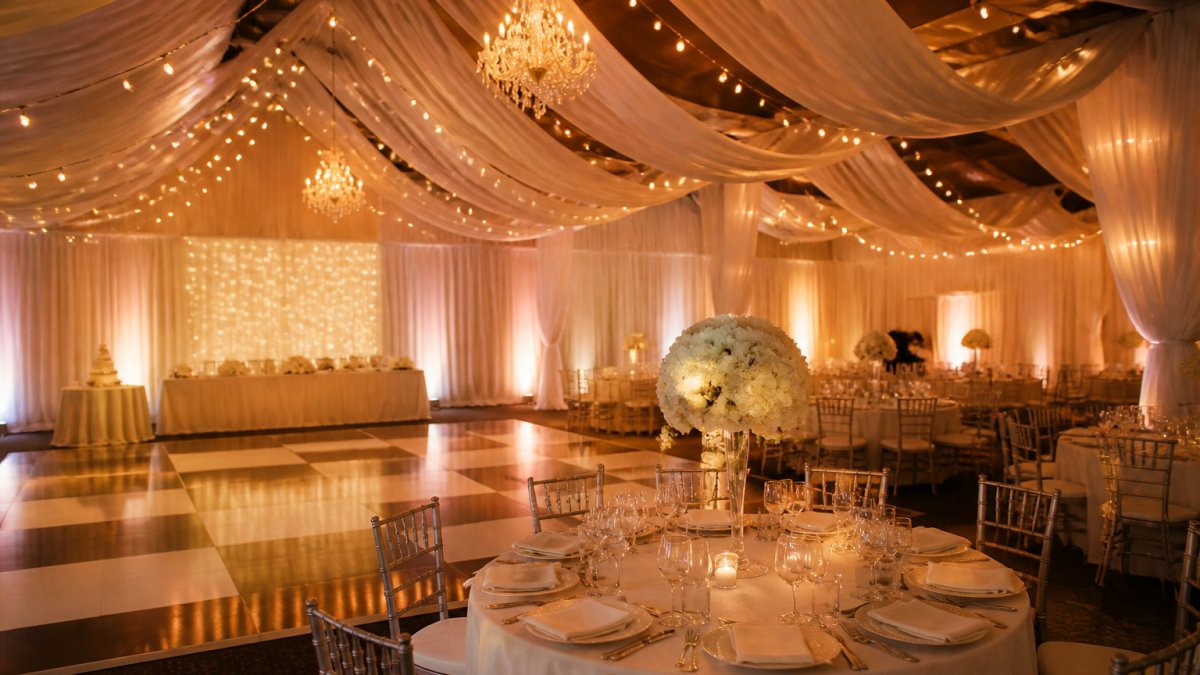
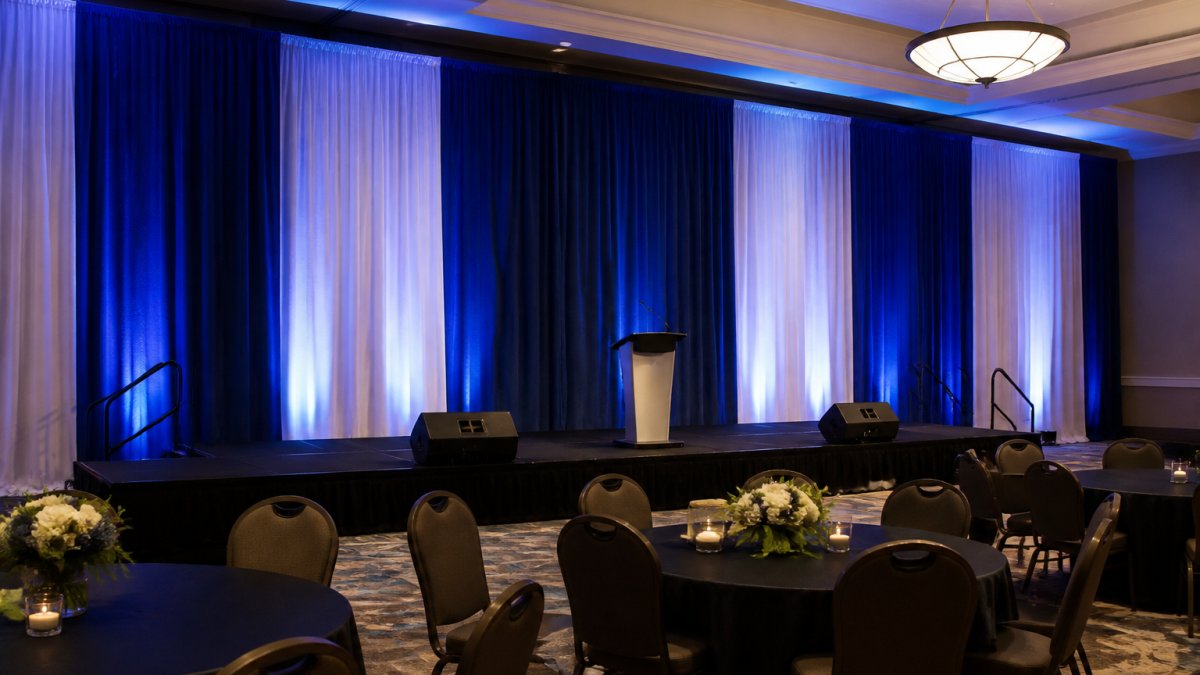
- Drape the stage backdrop in a primary brand color, with the logo rendered in a single clean material rather than a busy printed banner
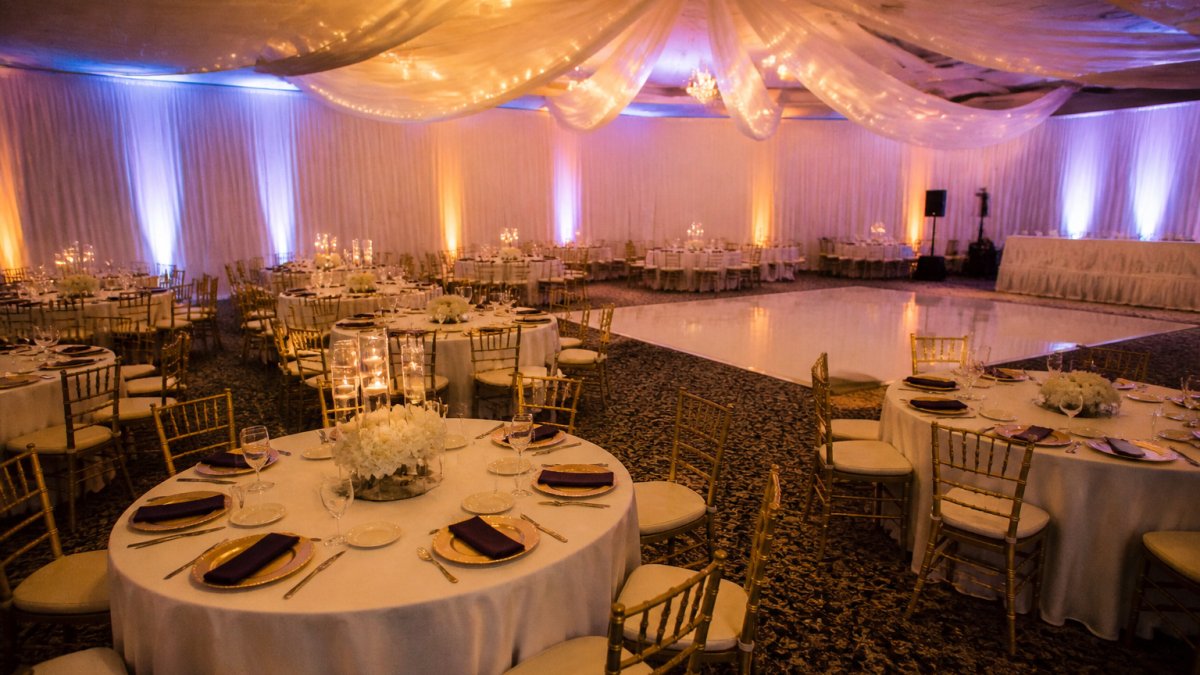
- Use uplighting in a secondary brand tone to wash walls and columns, which reads as intentional rather than themed
- Keep table centerpieces low and neutral so sightlines stay open and the brand color stays the accent, not the whole story
- Repeat one texture, such as satin draping or matte staging, across the room so the experience design feels unified
A brand-integration review step most checklists skip
Before any décor order is placed, route the item list past whoever owns the brand.
Logo density is not brand integration. A room with one confident logo moment and disciplined color reads as more on-brand than a room with logos on every surface.
Corporate Event Decor Budget: Where the Money Goes
Corporate event decor budget planning is really a triage exercise. Most of the spend concentrates in four areas: draping, lighting, staging, and table décor, with rentals, labor, and delivery layered on top.
Because pricing depends on quantity, dates, room size, and delivery distance, we quote every project individually rather than publishing flat rates. What we can say with confidence is how the allocation typically splits:
- Draping and fabric: wall draping, ceiling treatments, and stage backdrops, usually the largest single line
- Lighting: uplighting, pin spotting, and ambient lighting, which does more visual work per dollar than almost anything else
- Staging and dance floor: risers, staging, and flooring where the event program needs a focal point
- Table décor: linens, centerpieces, and chair treatments, where costs scale fastest with guest count
- Labor, delivery, and setup: often underestimated, and the line most likely to blow a budget late
Two cost-control trade-offs worth knowing. First, reusable draping and lighting outperform one-time printed props on value, because they can be reconfigured for a second event. Second, cutting setup labor to save money is the single most common mistake we see, and it usually shows up as a rushed, half-lit room on event day.
Event Decor Planning Timeline: Decision Deadlines and Lead Times
An event decor planning timeline works backwards from the event date, not forwards from today. The single biggest scheduling mistake in corporate event decor is treating décor as a final step.
Here is the timeline we use with clients:
- 16+ weeks out: Confirm event goals, purpose, and success measures; book the venue
- 14 weeks out: Set the budget allocation and confirm the event theme direction
- 12 weeks out: Review venue constraints, load-in windows, and installation rules
- 10 weeks out: Finalize brand integration, colors, and the décor item list
- 8 weeks out: Place orders for custom drapery, staging, and specialty lighting
- 4 weeks out: Confirm guest count, table layout, and catering and AV coordination
- 2 weeks out: Lock the setup schedule, teardown window, and site contact
- Event week: Final walkthrough, then setup day execution
Ordering lead times by décor category
The week-by-week milestones only work if you know how long each category actually takes.
- Custom fabric and drapery. Made-to-order draping, ceiling treatments, and printed backdrops carry the longest lead times because they move through cutting, sewing, and finishing. Treat 8 weeks as the outside limit for a custom order and add buffer for peak wedding and holiday season, when production queues lengthen.
- Custom staging and flooring. Modular staging and dance floors are often rented from stock, but custom sizes, finishes, or branded floor graphics need fabrication time. Confirm whether the item is in stock or built to order before you assume a short turnaround.
- Specialty lighting and effects. Standard uplighting and pin spotting are usually available on short notice. Gobos, custom projections, and programmed lighting cues take longer because they require design and testing time.
- Printed signage and graphics. Large-format printing is fast, but proofing, brand review, and reprints are not. Build in a proof approval step so a color correction does not push the order past the event.
- Rentals versus purchase. Off-the-shelf rentals can move faster than custom orders, but only if the venue has confirmed your load-in window and the rental house has the quantity on hand for your date.
Setup and strike windows
Décor does not end when the doors open.
- Setup. Confirm how many hours the venue allows for load-in, whether setup can happen the day before, and whether union labor rules apply to installation. A room that only opens two hours before doors is a different install plan than one available the previous afternoon.
- Strike. Confirm the teardown deadline and whether the venue charges for overtime. Rushed strikes are where rental damage and lost items happen, and those charges can exceed the savings from a shorter labor window.
- Delivery and freight. Freight elevator access, dock scheduling, and parking for load-in vehicles all affect how long setup takes. Get these details before the order is placed, not the week of the event.
Custom fabric and staging carry the longest lead times, so anything made-to-order belongs at the 8-week mark at the latest.
Corporate Event Decor Checklist Template You Can Copy
A corporate event decor checklist template keeps the whole project in one place. Copy the list below and assign an owner and a due date to every line.
- Event goals, purpose, and measurable outcomes documented
- Budget allocation approved, including labor and delivery
- Venue constraints, load-in rules, and setup windows confirmed in writing
- Target audience and guest count locked for table planning
- Theme and experience design direction approved
- Brand standards applied: colors, logo usage, and tone
- Décor items list finalized: draping, lighting, staging, table centerpieces, linens
- Vendor coordination complete, including catering and audio-visual needs
- Accessibility and sensory considerations reviewed for the event space
- Sustainability plan set: what gets reused, donated, or recycled
Venue Constraints, Accessibility, and Setup Logistics
Venue constraints decide more décor outcomes than any design preference.
Accessibility belongs in the décor plan from the start, not as a retrofit. A few practical checks:
- Keep pathways at least 36 inches wide and free of décor that narrows the route
- Avoid strongly scented florals and fog effects in rooms where guests may have sensory sensitivities
- Check that uplighting and moving effects do not create glare on screens or trigger photosensitivity
- Confirm that table centerpieces stay low enough for seated guests to see each other and the stage
The ADA Standards for Accessible Design set the baseline expectations most venues already work from, and it is worth reviewing before your walkthrough.
Sustainability and reuse deserve a line in the plan too.
Corporate event decor only looks effortless when the planning was anything but. The teams that get it right lock down goals, budget, and venue rules early, then let design follow.
XL Entertainment Systems has handled lighting, draping, dance floors, chairs, and staging for corporate events, weddings, and private celebrations since 1992. We build a custom design around your vision, work within your budget, and manage setup and teardown so you are not juggling five vendors on event day.
Frequently Asked Questions
What should be included in a corporate event decor planning checklist?
A working corporate event decor checklist covers goals and success measures, budget allocation, venue constraints, a decision timeline with ordering deadlines, brand elements like logo placement and color palette, lighting and draping specifications, accessibility and safety requirements, setup and teardown windows, and a post-event reuse or disposal plan. Build it as a shared document so vendors, the venue, and internal stakeholders all work from the same version.
How far in advance should you plan corporate event decor?
Start decor decisions 4 to 6 months before the event date. Custom fabrication, branded drapery, and specialty lighting require the longest lead times, so lock those first. Confirm venue load-in rules and power access at least 3 months out. Final counts and layout approvals should be done 3 to 4 weeks before, with setup scheduled the day before or morning of the event.
How do you create a corporate event decor budget?
Start with your total event budget and assign a realistic share to decor, then break that number into line items: draping, lighting, centerpieces, staging, signage, and labor. Get itemized quotes rather than lump sums so you can compare vendors. Keep 10 to 15 percent in reserve for venue surprises or last-minute additions. Pricing depends on quantity, dates, and delivery, so request a quote for your specific event.
How do you make event decor reflect a company's brand?
Pull your brand colors, logo, and typography into physical elements: uplighting in your primary color, a logo gobo projected on a wall, branded step-and-repeat backdrops, and cocktail napkins or signage that match your palette. Keep it consistent across every touchpoint so the space reads as one brand, not a collection of rented pieces. For hybrid events, test how those colors look on camera before finalizing.
What should you ask a corporate event decor company?
Ask for references from events similar in size and venue type, and actually call them. Confirm whether the company handles lighting, draping, staging, setup, and teardown in-house or subcontracts parts of it. Request photos of past work in spaces like yours. Ask about travel and delivery fees, insurance requirements, and what happens if a venue restricts installation methods like drilling or open flame.
What should be included in a corporate event setup and teardown plan?
Your setup and teardown plan should list load-in and load-out windows, dock or elevator access, crew size, equipment staging areas, and any venue-mandated quiet hours. Include a floor plan marking where each decor piece goes, who signs off on final layout, and when rental items must be returned. Confirm teardown timing with the venue in writing so you avoid overtime fees or damage disputes.