 how-to
7 Ways to Soften Harsh Venue Lighting for Events
Table of Contents
- Why Harsh Venue Lighting Ruins the Room (and the Photos)
- How to Soften Overhead Lighting Without Touching the Fixtures
- Diffuse Direct Light with Fabric, Panels, and Shades
- Use Wedding Uplighting Ideas to Warm Up a Cold Room
- Balance Mixed Lighting Sources and Color Temperature
- Wedding Ceiling Draping That Changes How Light Falls
- Event Lighting Design: Plan by Event Type and Venue Layout
- Frequently Asked Questions
Last Updated: October 19, 2026
Why Harsh Venue Lighting Ruins the Room (and the Photos)
Harsh venue lighting is any bright, direct light source that throws hard shadows, blows out skin tones, and makes a beautifully decorated room feel like a cafeteria.
The problem is rarely brightness itself. It is direction and quality. Direct downlights carve shadows under eyes and noses, bare bulbs glare off glossy floors, and cool white light makes wood tones look gray and florals look flat.
How to Spot Harsh Light Before You Commit
Walk the venue at the same time of day as your event. Warning signs include sharp shadows under tables and chairs, bright pools of light on the floor, cool blue or green tints on white linens, and lights aimed straight down with no diffusion cover. Take phone photos with and without flash; if faces look shiny and shadows look hard, you have a harsh light problem.
How to Soften Overhead Lighting Without Touching the Fixtures
You can soften overhead lighting by changing what the light passes through or bounces off, not by altering the fixtures themselves. A bare bulb is a point of light; a large glowing panel is a soft wash, same brightness, completely different feel. Practical moves that stay within venue rules:
- Add floor and table lamps to lift the ambient level so the overheads can be dimmed
- Place tall centerpieces and draping to break up direct sightlines to bright fixtures
- Ask the venue to dim overheads during dinner and dancing
Bounce Light Off Walls and Ceilings
Bouncing light is the oldest trick in the book. Aim a light at a pale wall or ceiling and it reflects back as a broad, soft glow instead of a hard beam. Place uplights and wash lights so their output hits a large surface before it reaches people. This is why ballroom draping and lighting work so well together, a soft white wall gives light something kind to bounce off.
Diffuse Direct Light with Fabric, Panels, and Shades
Diffusion is any material placed between a light source and the room that scatters the beam. Sheer fabric, frosted panels, and lamp shades all turn a hard point of light into a soft glow. The difference between a safe, venue-approved setup and a costly mistake comes down to the material, the distance from the fixture, and who signed off on it.
Match the Diffuser to the Fixture
Not every diffuser works on every light. The table below pairs common venue fixtures with diffusion approaches that are practical and reversible.
| Fixture Type | Diffusion Approach | Watch-Outs |
|---|---|---|
| Recessed downlights | Frosted acrylic or polycarbonate panels on stands below the fixture; sheer fabric scrims hung clear of the trim | Never tape gels or fabric to the trim ring; heat builds in the recess |
| Chandeliers | Sheer fabric swagged nearby (not touching bulbs); dim the circuit if the venue allows | Candle-style bulbs run hot; keep fabric well clear |
| Fluorescent panels | Diffusion sleeves or panels rated for the fixture; warmer gel if the venue permits | Flicker and green tint often matter more than harshness here |
| Exposed bulbs and bare lamps | Lamp shades, fabric-wrapped frames, or frosted sleeves | Bare bulbs are the highest heat risk; use shades rated for the wattage |
| Par cans and wash lights | Frosted gel in the gel frame (installed by the venue or your lighting vendor) | Gel must be rated for the fixture's wattage and never layered against the lens |
Fire Safety and Heat Clearance
Most diffusion materials used at events are marketed as flame-resistant, but "flame-resistant" is not the same as "safe against a hot fixture." Keep fabric and plastic diffusers at a safe distance from any bulb or lens; heat radiates farther than the visible glow suggests. Use shades and sleeves rated for the bulb's wattage, never sandwich gel between a lens and a tight frame, and treat any fixture hot to the touch as off-limits for DIY diffusion.
Get Venue and Electrician Approval First
Venues vary widely in what they allow. Some permit temporary, reversible additions, freestanding panels, fabric scrims on your own stands, added lamps, while restricting anything attached to their fixtures or tied into their circuits. Before you rent a single diffuser:
- Ask the venue which fixtures you may modify and which are hands-off.
- Confirm whether dimming is controlled by the venue or available to you.
- Ask whether a licensed electrician must make any connection to their system.
- Get the approval in writing, including any restrictions on materials.
If the answer is "no" on a fixture, work around it. Freestanding frosted panels, tall centerpieces, and strategic draping can block a harsh sightline without touching the venue's equipment.
The Elegant Option: Fabric as Diffusion
For a wedding or event, the most elegant diffusion is often fabric itself. Sheer draping in front of a bright window or fixture softens the light and looks intentional. Options include:
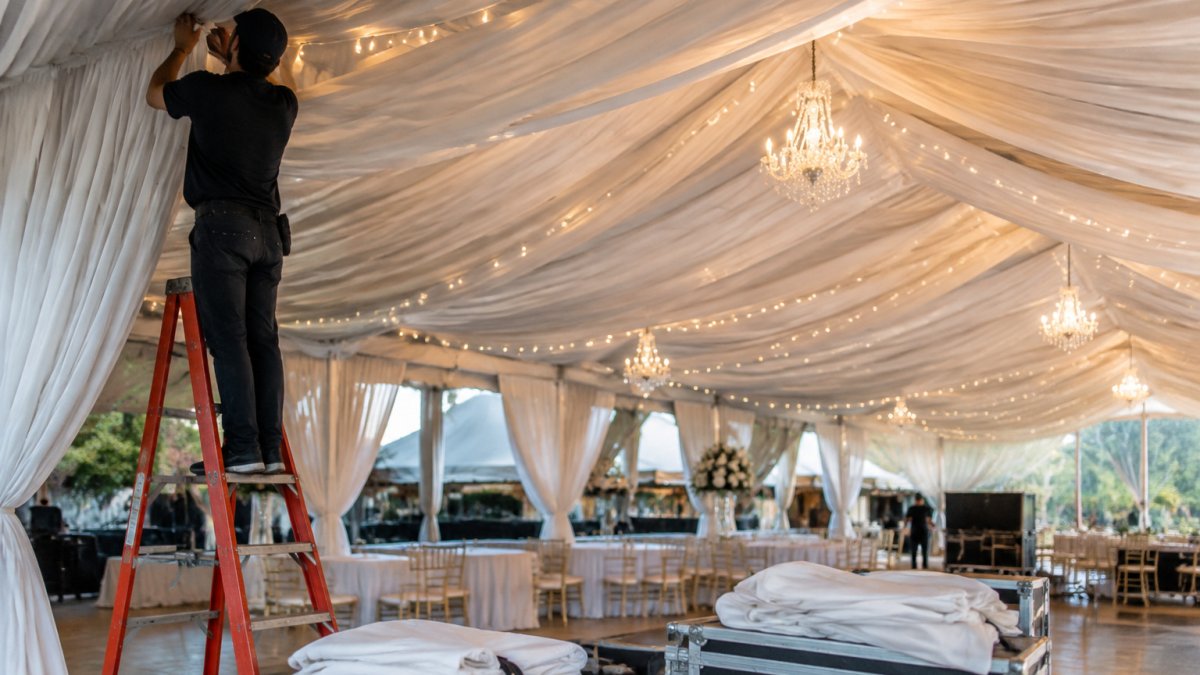
- Sheer ceiling draping to soften overhead fixtures
- Frosted panels on stands to shield guests from direct glare
- Fabric-wrapped columns to hide bright sources
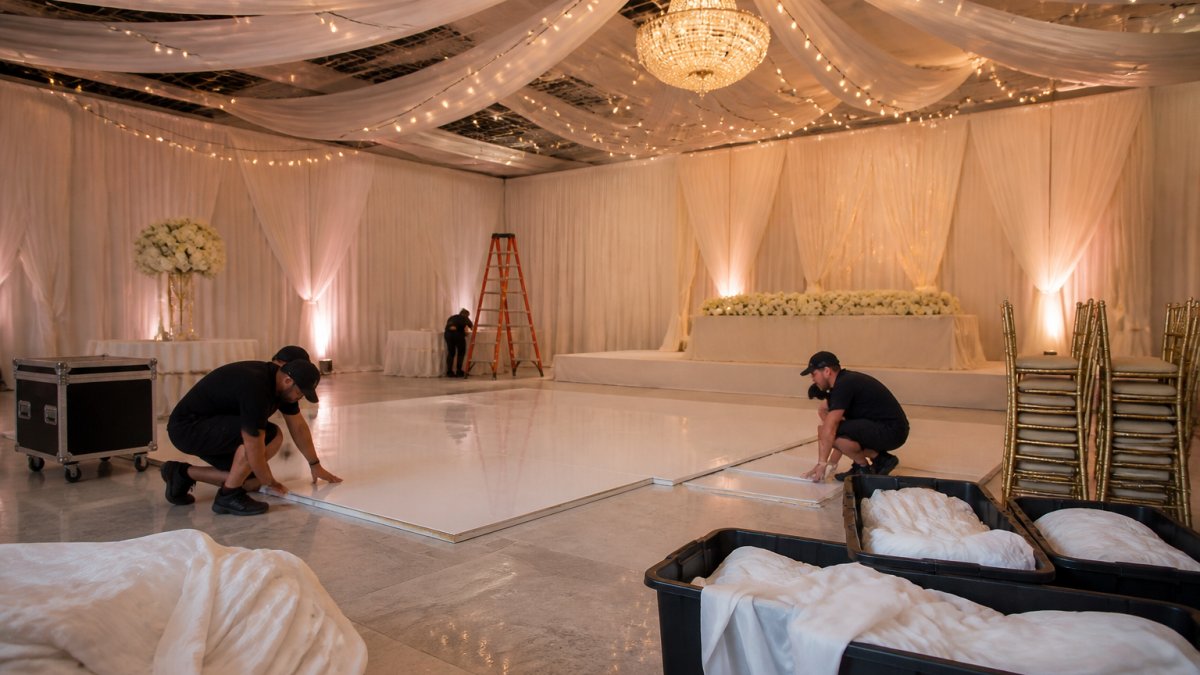
This is where professional installation earns its keep: a rental and installation team can hang fabric so it diffuses light without crowding a hot fixture, using flame-resistant materials suited to the room.
Use Wedding Uplighting Ideas to Warm Up a Cold Room
Wedding uplighting is the fastest way to change how a room feels.
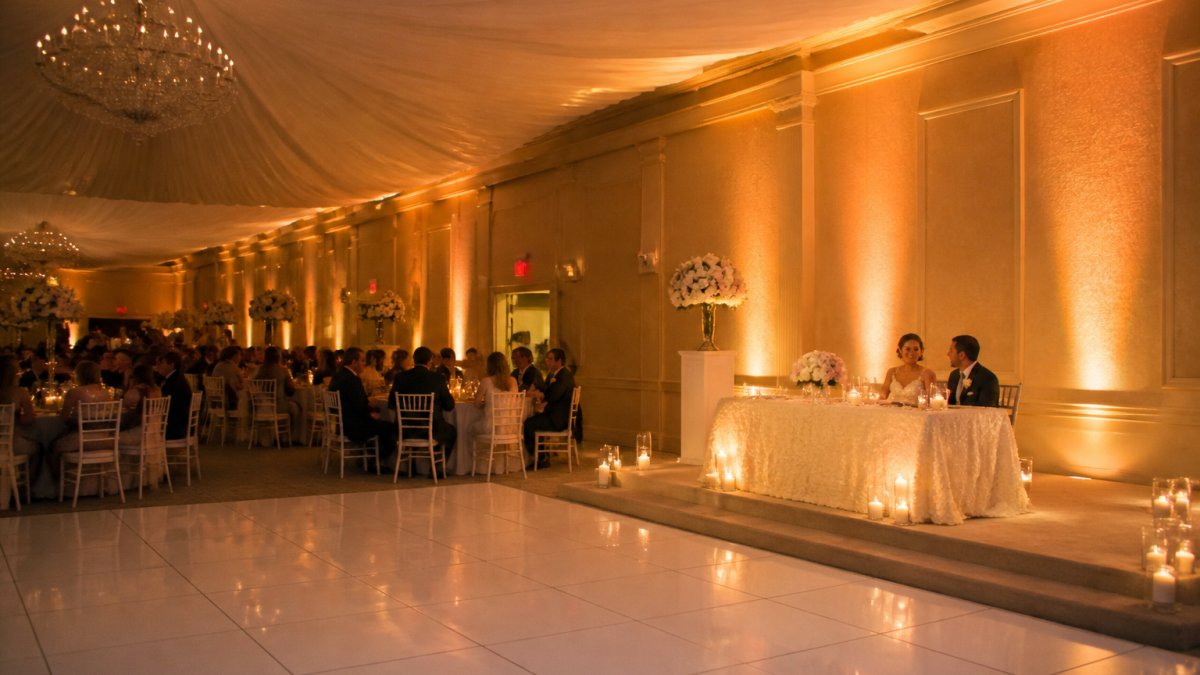
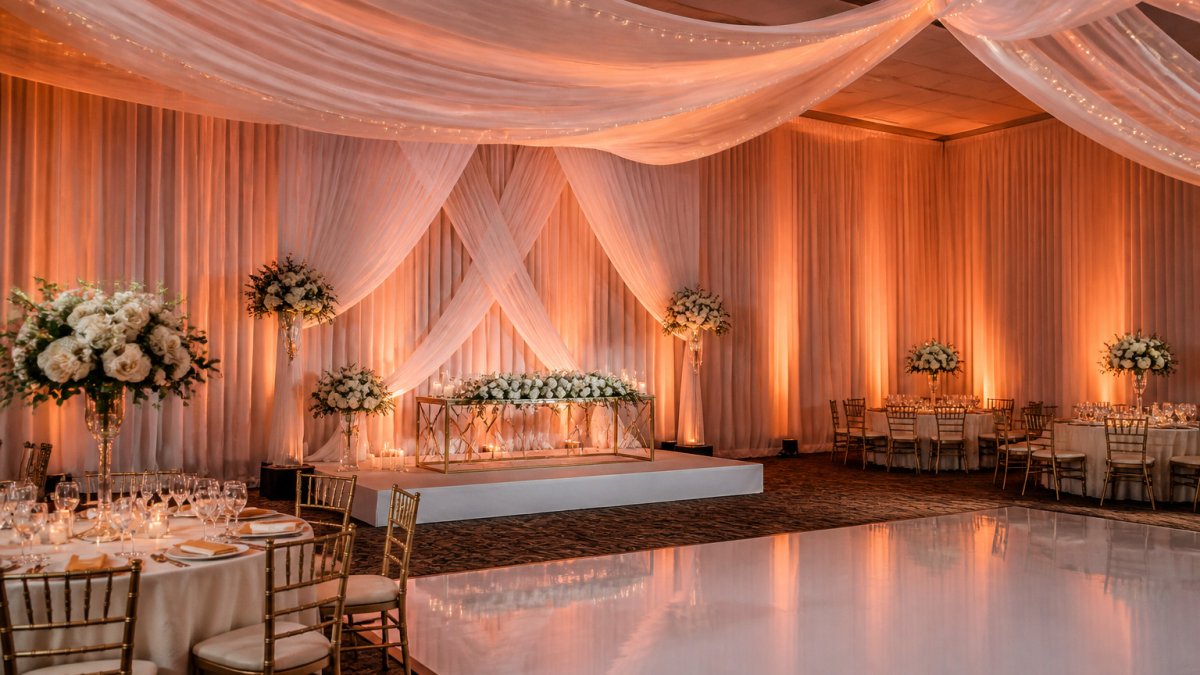
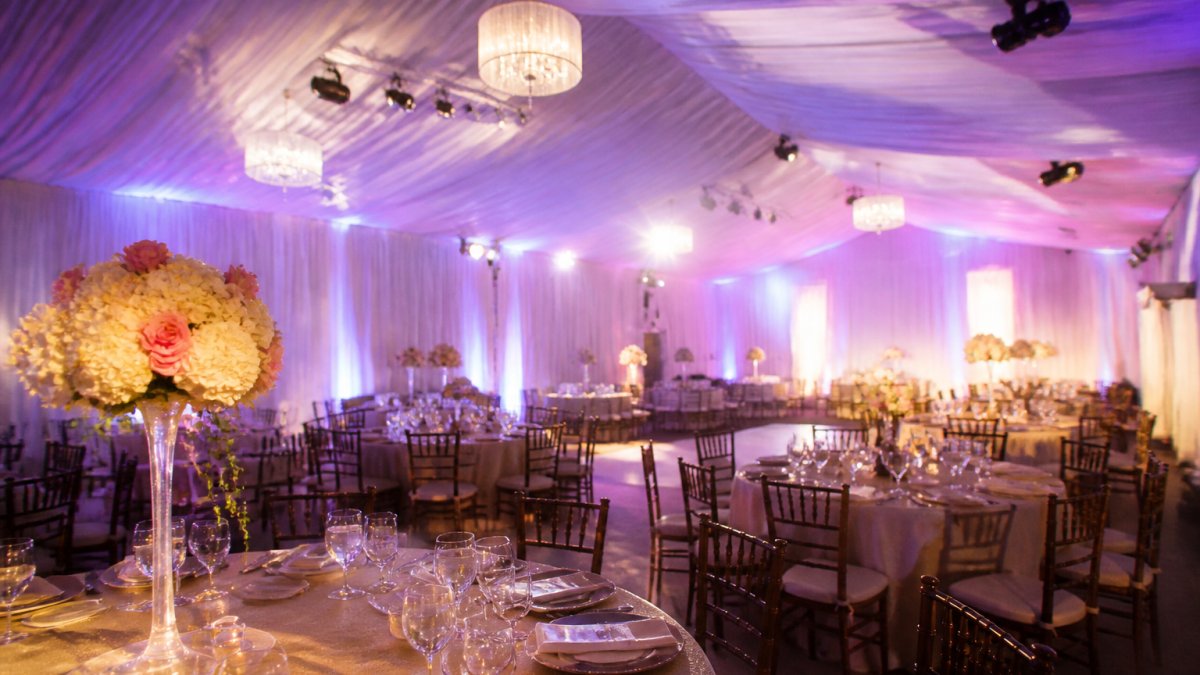
Amber and warm white tones flatter skin and wood. Cool blues and purples create drama but can read cold in photos, so use them as accents rather than the base layer.
Placement matters as much as color: lights tucked behind drapery or centerpieces glow without showing the fixture, keeping the room looking clean.
Point uplights slightly upward and angle them so the beam spreads across the wall rather than shooting straight up. You get a wider, softer wash and fewer hot spots near the ceiling.
Balance Mixed Lighting Sources and Color Temperature
Mixed lighting happens when warm bulbs, cool LEDs, and daylight share a room. The result is uneven color: some corners look yellow, others blue, and photos become a nightmare to correct. Most guides stop at "match the Kelvin", the harder work is diagnosing what is actually in the room and how it will read on camera.
Diagnose the Room Before You Add Anything
Walk the space with a simple checklist and note what you find:
- Color temperature: Compare a white napkin or shirt in different corners. If it reads cream in one spot and blue-white in another, you have a mix.
- Flicker: View LED and fluorescent fixtures through your phone's camera in video mode. Banding or pulsing means the fixture flickers, which will show up in photos and video.
- Color rendering: Look at reds and skin tones under each source. If faces look gray or florals look muddy, the fixture has poor color rendering even if it is bright.
Write down the venue's existing sources by type and approximate warmth, that note becomes the baseline for every added fixture.
Match, Don't Fight, the Existing Warmth
Color temperature is measured in Kelvin, and matching it is the fix. Keep added lighting close to the venue's existing warmth so everything reads as one scene: choose fixtures that match or sit slightly warmer, avoid mixing cool white LEDs with warm incandescent in the same sightline, and test the mix with a phone camera before the event. If the venue's overheads are cool and harsh, warm accent lighting can pull the room back toward a comfortable middle, handled well, that contrast reads as depth rather than mismatch.
Plan for Cameras, Not Just Eyes
Your photographer and videographer will see the room differently than you do. Three factors matter most:
- Color temperature consistency: A single warm base layer across the room is easier to white-balance than a patchwork of warm and cool zones.
- Color rendering: Warm amber and warm white uplighting flatters skin and wood; cool blues and purples create drama but can read cold in photos, so use them as accents rather than the base layer.
- Flicker: If a venue fixture flickers, no amount of added light fixes it in video. Ask the venue whether the circuit can be dimmed or swapped for the event, and flag it to your photo and video team in advance.
A common pattern is warm uplighting on the walls plus softer overhead light for the room itself, a consistent base that keeps skin tones natural.
Wedding Ceiling Draping That Changes How Light Falls
Wedding ceiling draping does more than decorate. It changes how light moves through a room by giving overhead fixtures a soft, fabric layer to pass through.
Sheer fabric stretched across a ceiling diffuses harsh downlights into an even glow and hides exposed beams, rigging, and bright fixtures that would otherwise dominate the room.
This is one of our favorite combinations at Wedding Draping, Lighting, Dance Floors & Chair Rentals: ceiling draping paired with warm uplighting.
If you can only do two things to fix harsh venue lighting, do these: add warm uplighting on the walls and soften the overheads with sheer ceiling draping. They solve most of the problem and look beautiful doing it.
Event Lighting Design: Plan by Event Type and Venue Layout
Event lighting design should start with the room and the moment, not the equipment list. Match the plan to the event:
- Ceremony: soft, even light on faces; avoid direct downlights
- Cocktail hour: warm ambient glow with a few brighter accents
- Dinner: dim overheads, warm the walls, light the tables gently
Venue layout drives placement. High ceilings need stronger, wider washes; low ceilings call for softer, closer fixtures.
| Space Type | Main Challenge | Best Fix |
|---|---|---|
| High-ceiling ballroom | Light falls too far and hard | Wide wall washes plus ceiling draping |
| Industrial loft | Cold, exposed fixtures | Warm uplighting and fabric diffusion |
| Tent or outdoor | Mixed daylight and bulbs | Match color temperature, add warm accents |
| Low-ceiling hall | Glare and hot spots | Dim overheads, add soft floor lamps |
When in doubt, walk the room with a lighting plan in hand and test it before the event. A professional installation team can map placement to your exact layout.
Harsh venue lighting is one of the most common problems we solve, and it is almost always fixable without touching the venue's fixtures.
Frequently Asked Questions
How can you soften harsh overhead lighting at a venue?
Start by identifying the fixtures causing the glare, then diffuse them with fabric panels or shades, bounce the light off walls or ceilings, and add warm layers like uplighting or string lights. If the venue allows, swap cool bulbs for warm ones. For a more permanent fix, ceiling draping hides the fixtures and softens how light falls. Always get venue approval before altering any fixture, and ask about dimmer access before your event date.
Can uplighting help reduce the appearance of harsh venue lighting?
Yes. Uplighting adds warm color to walls and vertical surfaces, which changes how the room reads and makes cool overhead light feel less clinical. Amber and warm white tones are especially effective in ballrooms and industrial lofts. Placing wash lights strategically along the perimeter balances the room and reduces the contrast between bright ceiling fixtures and darker corners, giving photographers more even exposure across the space.
How can draping change the look of a brightly lit venue?
Ceiling and wall draping gives light a softer surface to land on. Fabric absorbs glare, hides unattractive fixtures, and diffuses brightness so the room feels warmer and more intimate. In a venue with exposed beams or fluorescent panels, draping can reframe the entire ceiling. Pair draping with warm uplighting and you get a room that photographs well and feels romantic rather than harsh.
How do you balance decorative lighting with a venue's existing lights?
Treat the venue's fixtures as your base layer and build on top of it. Ask the venue which circuits and dimmers you can control, then add warm uplighting, bistro strings, or wash lights to soften the base. Match color temperature where possible, and avoid stacking cool white decorative lights against warm ones. A professional lighting design plan by event type and room layout keeps the layers working together instead of fighting each other.