 how-to
Event Lighting Design for Private Celebrations: 2026 Guide
Table of Contents
- Start With the Venue: Reading the Room Before You Light It
- Event Lighting Ideas That Fit Private Celebrations
- Event Uplighting: Color, Placement, and the Mood It Sets
- String Lights for Events: Warmth, Coverage, and Placement
- Lighting the Moments: Dance Floor, Stage, and Focal Points
- Your Event Lighting Setup Checklist
- Budget Tiers and DIY Versus Professional Installation
- Conclusion
- Frequently Asked Questions
Last Updated: October 21, 2026
Start With the Venue: Reading the Room Before You Light It
Great event lighting design for private celebrations starts with the room, not the fixtures, and that holds true for any event lighting design. Before choosing a color or hanging a single bulb, walk the space and note what the light already does.
A room's existing light decides half your plan. Get this step wrong and every fixture you add fights the space instead of shaping it.
Existing Light Sources and What They Do to Your Color Plan
Catalog every light source in the room: ceiling fixtures, chandeliers, windows, exit signs, and glow from adjacent rooms. Warm amber fixtures can mute a cool blue uplight into muddy gray, while fluorescent overheads flatten carefully placed accent lighting.
The fix is simple. Ask the venue which lights can be dimmed or switched off during your event, and plan your color palette around whatever stays on.
Power, Rigging, and Venue Constraints to Check First
Power and rigging decide what is possible before aesthetics enter the conversation. Confirm which outlets are available, how much load each circuit carries, and whether the venue allows fixtures hung from ceilings or beams.
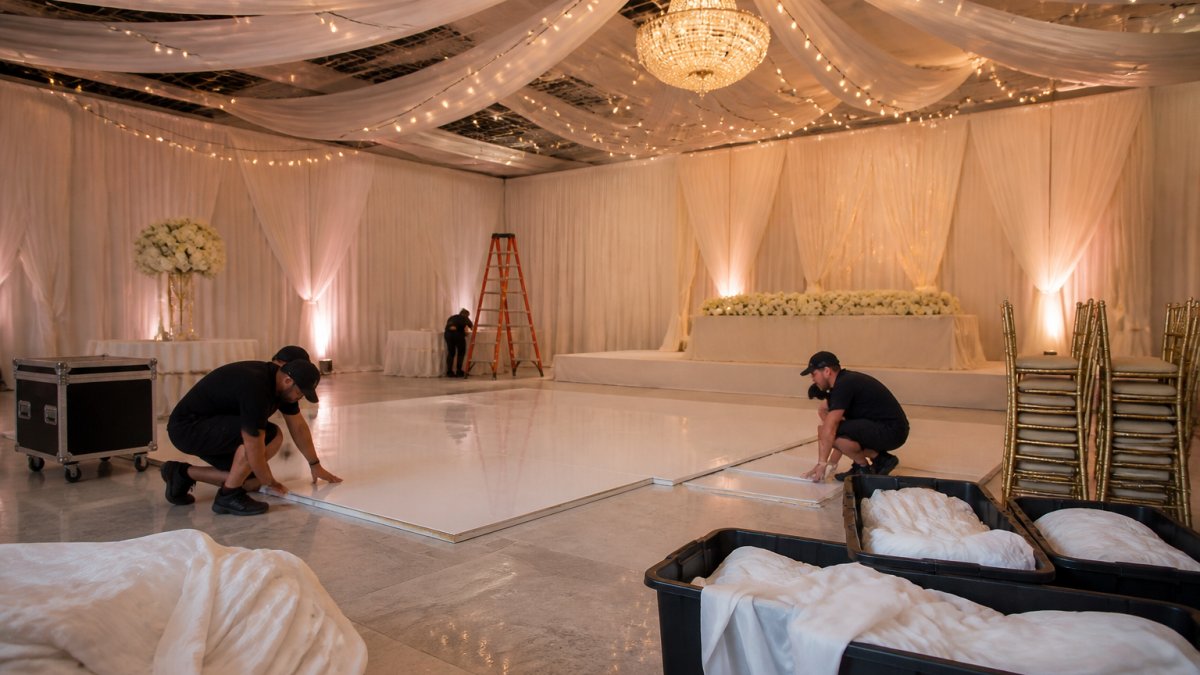
Ask about load-in times, elevator access, and setup windows. A venue that gives you one narrow hour to install will push you toward fewer, larger fixtures instead of dozens of small ones.
Event Lighting Ideas That Fit Private Celebrations
The best event lighting ideas for private celebrations share one trait: they layer. A single fixture type rarely carries a whole room. What most idea lists skip is the practical middle ground, which fixture does which job, roughly how many you need, and where they go.
Here is how the core techniques break down by purpose, typical fixture, and placement:
| Technique | Typical Fixture | Rough Quantity | Where It Goes | Best For |
|---|---|---|---|---|
| Perimeter uplighting | LED wash uplights | One every 6-10 feet of wall | Base of walls, columns, drapes | Flat rooms, instant color and depth |
| Overhead string lights | Bistro or market strands | Enough strands to span the ceiling in parallel or crisscross runs | Above the guest area, high enough to clear heads and cameras | Cold or industrial ceilings, tents, patios |
| Pin spotting | Narrow-beam spot fixtures | One per focal table or display | Aimed from above onto centerpieces, cake, sweetheart table | Rooms where details get lost in shadow |
| Dance floor wash | Color-changing wash or moving heads | Two to four fixtures | Aimed across the floor, not into faces | Energy shifts after dinner |
| Monogram or gobo projection | Pattern projector | One | Wall or dance floor with clear sightlines | A personal focal anchor |
| Cold sparkler effects | Cold spark machines | One to two per moment | Upstage or flanking the focal point | Grand entrances, first dance, cake cut |
Quantities are starting points, not rules, ceiling height, wall length, and fixture output all shift the count. A vendor who has walked the room can tighten these numbers.
Matching the Plan to the Celebration
Different private celebrations want different light. A few patterns hold up well:
- Birthdays: brighter, more saturated color and active dance floor lighting; the room should feel energetic from arrival.
- Anniversaries: warm amber and soft white, pin spots on photos or a memory table, gentle transitions rather than dramatic shifts.
- Engagement parties: romantic and flattering, amber uplighting, a string light canopy, and a soft spotlight for the toast.
- Family celebrations and milestone gatherings: even, comfortable light with strong focal lighting so multi-generational guests can see and move easily.
Each idea solves a different problem. Uplighting fixes a flat room, string lights fix a cold ceiling, and pin spotting fixes a room where guests cannot see the details. Start with the room's biggest weakness, then layer until the space feels finished. Two or three well-chosen techniques usually beat five competing ones.
Event Uplighting: Color, Placement, and the Mood It Sets
Event uplighting places color-changing fixtures at the base of walls and aims them upward to wash architecture in light.
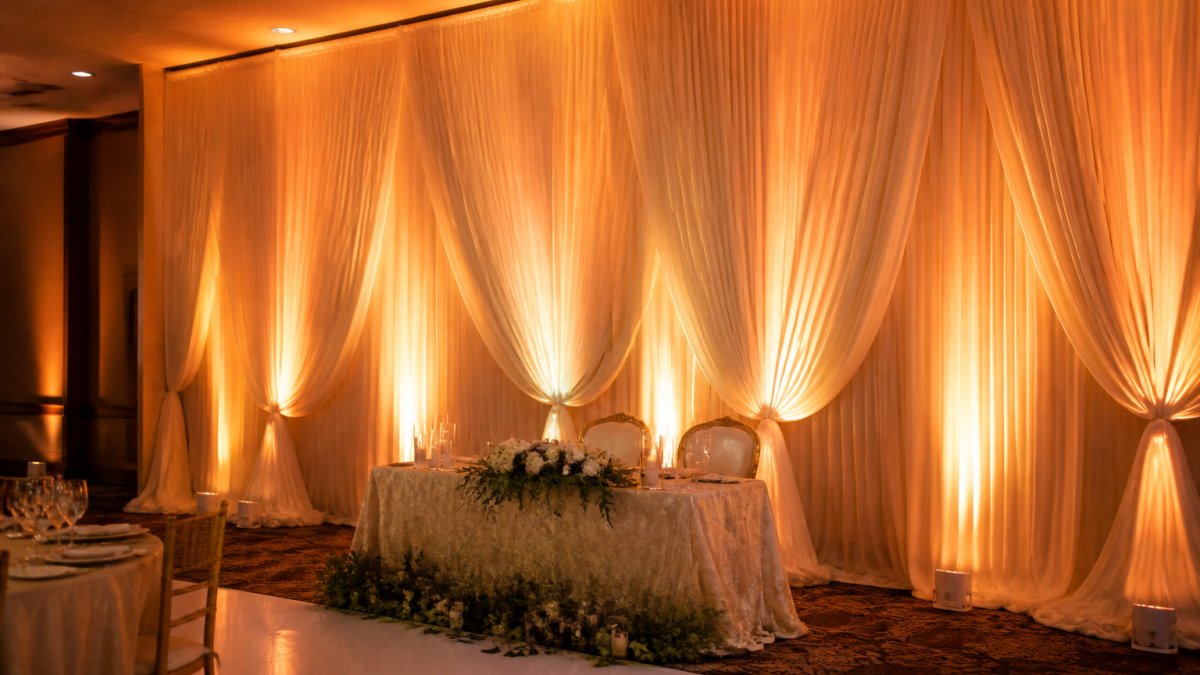
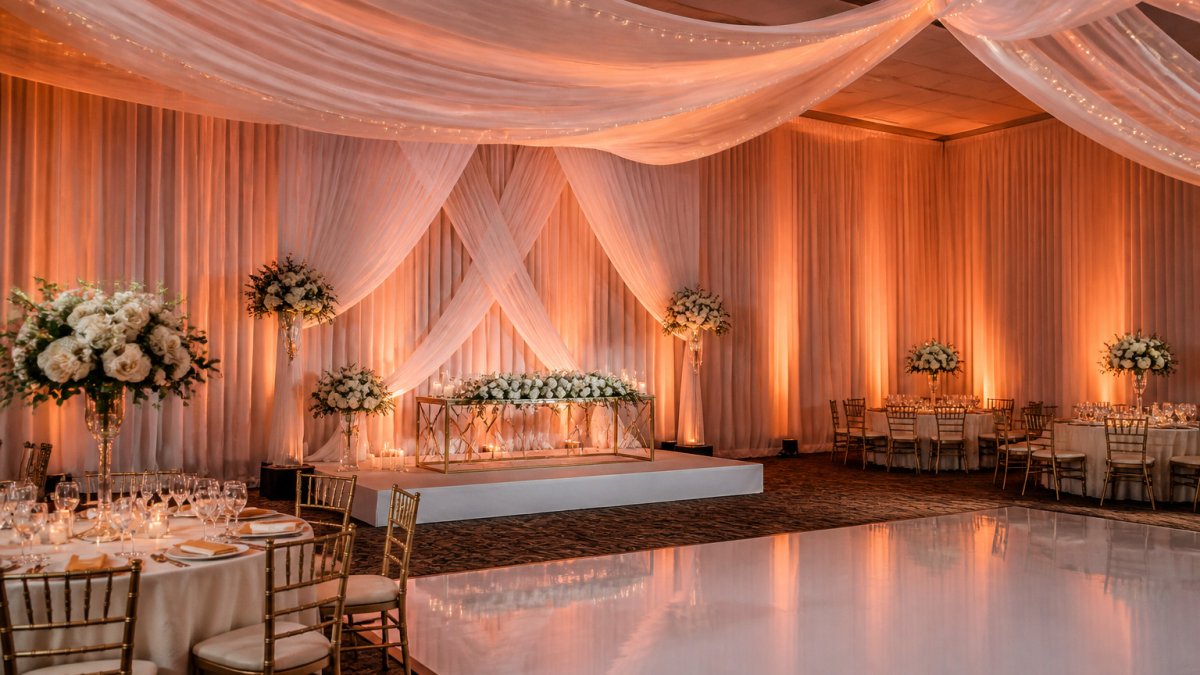
Color choice drives the mood more than fixture count. Amber and warm white feel romantic and flattering to skin tones. Soft blush and champagne read elegant.
Placement matters just as much. Space fixtures evenly along each wall, aim them slightly off the wall to avoid hot spots, and hide the units behind drape or decor.
String Lights for Events: Warmth, Coverage, and Placement
String lights for events do one job better than any other fixture: they make a ceiling feel intimate.
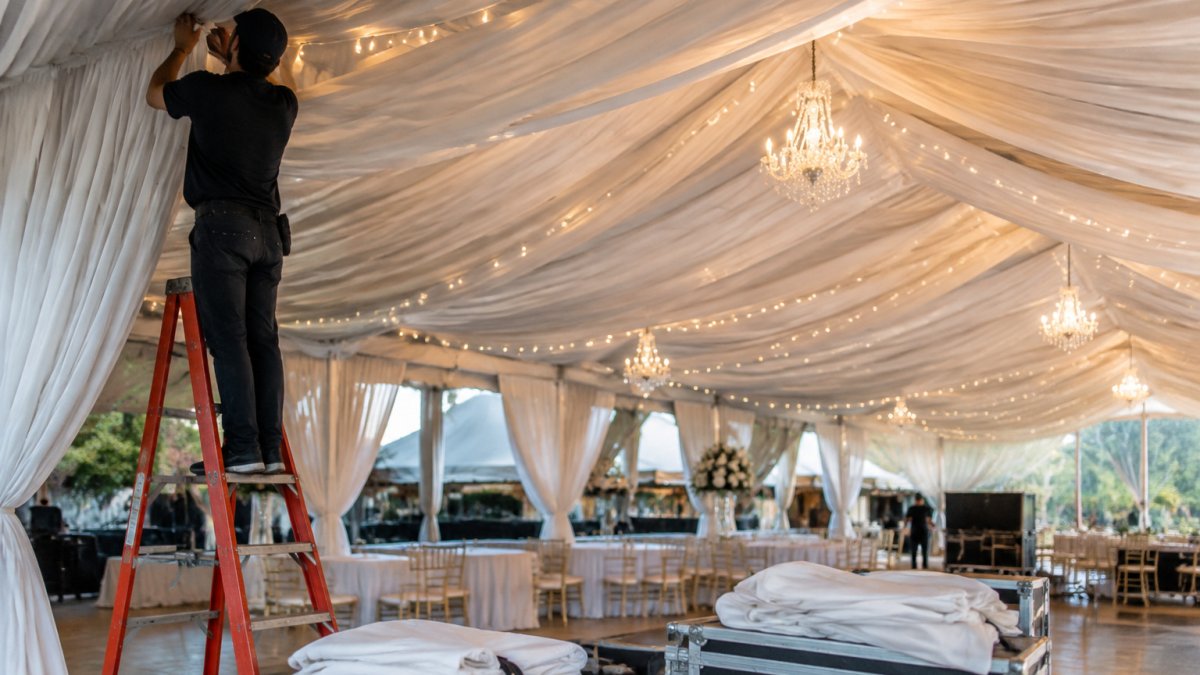
Placement decides the effect. Run strands in parallel lines for a clean, modern look, or crisscross them for a fuller canopy.
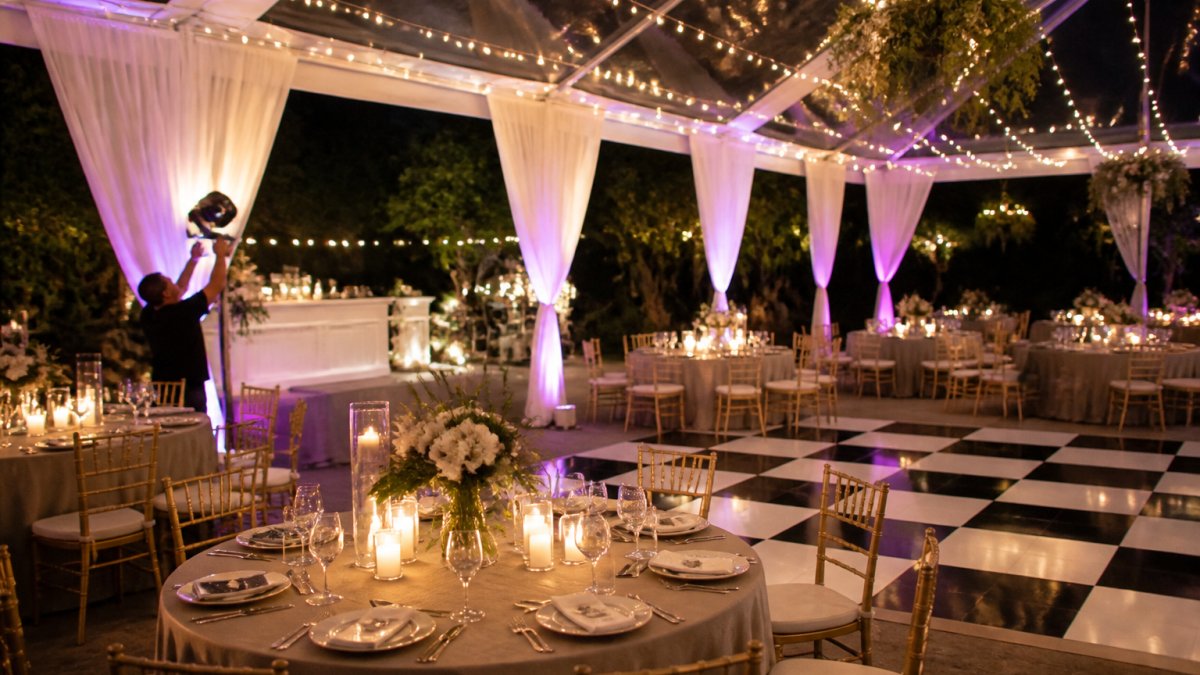
Pair string lights with uplighting and the room gains both depth and height: warm color on the walls, soft sparkle overhead.
Lighting the Moments: Dance Floor, Stage, and Focal Points
Lighting the dance floor, stage, and focal points is where a private celebration stops looking decorated and starts feeling designed. These are the areas guests photograph most.
Dance floor lighting sets the energy.
Stage and head table lighting should flatter, not blind. Aim fixtures across the front of the stage rather than into faces, and keep spotlights soft.
Focal points deserve their own treatment.
Cues Across the Evening
Lighting should change as the night does. A simple cue plan keeps the mood matched to each moment:
- Cocktail hour: bright and welcoming, warm white with soft uplighting
- Dinner: dimmer, amber tones, pin spots on tables
- Speeches and toasts: focused light on the speaker, room softened
- First dance: spotlight the couple, gentle color on the floor
- Open dancing: full color and movement, dance floor lighting active
Write the cue list down and share it with whoever runs the fixtures. Improvised lighting usually looks improvised.
Your Event Lighting Setup Checklist
Use this event lighting setup checklist to plan in the right order and avoid last-minute scrambles:
- Walk the venue and photograph every existing light source
- Confirm which lights the venue will dim or turn off
- Check outlets, circuit capacity, and rigging permissions
- Confirm load-in, setup, and load-out windows
- Match your color palette to the room's wall and floor colors
- Choose two or three layered techniques, not five competing ones
| Planning Stage | What to Confirm | Why It Matters |
|---|---|---|
| Site walk | Existing light and wall colors | Prevents color clashes |
| Power check | Outlets and circuit load | Avoids tripped breakers |
| Rigging check | Overhead attachment rules | Decides string light options |
| Cue plan | Lighting changes by moment | Keeps mood matched to the night |
| Load-in plan | Setup and teardown windows | Prevents rushed installs |
Budget Tiers and DIY Versus Professional Installation
Lighting budgets stretch further when you spend on the fixtures guests actually notice. Uplighting and dance floor lighting deliver the biggest visible change per fixture. Elaborate ceiling treatments cost more in labor than equipment, which is why a full string light canopy can outprice a room full of uplights.
Rather than quote numbers that vary by room, date, and delivery, understand what drives the total:
- Fixture count and type. More fixtures mean more equipment and more setup time. Moving heads and pattern projectors cost more to rent and operate than static washes.
- Labor and access. High ceilings, rigging points, stairs, and tight load-in windows all add installation time, and installation time is a real line item.
- Power and cabling. Long cable runs, distro, and circuit management add cost and complexity, especially in older rooms with few outlets.
- Operating needs. If someone must run cues live versus a pre-programmed show, that changes the plan and the labor.
A Practical Priority Order
If the budget is fixed, spend in this order: perimeter uplighting, then a focal treatment (pin spots or a monogram), then dance floor lighting, then overhead string lights. That sequence front-loads the changes guests notice on arrival and saves labor-heavy ceiling work for last.
DIY Versus Professional Installation
DIY versus professional installation comes down to four questions:
- Can you safely reach the rigging points? Ladders and lifts near guests and glass are a genuine hazard.
- Does the venue allow self-installation? Many venues require licensed or approved vendors for overhead work and carry insurance requirements.
- Do you have the power to run it? Overloaded circuits trip breakers mid-event, and cable across walkways is a trip hazard.
- Do you have time to test every fixture before guests arrive? Untested gear fails at the worst moment.
If any answer is no, professional installation is the safer choice. A family-owned rental team that has installed in local venues for decades also knows the room's quirks, shared circuits, rigging rules, and how the existing light behaves, before the first fixture goes up.
Pricing depends on quantity, dates, and delivery, so ask for a quote rather than guessing from a list. Share your event date, venue, guest count, and the services you want, and a vendor can build an accurate plan.
Conclusion
Every private celebration has one room that feels flat until the right light hits it. The difference between a decorated space and a transformed one comes down to a layered plan, honest venue checks, and fixtures placed with purpose.
At XL Entertainment Systems, our family-owned team has designed and installed event lighting since 1992. We handle custom lighting design, amber uplighting, bistro and market string lights, monogram projection, and cold sparkler effects, and we pair them with draping, dance floors, and chair rentals so one team manages the whole transformation.
Frequently Asked Questions
What is the 3 lighting rule for private events?
The three-layer rule means every room gets ambient light for overall visibility, accent light to highlight focal points like a backdrop or cake table, and task or effect light for specific moments such as dinner tables, the dance floor, or a stage. Layering keeps a room from looking flat under a single overhead source. In practice, most private celebrations combine uplighting for ambiance, string lights or pin spotting for accents, and focused dance floor lighting. Build the layers in that order and adjust intensity as the evening moves from cocktails to dancing.
How do you choose event lighting ideas that match a venue?
Start with what the venue already has: window light, chandeliers, wall color, and ceiling height. A room with warm wood or brick reads well under amber uplighting, while a white ballroom can carry cooler tones or color changes. Then match the ideas to the celebration type: soft and romantic for a wedding reception, brighter and more focused for a corporate gala. Ask for photos of similar spaces the rental company has transformed so you can see the effect before committing.
When should event lighting be installed and tested?
Installation usually happens the morning of the event or the day before, depending on venue access windows. Testing should happen after dark or with the room's blackout conditions in place so you can judge color and intensity accurately. Confirm with your venue when vendors can load in and whether a site walkthrough is required. A professional team will test every fixture, check circuit loads, and confirm cues with your timeline before guests arrive, which prevents surprises during speeches or the first dance.
Can string lights and uplighting be combined in one setup?
Yes, and the combination is one of the most requested looks for private celebrations. String lights overhead create a warm ceiling canopy and a soft ambient glow, while uplighting washes walls and architectural features in color. Together they give you depth: the room feels intimate at eye level and dramatic at the edges. Plan the color temperature so the two layers do not clash, and decide early whether the uplighting will stay one color all night or shift for dinner and dancing.