 how-to
Wedding Lighting in Orange County: Planning Guide
Quick Summary
Wedding lighting sets the mood of a venue and shapes how the couple looks in photographs. For Orange County venues, plan for power access, weather contingency, and fixture types such as uplights, pin spots, and bistro string lights, layered together for depth.
- Start by identifying what the room lacks: height, warmth, texture, or focus.
- Confirm outlet locations, circuits, and whether the venue allows generators before choosing fixtures.
- Keep lighting well under each circuit's rated capacity and spread fixtures across multiple circuits.
- Warm amber or soft white bases photograph more flatteringly than an all-saturated room.
- Test colors against your actual draping and linens before committing to a design.
Table of Contents
- How Wedding Lighting Shapes the Mood of Your Venue
- Outdoor Wedding Lighting Orange County Venues Need
- Wedding Uplighting Rentals and the Colors That Work
- Bistro String Light Rentals for Ceremonies and Receptions
- What Makes the Best Wedding Lighting Orange County Couples Choose
- Planning Your Lighting Timeline, Power Needs and Venue Walkthrough
- Booking Your Wedding Lighting Consultation With XL Entertainment Systems
- Frequently Asked Questions
How Wedding Lighting Shapes the Mood of Your Venue
Wedding lighting sets the mood before a single guest takes a seat. At XL Entertainment Systems, a family-owned company serving Southern California since 1992, we know how the right lighting can turn a plain hall into a room people remember.
Lighting does three jobs at once. It sets the emotional temperature of the room, it guides guests from the ceremony to the reception, and it shapes how the couple looks in photographs. Many couples focus on flowers and linens and treat lighting as an afterthought, which is often where the room falls flat.
Start with the venue itself. A ballroom with high ceilings needs light that reaches upward, while a garden courtyard needs light that defines paths and seating areas after sunset. Ask yourself what the room lacks: height, warmth, texture, or focus.
Outdoor Wedding Lighting Orange County Venues Need
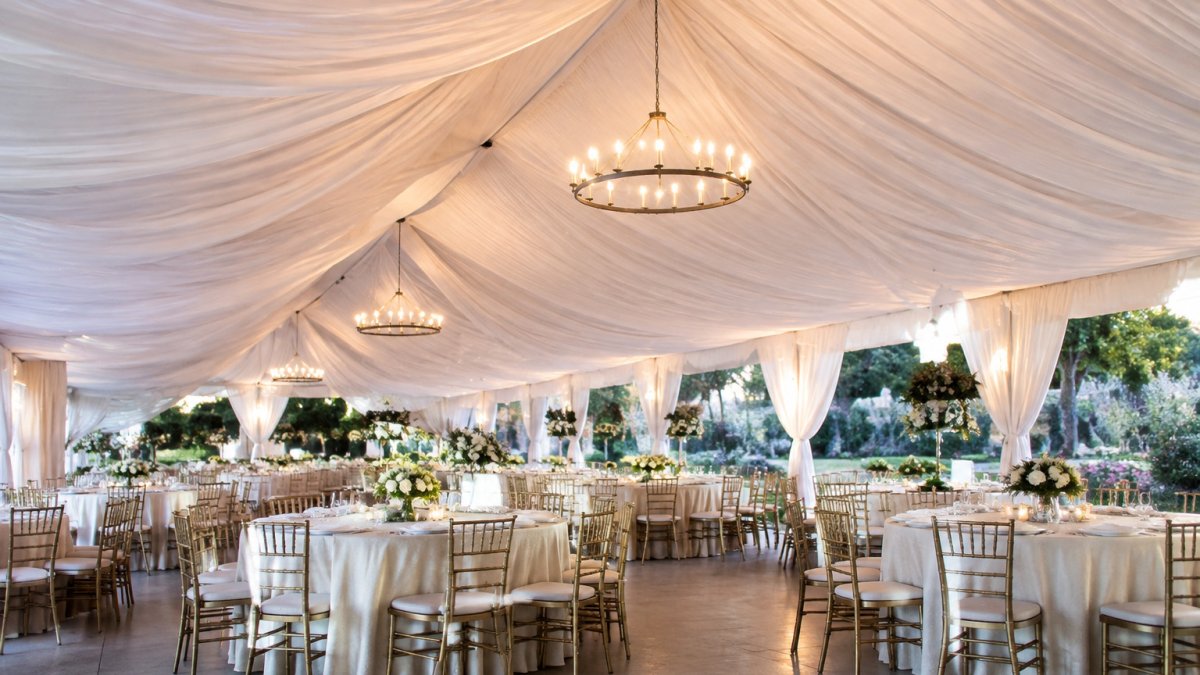
Outdoor venues across Orange County face challenges indoor spaces do not. Evening temperatures drop quickly, wind can move lightweight fixtures, and the sun may set before dinner is served. Plan for all three.
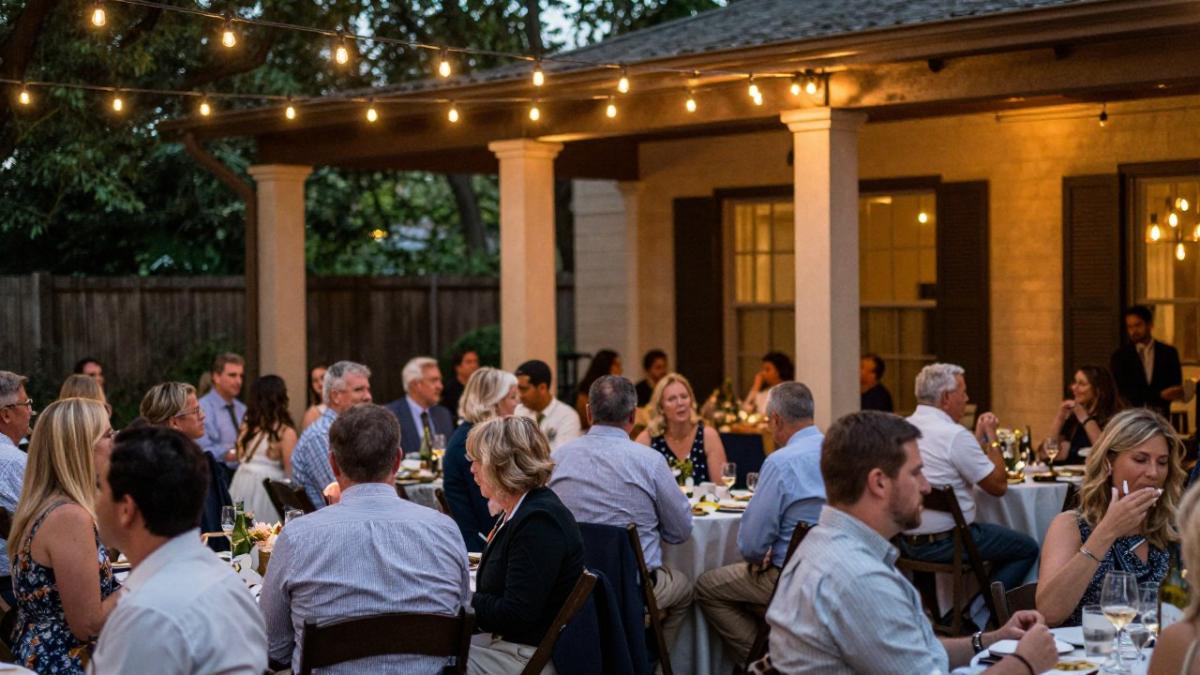
Power access is the first practical question. Confirm where outlets sit, how many circuits are available, and whether the venue allows generators. Many outdoor spaces have limited power, so a lighting plan that looks good on paper may need adjustment once you walk the grounds.
Weather contingency matters too. Choose fixtures rated for outdoor use and secure every cable run against foot traffic. Build a backup plan for light rain or wind, such as covered walkways or a tent with interior lighting. A simple checklist helps:
- Confirm outlet locations and available amperage
- Mark pathways that need guiding light
- Identify a covered area for rain contingency
- Schedule setup early enough to test everything before guests arrive
Wedding Uplighting Rentals and the Colors That Work
Uplighting is one of the most popular ways to add color and depth to a wedding space. Fixtures placed on the floor and aimed at walls, columns, or draping wash the surface in soft color and create a sense of dimension. But "uplighting" is not one product. The fixture type, the beam angle, and the placement all change what the room looks like, and couples who understand those variables make better decisions than couples who only pick a color.
The main fixture types and what each one does
- LED wash uplights. The workhorse of wedding uplighting. A wide beam spreads soft color up a wall or across draping. Best for ballrooms, tent walls, and large flat surfaces. Most units are dimmable and can shift color through the night, so the same fixture can carry a soft amber dinner and a saturated blue dance floor.
- Pin spots. A narrow, focused beam aimed at one object, a cake, a centerpiece, a sweetheart table backdrop, or a monogram. Pin spots create contrast and draw the eye. They are not room-filling lights; they are accent lights.
- Gobo and monogram projectors. These project a pattern, logo, or names onto a wall, dance floor, or ceiling. They work best on a clean, light-colored surface and need a clear throw distance. A monogram projected onto busy draping or a textured wall loses legibility.
- Intelligent moving-head fixtures. Motorized fixtures that pan, tilt, and change color. Useful for dance-floor energy and for shifting the room from dinner to party without a second setup. They cost more per unit and need more planning for placement and power.
Color choice and how it behaves in a real room
Color choice shapes the feel of the room. Amber and warm gold suggest romance and candlelit warmth, which suits intimate dinners and rustic venues.
Color also behaves differently depending on what it hits.
Watch out: a fixture that looks golden in a showroom may appear orange against ivory fabric, and a blue that reads as jewel-toned on a swatch can turn muddy on a beige wall.
Placement and the details that separate clean from cluttered
Uplights sit on the floor and aim upward, so the base of every fixture is visible unless it is hidden. Good installations tuck fixtures behind draping, table linens, or floral arrangements, and run cables along walls rather than across walkways.
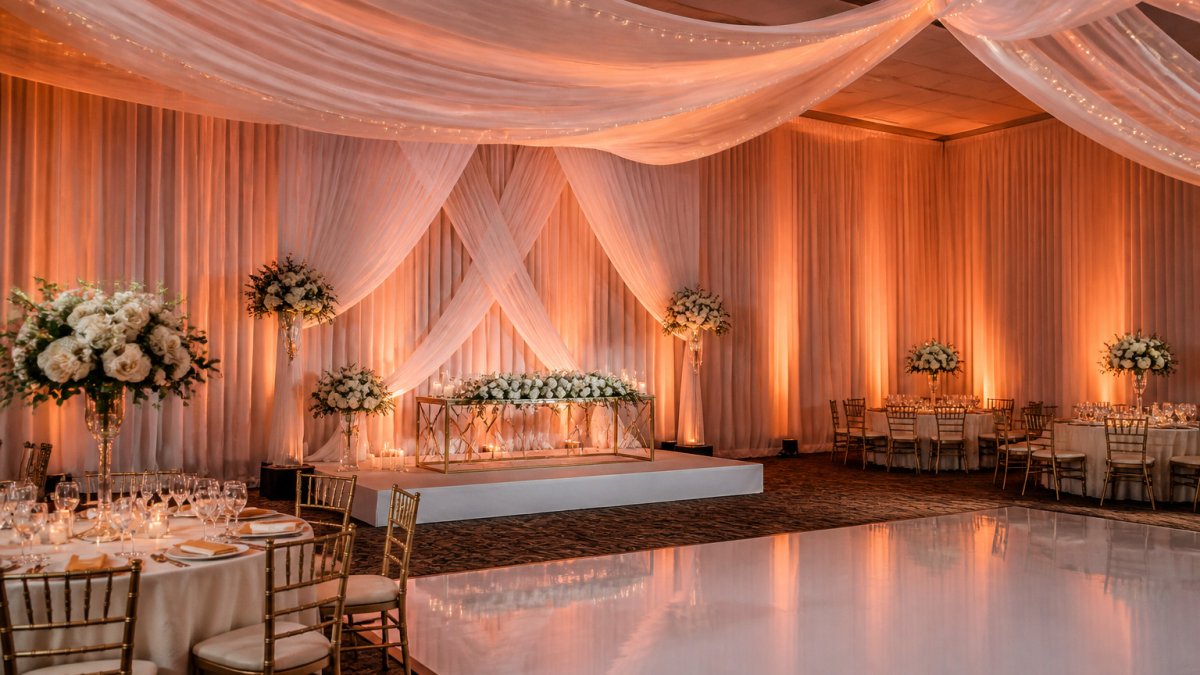
Uplighting pairs naturally with other rentals. Amber uplighting behind ceiling draping warms the whole room from above and below at once. Uplighting plus a monogram on the dance floor gives the party a focal point.
Uplighting and photography
Photographers care about color temperature and shadows. Very saturated colors can cast strong tints on skin, and a single hard uplight aimed at a guest's back can throw a shadow across the couple during a toast. A warm amber or soft white base, with saturated color reserved for the dance floor and accent moments, often photographs more flatteringly than an all-blue room.
Bistro String Light Rentals for Ceremonies and Receptions
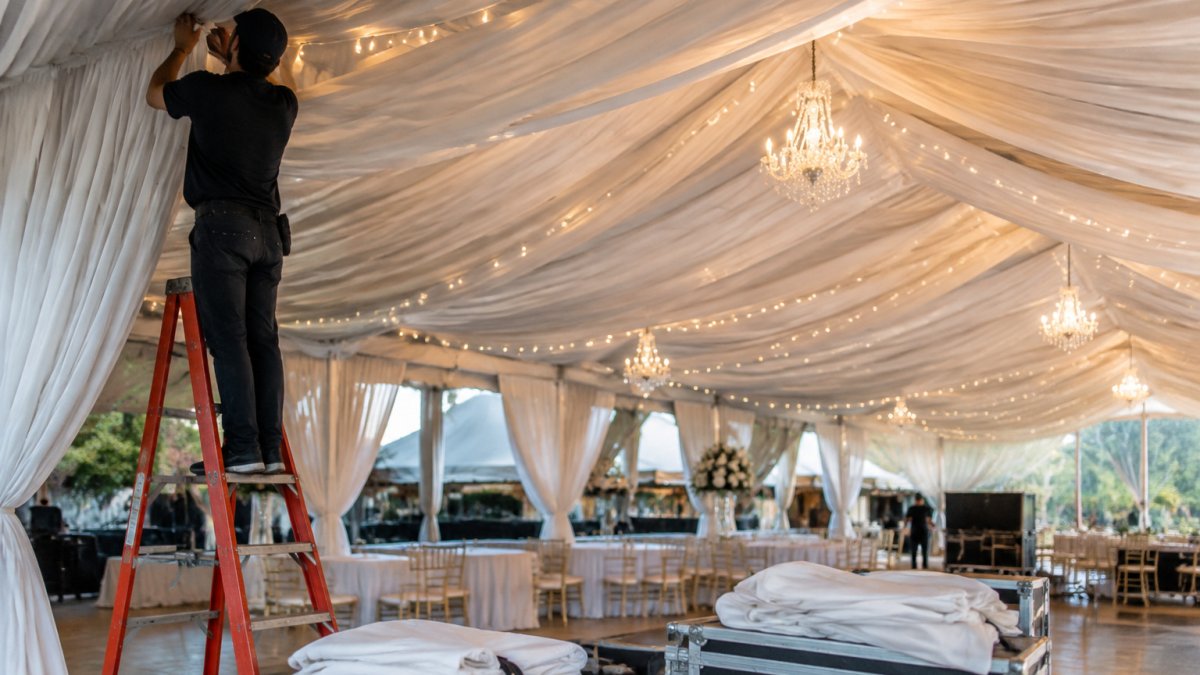
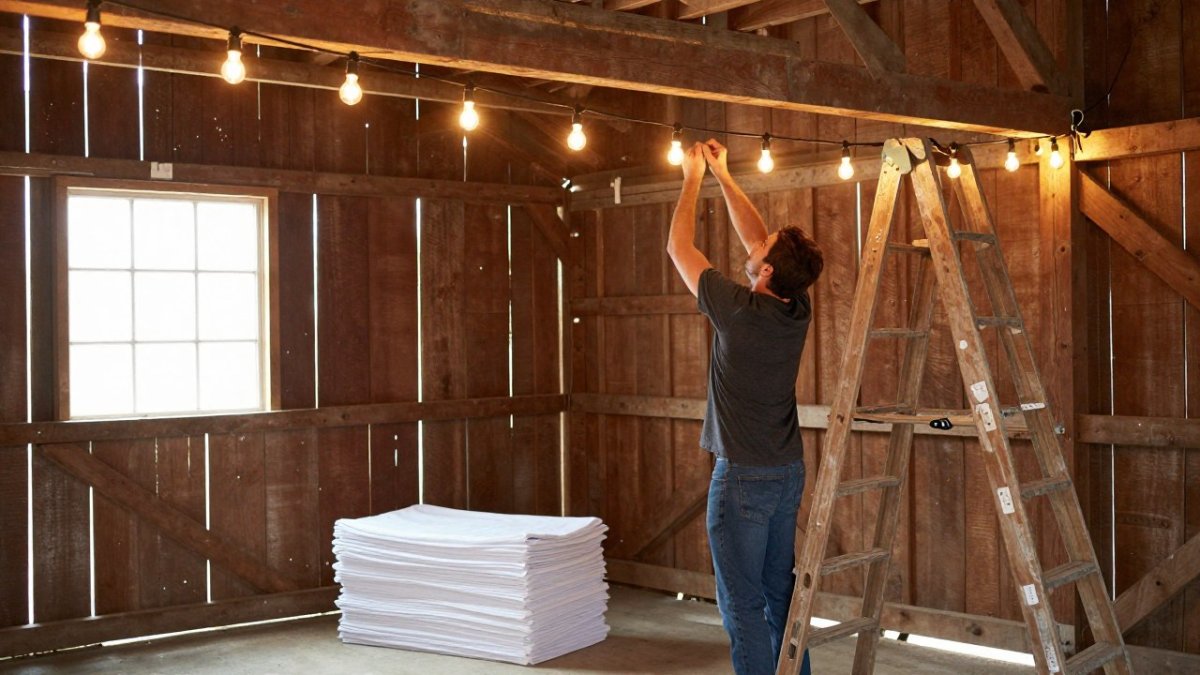
Bistro string lights are a practical choice for ceremonies and receptions because they cover large areas with soft, even light.
Consider spacing carefully. Lights hung too sparsely look like scattered dots, while lights bunched too tightly can feel heavy.
Bistro lights also work well layered with uplighting.
Bistro string lights offer soft, even coverage, and a few details shape the mood more than most couples expect.
| Factor | Why it matters | Note |
|---|---|---|
| Spacing | Sparse lights look like scattered dots | Measure the area before choosing run count |
| Dense spacing | Tight bunching can feel heavy | Balance coverage against visual weight |
| Bulb color | Changes the mood more than expected | Choose warm white or cool white |
| Layering | Adds depth to the room | Pair with uplighting for floor-level color |
What Makes the Best Wedding Lighting Orange County Couples Choose
The best wedding lighting is rarely the most elaborate. It is the lighting that fits the venue, the season, and the couple's style.
Quality shows in the details. Look for fixtures that run cleanly without flicker, cable runs hidden under draping, and setups that are tested before guests arrive.
Family ownership has shaped how we approach this work. Since 1992, we have focused on careful planning and personal attention to every event.
Planning Your Lighting Timeline, Power Needs and Venue Walkthrough
A clear timeline prevents most lighting problems. Begin planning as soon as the venue and date are set, then work backward. A typical sequence looks like this:
- Three to four months out: Walk the venue and note power sources, ceiling height, and sightlines.
- Six to eight weeks out: Finalize your lighting design, including color, fixture count, and placement.
- One week out: Confirm delivery, setup time, and power access with the venue.
- Day of: Allow time for installation, testing, and adjustment before guests arrive.
The details inside each step are where lighting plans succeed or fail.
The venue walkthrough: what to actually measure and ask
Bring a notebook and a phone to photograph ceilings, walls, and outlet locations. Measure key distances, especially from the proposed lighting position to the draping or backdrop, and note ceiling height at the point where you plan to hang anything. A few specifics to capture:
- Ceiling height and structure. Note whether the ceiling is drywall, exposed beam, truss, or a drop ceiling. Each hangs differently, and some cannot be hung from at all.
- Rigging permissions. Ask the venue whether you may hang from the ceiling, what the load limits are, and whether they require a licensed rigger or a venue-approved vendor. Some venues allow only freestanding pipe and drape or ground-supported structures.
- Union and labor rules. Some venues require their own staff to hang or strike certain items. Confirm who does the work and when.
- Sightlines. Stand where guests will sit and where the photographer will shoot. Note columns, low beams, and anything that blocks a light's throw.
Power planning: the math most couples skip
Power planning deserves its own step. Add up the wattage of your planned fixtures, then confirm the venue can supply that load safely. Overloaded circuits are a common cause of failure during the event.
Watch out: the biggest power failures come from assuming an outlet is dedicated when it is not. A circuit that runs fine during a daytime walkthrough can trip the moment the caterer plugs in warming trays.
Outdoor and weather contingency
Outdoor venues add variables indoor spaces do not. Evening temperatures drop, wind moves lightweight fixtures, and the sun may set before dinner is served. Choose fixtures rated for outdoor use, secure every cable run against foot traffic with cable ramps or stakes, and build a backup plan for light rain or wind, covered walkways, a tent with interior lighting, or a scaled-back design that still works if part of the setup has to come down.
Coordinating with the venue and your other vendors
Your lighting plan touches the venue, the caterer, the DJ or band, and the photographer. Share the final plan with all of them before the event. The DJ needs to know where power and control are; the photographer needs to know where the key light and any monogram will fall; the venue needs to approve rigging and load-in times. A single shared document with fixture counts, placement, power needs, and setup times prevents most day-of surprises.
What to bring to your consultation
When you contact a rental company, have your event date, venue name, and a rough guest count ready, plus any photos from your walkthrough. That information lets the team recommend a realistic fixture count and flag venue restrictions early, rather than discovering a rigging limit during setup.
Booking Your Wedding Lighting Consultation With XL Entertainment Systems
Planning the right lighting for your wedding is easier with a clear picture of your venue, date, and vision.
To start, share your event date, venue name, and the services you are considering. Tell us about the mood you want to create, and we will help you plan a design that suits your room.
Request your free custom quote today, and let us help you light the celebration you have been planning.
Frequently Asked Questions
What color is most flattering for uplighting at a wedding?
Warm amber and soft gold tones are the most common choice because they flatter skin tones and make draping and florals look rich rather than harsh. Cooler colors such as blue or white can suit modern or minimalist venues, but they tend to make guests look pale in photos. Many couples start with amber for the reception and switch to a neutral white during the ceremony. Test a few colors at your venue before the event, since walls, ceilings and drapery change how each shade looks.
How do string lights and uplighting work together at a wedding?
Bistro string lights add a soft overhead glow and a sense of intimacy, while uplighting washes walls, columns and drapery with color. Used together, the string lights draw the eye upward and the uplighting defines the room's edges, which helps a large space feel warmer and more balanced. Keep the color temperatures aligned so the two sources do not clash. Plan the string light layout first, then add uplighting to the walls and features that need emphasis.
When should wedding lighting be installed and tested?
Lighting should be installed after the venue's power access is confirmed and before decor is placed, so the team can adjust angles and brightness without moving finished setups. Schedule a test run at least a few hours before guests arrive, and check the lighting again once the room is dark, since colors look different at night. If the venue has strict load limits or restricted access times, raise those details during planning so installation fits the venue's schedule.
Do outdoor wedding lights in Orange County need to plan for weather?
Yes. Outdoor events in Orange County can face evening wind, coastal fog and sudden temperature drops, so lighting plans should include weatherproof fixtures and secure anchoring for string lights. Ask the venue about covered areas and backup power options, and confirm whether a rain plan or indoor space is available. Planning for these conditions in advance helps keep the lighting reliable and the setup safe for guests.