 how-to
Uplighting Rental in Orange County: Placement, Color and Setup
Quick Summary
An uplighting rental places fixtures low to project light upward onto walls, drapery and ceilings, creating warmth and depth in a room. Plan one uplight every 8 to 12 feet along major walls, choose two or three colors that match your draping and florals, and allow 5 to 10 minutes of setup per fixture.
- Start with one uplight every 8 to 12 feet along major walls.
- Darker walls absorb more light and usually need additional fixtures.
- Warm amber and soft gold suit a classic, romantic evening.
- Battery-powered LED uplights can reduce long cable runs in venues with limited outlets.
- Allow roughly 5 to 10 minutes of setup per fixture, plus testing time.
Table of Contents
- Why Uplighting Changes the Feel of a Room
- Uplighting Placement Ideas for Wedding and Event Rooms
- What Color Uplighting Is Best for Weddings
- Indoor Uplighting Rental: Ballrooms, Lofts and Venues
- Outdoor Uplighting Rental for Patios, Gardens and Tents
- Planning Your Uplighting Rental Step by Step
- Request a Free Uplighting Quote for Your Orange County Event
- Frequently Asked Questions
Uplighting Rental in Orange County: Placement, Color and Setup
Last Updated: November 10, 2026
Why Uplighting Changes the Feel of a Room
Uplighting rental can change a plain room into one that feels warm and finished within minutes. Well-placed fixtures can pull attention to walls, drapery and ceilings that would otherwise go unnoticed. Light sent upward softens hard edges, hides worn surfaces and gives guests a sense of atmosphere.
The effect comes from light that rises rather than falls. Overhead fixtures flatten a room, while low uplights create depth and shadow. For weddings and special events, that difference often decides whether a space feels like a function room or a celebration.
Uplighting is also one of the more affordable ways to change a room's look. According to DIY Uplighting's market overview of LED event lighting rentals, entry-level LED uplight rental pricing starts at $17 per unit, which makes it easy to scale a design up or down to fit a budget.
Uplighting Placement Ideas for Wedding and Event Rooms
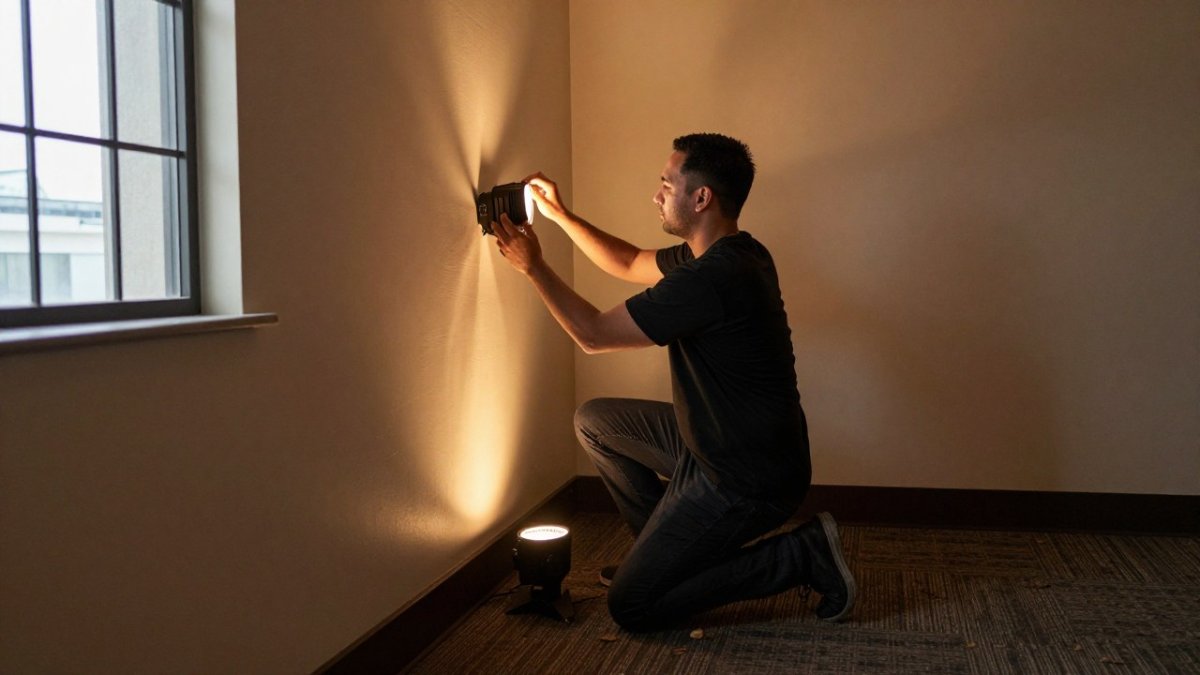
Good placement starts with the walls. Position fixtures along the perimeter so the light washes up the surface and creates a continuous glow. Corners, pillars and draped sections make strong focal points because they catch the light and reflect it back into the room.
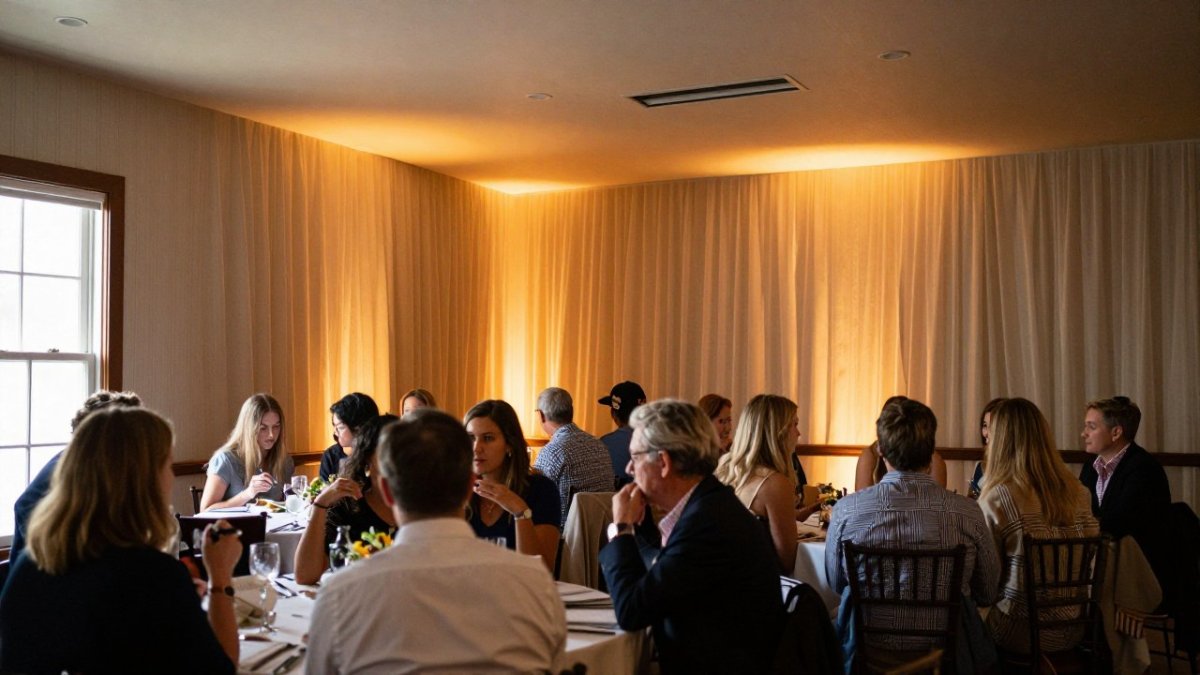
A common approach is to aim fixtures at features you want guests to notice, such as a sweetheart table backdrop, a dance floor edge or a cake table. Keep the beam angle wide enough to cover the surface but tight enough to avoid spill onto guests.
Setup time also shapes placement decisions. Standard LED uplighting typically takes about 5 to 10 minutes to set per fixture, according to Pro Lighting Rental's event setup benchmarks, so planning the layout in advance keeps installation on schedule.
How Many Uplights to Plan for a Room
A widely used guideline from Eden USA's lighting placement guidance is one uplight every 8 to 12 feet along major walls. Use this as a starting point, then adjust for ceiling height, wall color and how much contrast you want.
Darker walls absorb more light and usually need additional fixtures. Lighter or reflective surfaces can look full with fewer units.
What Color Uplighting Is Best for Weddings
Color sets the mood. Warm amber and soft gold suggest a classic, romantic evening. Deep blue and purple feel dramatic and modern. Clear or cool white tends to suit daytime ceremonies and clean, minimalist venues.
Match the color to the draping and florals. If the linens are ivory and the flowers are blush, amber or soft pink keeps the palette cohesive. If the room already has strong colors, a neutral white can keep the look balanced.
Test colors on site when possible. Light looks different against real fabric and architecture than it does on a screen.
Indoor Uplighting Rental: Ballrooms, Lofts and Venues
Indoor spaces reward careful planning, and the logistics matter as much as the color. Ballrooms often have tall walls that need more fixtures to fill evenly. Lofts and industrial venues may have exposed brick or concrete, which can look cold without warm light and soft drapery. Historic venues may have plaster, wood paneling, or architectural details that change how light reads on the wall.
Battery-powered versus plug-in fixtures
This is the decision that shapes the rest of your plan.
- Battery-powered LED uplights run on internal rechargeable batteries. They can reduce long cable runs and are a practical choice for venues with limited outlets. Output and runtime vary by model, so confirm with the rental company that units are charged and tested before delivery.
- Plug-in fixtures draw from wall outlets. They can suit large ballrooms where you need to reach tall walls, but they require enough circuits, extension planning, and cable management that the venue will approve.
Many indoor events use a mix: battery units on walls far from power, plug-in units on feature walls near outlets.
Venue approval and power access
Venues often enforce rules about tape, cable management, and where equipment can be placed. Confirm these details before you finalize a layout:
- Ask the venue which outlets are available to vendors and whether any circuits are shared with catering equipment.
- Ask whether gaffer tape, cable ramps, or floor covers are permitted, and which surfaces they can touch.
- Confirm load-in and load-out windows, elevator access, and whether setup can happen the same day or must occur the night before.
- Ask whether the venue requires a walkthrough or approval of the lighting plan in advance.
Setup timing and safe placement
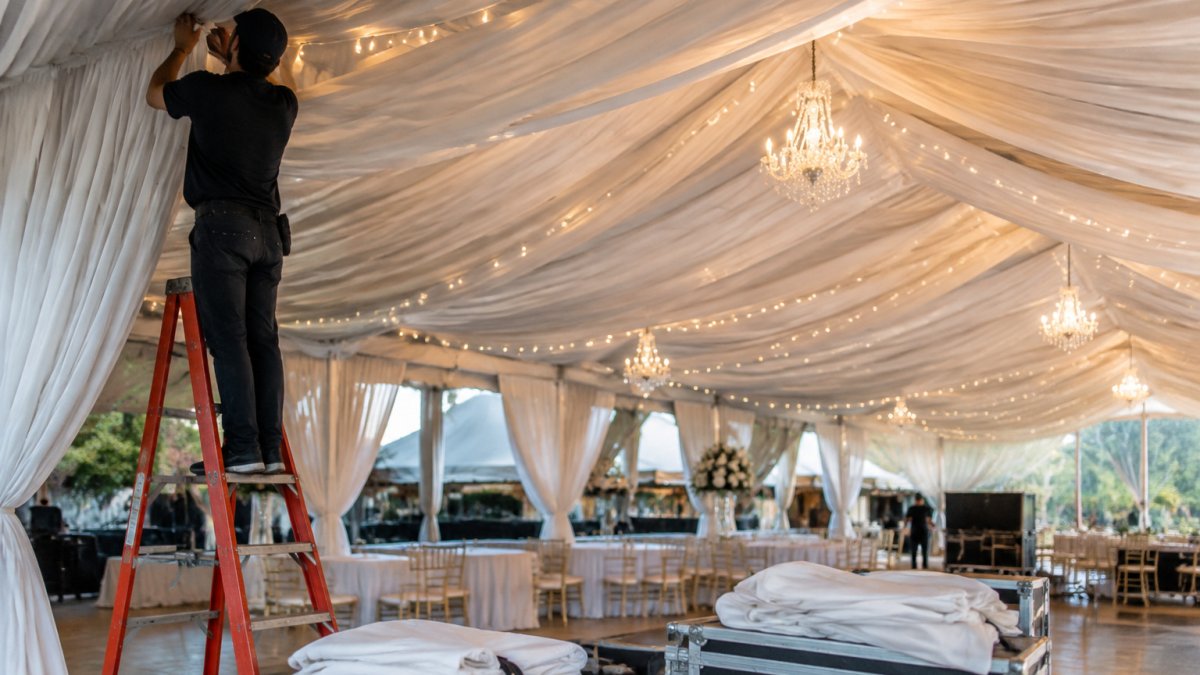
Standard LED uplighting typically takes about 5 to 10 minutes to set per fixture, according to Pro Lighting Rental's event setup benchmarks, so a 20-fixture ballroom plan is roughly two to three hours of installation before testing. Build that into the load-in schedule rather than assuming it fits in a short window.
Place fixtures where guests won't kick them, caterers won't stack cases on them, and cables won't cross walkways. Keep uplights at least a few inches from drapery and other fabrics, and route cables along walls or under carpet edges where the venue allows.
Pairing uplighting with draping
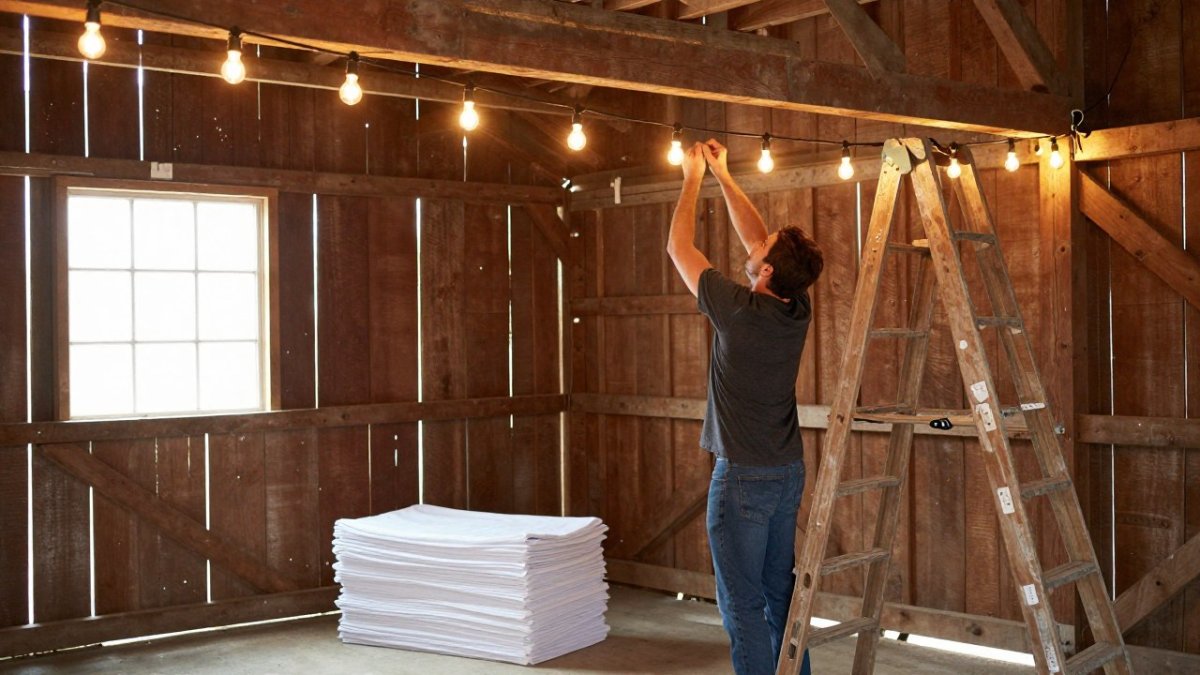
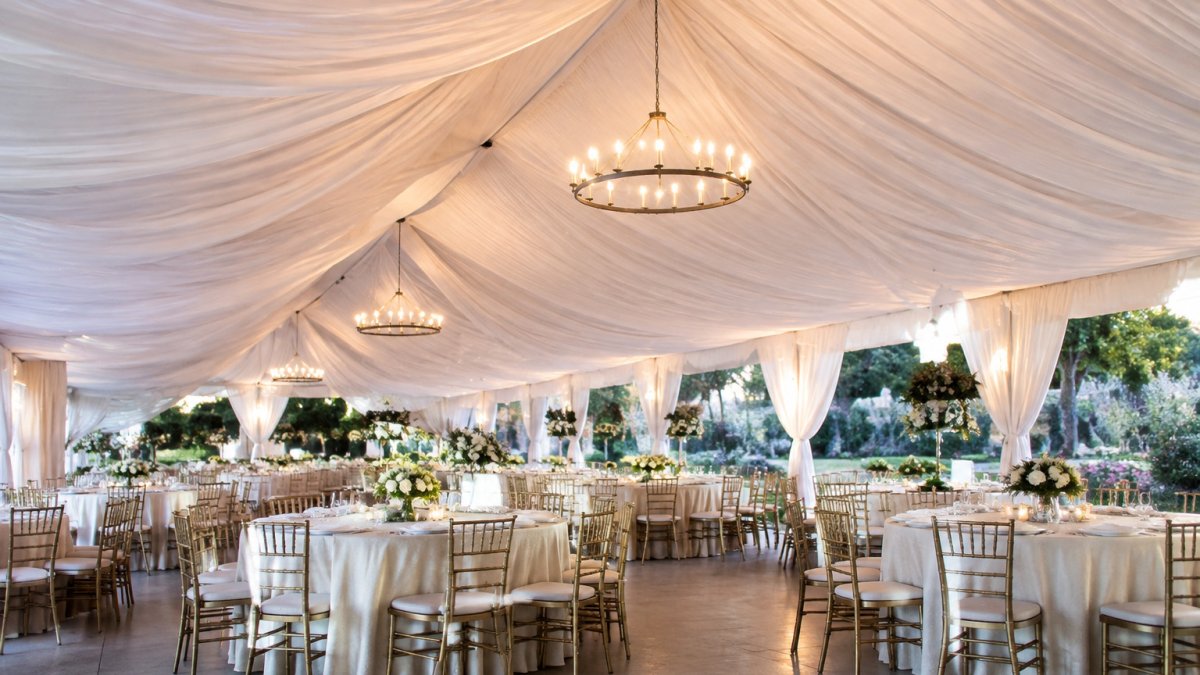
Indoor uplighting works best when it has something to wash. Adding ceiling or wall drapery and lighting them together creates a finished look that makes a room feel like a different venue. A sweetheart table backdrop, pipe and drape, or ceiling treatment gives the light a surface to catch, and the combination often reads as a more complete design than either element alone.
Confirm power access in writing before the layout is locked, since catering equipment and other vendors often share the same circuits.
Outdoor Uplighting Rental for Patios, Gardens and Tents
Outdoor events face different conditions. Wind, uneven ground and changing light levels all affect how uplights perform. Choose fixtures rated for outdoor use, and keep cords protected and out of walkways.
Tented and garden events benefit from uplighting the tent poles, canopy edges and nearby trees. This ties the structure together and carries the glow into the evening after the sun sets. For patios, uplights along low walls or planters can define the space without overwhelming the view.
Plan a rough layout before the day so you can confirm power and access points with the venue.
Planning Your Uplighting Rental Step by Step
A clear process prevents most day-of problems. Follow these steps:
- Walk the room. Note wall lengths, ceiling height, existing colors and power outlets.
- Sketch fixture positions. Start with one uplight every 8 to 12 feet along major walls.
- Choose colors. Pick two or three colors that match your draping, linens and florals.
- Plan power and cable routes. Mark outlets and confirm venue rules.
- Schedule setup time. Allow roughly 5 to 10 minutes per fixture, plus time for testing.
- Confirm teardown. Ask whether the team will remove fixtures and cables after the event.
Starting with a written plan also makes it easier to compare quotes and see what is included.
Here is a quick reference for the planning steps, with the timing or spacing the article gives for each.
| Step | What to do | Time or spacing |
|---|---|---|
| Walk the room | Note wall lengths, ceiling height, colors and outlets | Before layout |
| Sketch fixture positions | Start with one uplight per major wall section | Every 8 to 12 feet |
| Choose colors | Pick two or three matching draping, linens and florals | Before ordering |
| Plan power and cables | Mark outlets and confirm venue rules | Before setup day |
| Schedule setup | Allow time for installation and testing | 5 to 10 minutes per fixture |
| Confirm teardown | Ask whether the team removes fixtures and cables | Before the event |
Request a Free Uplighting Quote for Your Orange County Event
Every event has different room sizes, colors and logistics, so the right uplighting plan depends on your space. Contact Wedding Draping, Lighting, Dance Floors & Chair Rentals to request a free, personalized quote for your Orange County event. Share your event date, venue, location and the services you have in mind, and we will help you plan a layout that fits your room.
You can also explore our full range of wedding draping, uplighting, dance floor, backdrop and chair rental services to see how lighting pairs with other elements for a cohesive design.
Frequently Asked Questions
How many uplights do I need for my event?
The number depends on room size and wall length. A common planning guideline is one uplight every 8 to 12 feet along major walls, which gives balanced illumination across the room. Larger rooms or rooms with columns and alcoves may need more fixtures. Share your venue dimensions and layout when you request a quote, and the team can recommend a count that fits your space and budget.
Where should uplights be placed in a wedding venue?
Place uplights along the walls at regular intervals, focusing on areas guests see most, such as behind the head table, along the dance floor perimeter, and near entrances. Uplights also work well behind the sweetheart table or on either side of the ceremony backdrop. Spacing them evenly prevents dark patches and helps the color look consistent from every seat.
What uplighting colors work best for weddings?
Amber and warm white are popular for romantic, intimate receptions because they flatter skin tones and suit most décor. Soft pink, blush, and champagne tones work well with floral palettes, while deep blue or purple creates a dramatic evening mood. Many couples choose one main color for the reception and a second shade for the dance floor, then adjust the mix to match linens and draping.
Can uplighting be used outdoors?
Yes. Outdoor uplighting rental works well for garden weddings, patios, and tented receptions in Orange County. Fixtures should be rated for outdoor conditions, and placement must account for power access, cable runs, and wind or moisture exposure. Discuss your site layout and timing during your consultation so the setup plan fits the location.