 ultimate-guide
Best Wedding Lighting Techniques for 2026
Last Updated: October 26, 2026
Quick Summary
The best wedding lighting techniques in 2026 treat light as architecture by layering three or more sources at different heights and intensities so no single fixture carries the room. Warm amber uplighting around 2700K-3000K flatters most skin tones and photographs cleanly, making it the default for ballrooms and tents.
- Layered lighting combines ambient, accent, and task layers so no single fixture carries the room.
- Warm amber uplighting around 2700K-3000K flatters most skin tones and blends with candlelight.
- Textured or dark walls absorb light and need more fixtures spaced closer together.
- Many ballrooms prohibit haze because it can trigger fire alarms and smoke detectors.
- Plan rentals around venue type, event timeline, and the moments you most want photographed.
Table of Contents
- Why Wedding Lighting Design Defines Your 2026 Reception
- Layered Lighting: The Core Technique Behind Every Great Wedding
- Wedding Uplighting Ideas That Add Warmth and Dimension
- String Lights for Weddings: Bistro, Market, and Twinkle Options
- Wedding Reception Lighting Ideas for Dinner and Dancing
- How to Plan Wedding Lighting Rentals by Venue and Time of Day
- Lighting for Photography, Guest Comfort, and Safety
- Request a Free Wedding Lighting Quote
- Frequently Asked Questions
Why Wedding Lighting Design Defines Your 2026 Reception
The best wedding lighting techniques in 2026 share one trait: they treat light as architecture, not decoration. XL Entertainment Systems is a family-owned wedding and event rental company established in Anaheim in 1992. Light decides where guests look, how a room photographs, and whether a ballroom feels intimate or cavernous.
Zola's 2026 First Look Report, built on its largest survey to date with more than 11,500 couples, confirms how much weight couples now place on the overall guest experience. Lighting is where that experience gets built.
Below, we break down lighting techniques and how to plan rentals around your space and schedule.
Layered Lighting: The Core Technique Behind Every Great Wedding
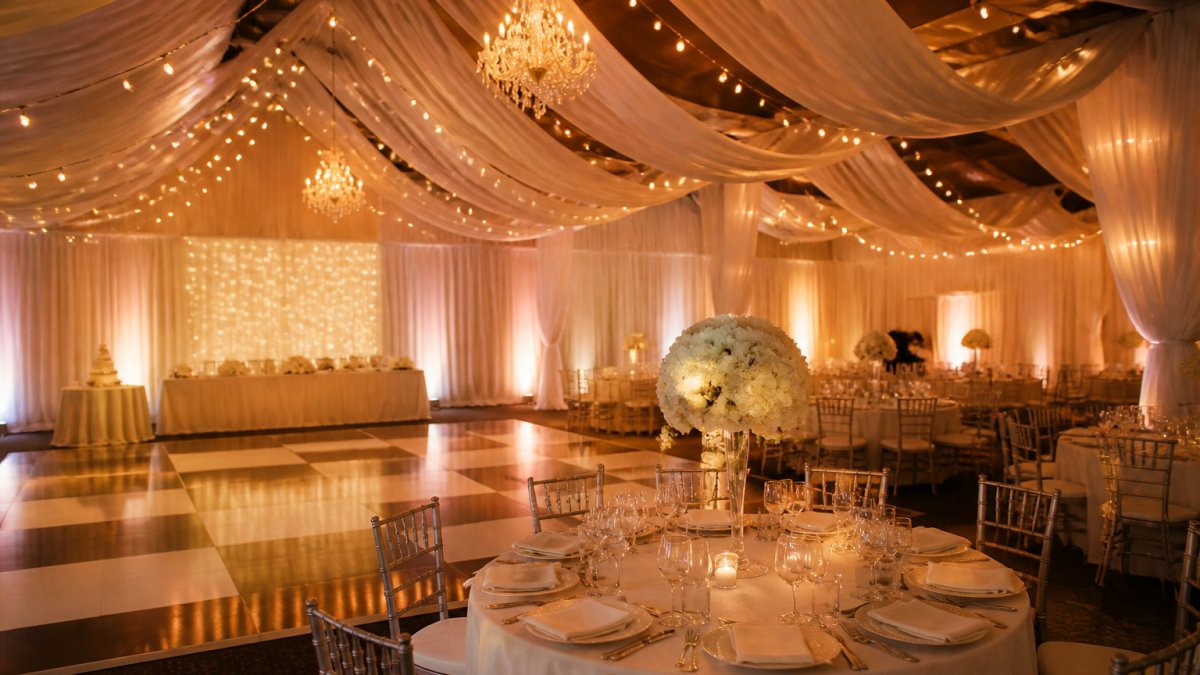
Layered lighting is the practice of combining three or more light sources at different heights and intensities so no single fixture carries the room. It is the foundation every other technique in this guide builds on, and it is what separates a designed room from a lit one.
The 2026 wedding lighting trends guide describes the current direction as refined, layered uplighting that adds warmth and dimension without overpowering the venue. That balance is the whole game.
Ambient, Accent, and Task Layers Explained
- Ambient fills the room evenly: string lights, ceiling washes, chandeliers dimmed low.
- Accent creates contrast: uplighting on walls, pin spots on centerpieces, a glow behind the sweetheart table.
- Task keeps things usable: pool lighting on the dance floor, pathway lights, bar illumination.
For a fuller look at pairing light with fabric, our lighting and draping planning guide walks through how the two work together.
Wedding Uplighting Ideas That Add Warmth and Dimension
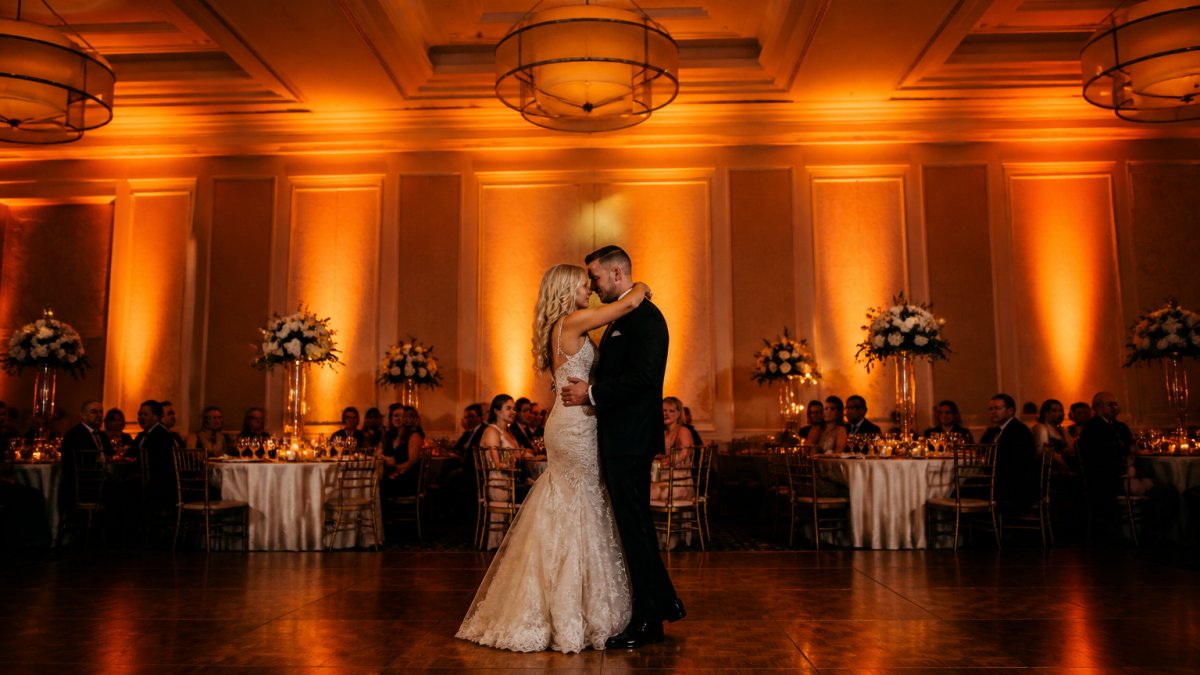
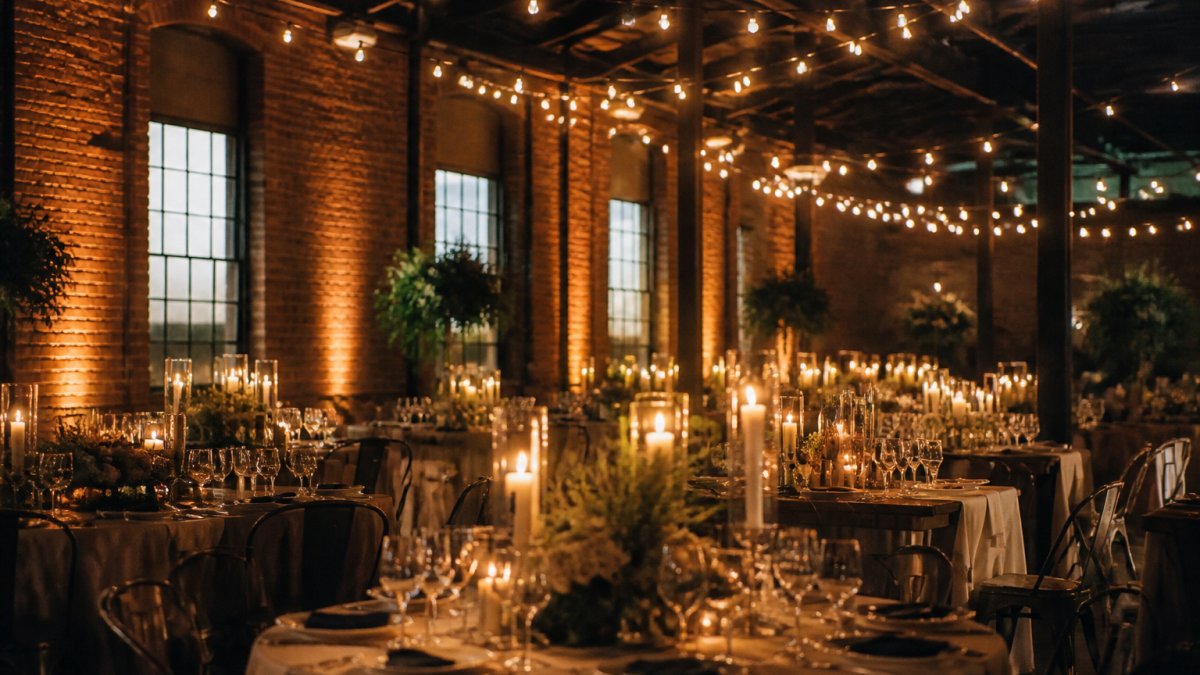
A row of fixtures placed at the base of each wall throws color upward, softening plain drywall, warming exposed brick, and giving a tent a finished ceiling line. The technique works because it changes the color of the room itself rather than adding another object to it.
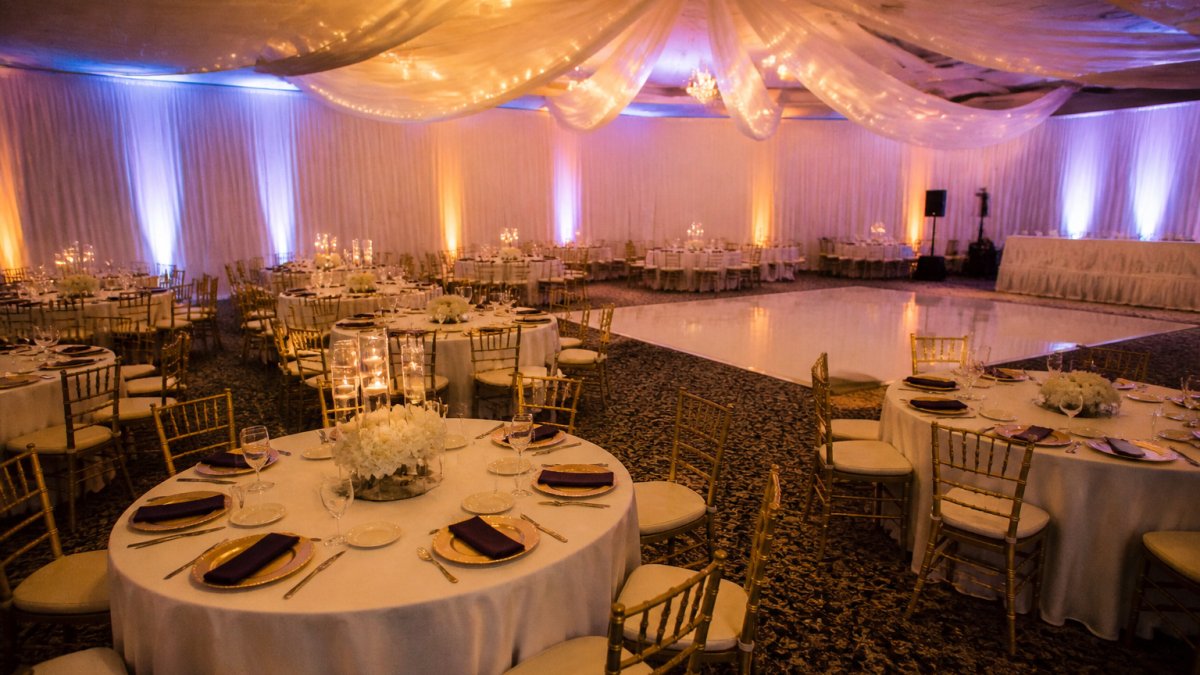
The strongest wedding uplighting ideas for 2026 lean restrained. Monochromatic color washes, named as a leading venue-design trend in the 2026 venue lighting and decor guide, read as intentional rather than themed. A single color repeated around the perimeter reads as architecture. Three competing colors read as a school dance.
Choosing Uplighting Colors and Color Temperature
Color temperature is the single decision that most affects how your room and your guests look in photos.
- Warm amber (roughly 2700K-3000K) flatters most skin tones, blends with candlelight and bistro strands, and photographs cleanly. This is the default for ballrooms, tents, and any room with wood or fabric surfaces.
- Neutral white (roughly 4000K) suits modern venues with glass, steel, or white marble, but it can read clinical in a traditional ballroom.
- Cool blue and violet (5000K and up) create drama for a grand entrance or a late-night dance set, but used as a full-room wash they can turn skin gray in photos and clash with warm candlelight.
How Wall Surfaces Change the Result
Uplighting is not paint. The wall is part of the fixture.
- Textured or dark walls absorb light and need more fixtures spaced closer together to avoid dark gaps between beams.
- White or light walls bounce color back into the room and can make a single row of fixtures feel like a full wash.
- Mirrors, glass, and windows reflect the beam and can double the apparent color, which is usually flattering but can create hot spots.
- Draped walls diffuse the beam into a soft gradient rather than a hard scallop, which is one reason draping and uplighting are so often ordered together.
For a fuller look at pairing light with fabric, our lighting and draping planning guide walks through how the two work together.
String Lights for Weddings: Bistro, Market, and Twinkle Options
Bistro and market strands give a warm, café-style canopy. Twinkle lights add a finer sparkle for backdrops and centerpieces.
The practical difference is bulb spacing and drop height. Tight strands at a consistent height read clean and formal. Loose, varied swags read relaxed.
Wedding Reception Lighting Ideas for Dinner and Dancing
The best wedding reception lighting ideas change with the clock. Dinner wants low, warm, and flattering. Dancing wants energy, movement, and color. The technique that most couples underestimate is the transition itself: the room should visibly change between courses, and that change should be planned, not improvised.
Dance-Floor Lighting and Dynamic Effects
Dance-floor lighting focuses attention where the celebration happens. A few practical points separate a good dance-floor look from a distracting one:
- Aim fixtures at the floor and the crowd, not into guests' eyes. Blinding beams read as dramatic in a photo and miserable in person.
- Keep the dance floor a different color temperature from the dinner hour. A shift from warm amber to saturated color signals the transition without an announcement.
- Program a slower, dimmer look for the first dance and parent dances, then open up to full movement for open dancing.
Cold Sparks, Haze, and Fog: What to Confirm Before You Book
- Whether the venue allows the effect at all. Many ballrooms prohibit haze because it can trigger fire alarms and smoke detectors.
- Whether a fire permit or venue approval is required. Some venues require written approval or a permit for open-flame-adjacent and particulate effects.
- Where the effect can be placed. Cold sparks are typically run outdoors or in a well-ventilated area with clearance from draping, linens, and guests.
- Who operates it. Professional operation and teardown are part of a safe rental, not an add-on.
How Reception Lighting Affects Photos and Video
Lighting decisions show up in every photo and every frame of video. A few effects behave differently on camera than they do to the eye:
- Haze and fog make beams visible on camera, which is usually the goal, but heavy haze can flatten contrast and soften background detail.
- Fast-moving lights and color changes can produce flicker or banding on video, especially when the shutter speed is not matched to the fixture.
- Deep saturated colors can overwhelm skin tones in photos; warm amber and soft white keep faces natural.
- Cold sparks are bright and fast, so they photograph best when the photographer knows the cue and the timing in advance.
A Simple Dinner-to-Dancing Sequence
- Cocktail hour: ambient string lights and warm uplighting at low intensity.
- Dinner: uplighting at full warm amber, pin spots on centerpieces, house lights dimmed.
- Toasts and first dance: a single focused look, cooler or warmer depending on the moment, with the dance floor isolated.
- Open dancing: moving heads and color on the floor, ambient layers held low.
- Send-off: cold sparks or a final focused look, coordinated with the photographer.
If your venue has harsh existing light, our guide to softening harsh venue lighting covers practical fixes.
How to Plan Wedding Lighting Rentals by Venue and Time of Day
Wedding lighting rentals should be planned around three variables: venue type, event timeline, and the moments you most want photographed. Our event lighting and decor pricing guide explains what lighting and decor typically involve so you can plan your budget.
| Venue Type | Priority Technique | Watch For |
|---|---|---|
| Hotel ballroom | Wall uplighting, dimmed ambient | Existing fixtures competing with yours |
| Tent or outdoor | String light canopy, pathway lighting | Wind, rigging points, power access |
| Industrial loft | Warm uplighting, pin spots | Cold surfaces, high ceilings |
| Garden or patio | Market lights, candlelight | Sunset timing, backup power |
Lighting for Photography, Guest Comfort, and Safety
Lighting decisions show up in every photo.
Safety matters just as much. If your venue has harsh existing light, our guide to softening harsh venue lighting covers practical fixes.
Request a Free Wedding Lighting Quote
The best wedding lighting techniques in 2026 all depend on your specific room, your timeline, and your budget.
XL Entertainment Systems is a family-owned wedding and event rental company established in 1992. We specialize in uplighting, string lights, draping, dance floors, and chair rentals, with professional installation. You can explore our full services or contact our team with your event date, venue, and the services you want.
Frequently Asked Questions
What are the best lighting techniques for a wedding reception?
Ambient light provides overall glow, accent lighting can add dimension, and task lighting serves dining and dancing. The goal is a room that shifts mood as the night moves from dinner to dancing.
How do you layer lighting for a wedding?
Start with ambient light, the base glow from overhead fixtures or string lights. Add accent lighting next, such as wedding uplighting. Each layer should serve a purpose, and no single layer should dominate.
What color uplighting works best for weddings?
The choice of uplighting color depends on the look you want for the room. Amber, warm white, soft blush, champagne, muted gold, cool blue, and purple are color ideas to consider.
Are string lights or uplighting better for a wedding?
String lights and uplighting are different lighting options. XL Entertainment Systems offers string lighting and uplighting; the choice depends on the look you want for your venue.
When should couples book wedding lighting rentals?
Share your event date, venue, and requested services when you request a quote.
Your venue has a lighting problem worth solving, whether it is a cold industrial space or a ballroom that photographs flat. XL Entertainment Systems brings more than 30 years of experience, custom event design tailored to your vision, and a full range of lighting, draping, dance floors, and chairs under one roof. Get started with XL Entertainment Systems and request a free custom quote for your celebration.